
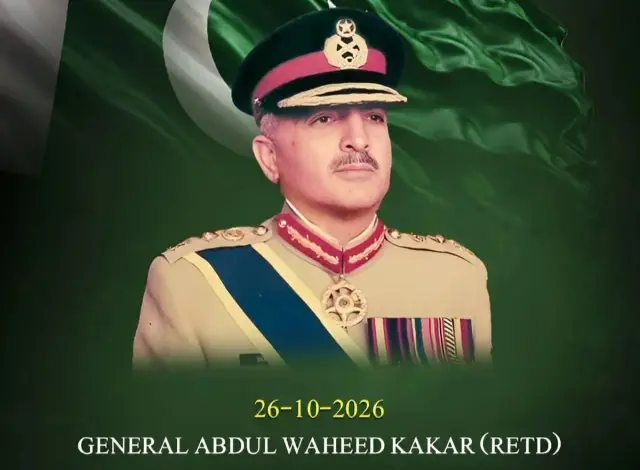
The death was confirmed by the military’s media wing, which stated that Chief of Defence Forces (CDF) and COAS Field Marshal Syed Asim Munir, alongside all ranks of the Pakistan Army, expressed “deep sorrow” over his demise. In a formal statement, ISPR noted that the CDF and the army paid tribute to the late general’s “distinguished military career, leadership and invaluable services to the Pakistan Army.”
The military leadership emphasized its solidarity with the deceased’s family. “The Pakistan Army shares the grief of the bereaved family and offers its heartfelt condolences,” the ISPR statement read. It concluded with a prayer for the departed soul to be granted the “highest place in Jannah” and for the family to be given “strength and patience” to bear the loss.
National political leaders also responded to the news of General Kakar’s passing. President Asif Ali Zardari expressed his grief in a statement, conveying “heartfelt condolences and sympathy” to the bereaved family. The President’s office stated that they prayed for the late general’s forgiveness and for the family to be granted the strength to endure their loss with patience.
Prime Minister Shehbaz Sharif similarly expressed “deep grief and sorrow” over the former army chief’s death. According to the Prime Minister’s Office (PMO), Sharif paid tribute to Kakar’s “invaluable services to the Pakistan Army” and extended condolences to his relatives. The PMO statement included prayers for the departed and for the fortitude of the grieving family.
General Abdul Waheed Kakar served as the Chief of Army Staff of Pakistan from January 1993 to January 1996. His tenure is historically significant for its intersection with the country’s turbulent political landscape during the early 1990s. During his command, General Kakar pressured then-President Ghulam Ishaq Khan and then-Prime Minister Nawaz Sharif to hand in their resignations. This political move precipitated the 1993 general elections, in which Benazir Bhutto was elected as Prime Minister. General Kakar retired at the conclusion of his three-year term.
While the immediate focus has been on the tributes from state institutions and the military establishment, the passing of a former army chief who navigated one of Pakistan’s most contentious political transitions underscores the enduring influence of the military in the country’s governance structures. The unified response from the President, Prime Minister, and the Chief of Defence Forces highlights the institutional respect accorded to former COAS, regardless of the political era in which they served.
No immediate state funeral or specific ceremonial arrangements were detailed in the initial ISPR statements provided. The focus remains on the official condolences and the recognition of General Kakar’s service during a pivotal period in Pakistan’s democratic history.