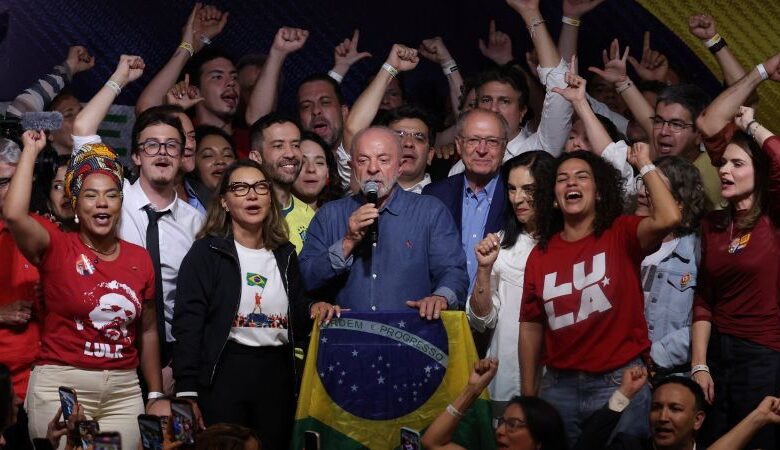
The victory is particularly significant for its timing and context. It marks a rare reversal of a first-round defeat, a feat no Brazilian president had previously achieved. Between the two rounds of voting, Lula’s Workers’ Party candidate gained more than 10 million votes, while his rival managed to add only 3.6 million. This decisive swing allowed Lula to secure a larger lead than he achieved in 2022, when he first defeated Jair Bolsonaro, Flávio’s father and the incumbent president at the time. By winning, Lula also reaffirmed his status as the leading figure of the regional left at a time when other governments in Latin America have moved to align with Donald Trump’s White House.
The geographic dynamics of the election reveal how Lula managed to overturn his initial deficit. In Minas Gerais, the state with Brazil’s second-largest electorate, Lula transformed a first-round loss of nearly 590,000 votes into a narrow victory of approximately 99,000 votes, representing a swing of roughly 690,000 votes in the margin. Minas Gerais, which has historically voted for the winner of every direct presidential election since 1989, once again aligned with the national result. While Flávio Bolsonaro retained his lead in the major states of São Paulo and Rio de Janeiro, Lula captured their capitals—the country’s two largest cities—and reversed the first-round outcome in the city of Rio. His gains were further solidified by victories in all nine northeastern states, supported by a higher overall voter turnout that saw abstention rates drop from 21.08 percent in the first round.
The political significance of this outcome extends beyond the winner’s podium. The election result represents a check on the right-wing wave that has recently swept across the continent. However, the triumph carries inherent limitations for the incoming administration. While the defeat of Flávio Bolsonaro is a significant setback for the far-right, it does not erode the right’s substantial grip on Congress and various state governments. This creates a paradox for Lula’s next term: a historic electoral mandate paired with limited room to govern due to a fragmented legislative landscape.
Immediate tensions have already emerged regarding the legitimacy of the result. As his father did four years ago, Flávio Bolsonaro refused to recognize the outcome, announcing plans to seek annulment of the election through the courts. The senator specifically challenged a decision by Supreme Federal Court Justice Cristiano Zanin to extend voting hours by two hours on election day, arguing that the uneven application of this measure compromised equal voting conditions. “It is impossible to recognize the election results given the circumstances in which these events unfolded,” Bolsonaro stated. While this legal maneuvering threatens to complicate the transition, it did not dampen the celebrations in Brazil’s major cities.
In Rio de Janeiro and São Paulo, streets filled with supporters dressed in the green, yellow, and red of Brazil’s flag, as well as the red associated with Lula’s Workers’ Party. In Rio, vuvuzelas and pro-democracy chants echoed along the beachfront, while in São Paulo, crowds packed central squares, waving banners and setting off flares in scenes reminiscent of football title celebrations. Lula hailed the high turnout, stating that Brazilians had “voted to defend democracy.”
As the dust settles on the voting, the focus now shifts to the institutional mechanisms that will determine the stability of the new administration. The upcoming legal challenges from the Bolsonaro camp will test the resilience of Brazil’s judicial institutions, while the incoming government must navigate a Congress where the opposition retains significant power. The next formal step involves the official certification of the results by the Superior Electoral Court and the subsequent inauguration process, which will occur despite the ongoing legal disputes lodged by the defeated candidate.