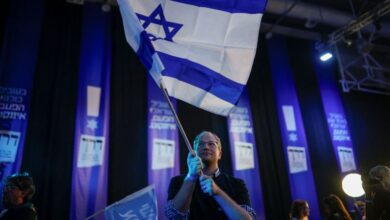
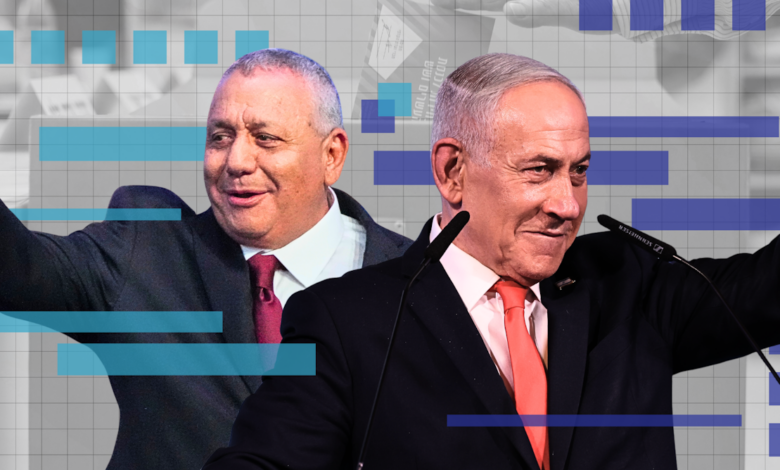
The early count, conducted after 3,775,461 votes were tallied across 8,702 voting stations, showed Netanyahu’s Likud party leading with 790,994 votes (21.05%). His broader right-wing bloc, which includes United Torah Judaism, Otzma Yehudit, Shas, and Religious Zionism-Zehut, had accumulated a collective 1,622,659 votes, or 43.17% of the total. Based on this partial data, Israeli media projected that Netanyahu’s camp would secure 54 seats. In contrast, the opposition bloc led by former IDF chief of staff Gadi Eisenkot had garnered 37.51% of the votes. Eisenkot’s Yashar! party received 606,897 votes (16.24%), while his allies B’Yachad, the Democrats, and Yisrael Beiteinu contributed significantly to a bloc projected to win 48 seats. Arab parties were projected to hold 18 seats, a figure that aligns with exit poll predictions of a dramatic increase in their representation.
The discrepancy between these early results and the exit polls broadcast at the close of voting stations at 10 p.m. Tuesday has introduced an element of uncertainty. Channel 14’s exit poll had initially favored Netanyahu’s bloc with a projection of 60 seats, whereas Channel 12 and Channel 13 suggested a stronger showing for the opposition, with projections ranging from 52 to 53 seats for the anti-Netanyahu camp. Experts note that such variations are common in Israel’s proportional representation system, where surplus-vote agreements and the counting of specific ballot categories can shift final seat allocations.
A significant portion of the electorate’s votes remains uncounted. Approximately 650,000 reservists, diplomats, and evacuees voted using “double envelopes,” a secure method that ensures these ballots are counted only after election day. With tens of thousands of additional overseas citizens having flown in to vote, the final tally is not expected until October 30, with official results published on November 4. The counting of these double-envelope ballots is expected to continue into Thursday and potentially beyond, meaning the current seat projections remain subject to change.
The political stakes extend beyond the immediate question of who will lead the next government. Prime Minister Netanyahu faces an international arrest warrant related to the military campaign in Gaza, a conflict that has resulted in over 74,000 deaths according to the Gaza health ministry, while more than 1,200 people in Israel were killed in the October 7, 2023 attack that precipitated the war. Domestically, Netanyahu’s leadership is scrutinized for judicial reforms and his handling of the October 7 security failure. He is currently undergoing a yearslong corruption trial, which he and his allies, including U.S. President Donald Trump, have described as politically motivated. Trump claimed on Tuesday that Netanyahu was successful in the election, while Vice President JD Vance offered a more cautious stance, stating he was neither explicitly anti- nor pro-endorsing the Prime Minister.
Opposition leader Gadi Eisenkot has campaigned on a platform that includes ending the de facto exemption of ultra-Orthodox men from military conscription, a point of intense public debate given that less than 10% of eligible ultra-Orthodox men currently enlist despite a shortage of soldiers. The election also highlights the difficulty of polling in Israel, where 618,000 new voters and a large segment of the population residing abroad complicate accurate pre-election projections.
With no single party or bloc holding a clear majority, the next formal step lies with President Isaac Herzog. Under Israeli law, the President must invite the leaders of parties that crossed the 3.25% threshold to his residence in Jerusalem to recommend a candidate for Prime Minister. This “recommendation parade” typically begins shortly after the official results are handed over. While Netanyahu’s right-wing bloc appears to be in a stronger position to receive the initial mandate to form a government, the lack of a guaranteed 61-seat majority means that any government will require intricate deals with smaller parties, including potentially the Arab representatives. The coming weeks will be defined by these negotiations, as both camps vie for the support needed to build a stable coalition in a deeply divided parliament.