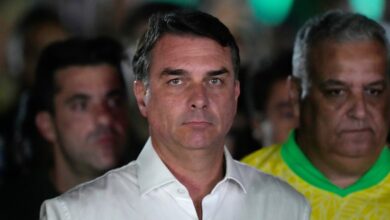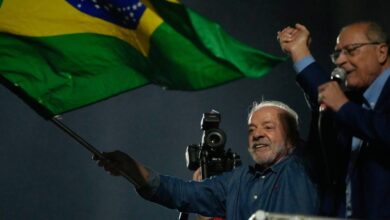
The election, widely viewed as a referendum on Netanyahu’s leadership and his handling of the Hamas-led attacks of October 7, 2023, and the subsequent war in Gaza, has drawn the highest level of participation in more than two decades. The Central Elections Committee reported that 77.7 percent of eligible voters participated, a surge of 7.1 percentage points compared to the 2022 election. Turnout among soldiers also climbed, with the military reporting participation rates above 68 percent by early evening. More than 60,000 Israelis returned from abroad to cast their ballots, underscoring the stakes attached to this vote. However, the high turnout did not resolve the political deadlock; instead, it amplified the significance of a fragmented parliament where no single party has ever won a majority on its own.
Within this stagnant landscape, individual party performances provide the clues for potential coalition building. Updated projections from Channels 12 and 13 indicate that Netanyahu’s Likud party emerged as the single largest party in the Knesset, with an estimated 27 seats, compared to 21 for Eisenkot’s Yashar party. This gives Likud a clear lead over any other individual party, though it falls far short of governing power. The political arithmetic suggests that both blocs will need to court smaller parties to reach the 61-seat threshold. For Eisenkot, this likely involves difficult negotiations with Arab-led lists. The Joint List and the Ra’am party were projected to win a combined 19 seats, a dramatic increase from the 10 seats they held in 2022. Ra’am leader Mansour Abbas expressed hope that the final results would allow the opposition bloc and his party to reach the majority needed for government, while Joint List leader Yousef Jabareen stated in a video statement that the party believes it can put an end to Netanyahu’s “bloody reign.”
Reactions to the exit polls were immediate and sharply divided, reflecting the deep polarization that characterized the campaign. In Jerusalem, Netanyahu addressed his supporters just after 3:00 a.m., asserting that Likud’s performance proved it was the dominant force in Israeli politics. He called for the formation of a “national right-wing government” and explicitly warned against forming a coalition that relies on the support of Palestinian parties. “What we’ve seen is that the Likud party is the largest party – nobody can compete with us,” Netanyahu stated. He also accused the television channels of attempting to discourage his supporters by projecting stronger results for the opposition, and in a series of posts on social media, he alleged that Arab voters were “raiding the polling stations and stealing the elections.” The Central Elections Committee rejected these claims, stating it had seen no evidence of systematic tampering, and had previously rejected a last-ditch effort by Netanyahu and other parties to keep polling stations open beyond the 10:00 p.m. deadline.
In contrast, Eisenkot framed the result as a mandate for change. Addressing cheering supporters in Tel Aviv, he declared that the “old era is over” and that the Israeli public had voted for a “new start.” He urged Netanyahu to accept the public’s non-confidence and retire from politics, warning the prime minister not to use Israel’s security situation for political ends, specifically alluding to fears that the period of uncertainty might be used to launch a new attack on Iran. Other right-wing figures celebrated their respective performances. Finance Minister Bezalel Smotrich, whose Finance party is projected to win seven seats, vowed to continue the expansion of Jewish settlements in the occupied West Bank. National Security Minister Itamar Ben-Gvir praised his Otzma Yehudit party’s rise from obscurity to a significant political force. Conversely, Yair Golan, leader of the Democrats party, stated on social media that voters had “fired the Netanyahu government” and pledged to work with partners to form a new administration.
The path forward is procedurally complex and fraught with potential deadlock. Once the final count is official, President Isaac Herzog will consult with party leaders to determine who has the best chance of forming a government. The nominated candidate will then have 42 days to assemble a coalition. If Eisenkot cannot secure a majority through formal partnerships with Arab parties, experts suggest he may attempt to govern as a minority, relying on informal, vote-by-vote agreements to stay in power. If no government emerges within the 42-day window, Netanyahu and his current cabinet will remain as a caretaker government, and new elections will be called. For now, the Knesset enters a period of negotiation where the 61-seat threshold remains the decisive barrier, and the validity of the election itself remains a point of contention between the victors and the incumbents.