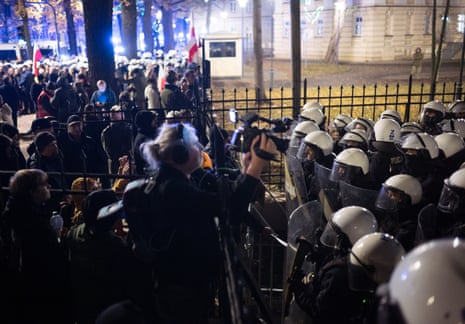
The suspension order was issued by judges elected by the current parliamentary majority, who moved to seize procedural control of the institution. According to Anna Korwin-Piotrowska, one of five judges whose swearing-in was previously blocked by President Nawrocki, she had assumed the top position citing her extensive judicial experience. The move triggered an immediate and furious reaction from the right-wing opposition Law and Justice (PiS) party. Its leader, Jarosław Kaczyński, condemned the action as an “assault” on the court, while the party’s social media channels and other opposition figures accused the government of carrying out a judicial “coup d’état.”
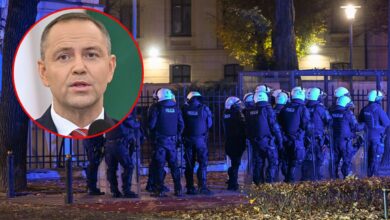
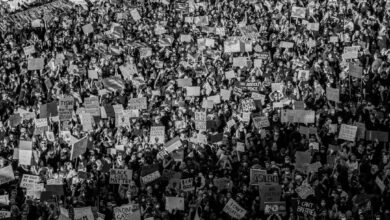
President Nawrocki, a close ally of Donald Trump who unexpectedly won the presidential election against the candidate backed by Prime Minister Donald Tusk, interrupted a state visit to Senegal to return to Warsaw. He arrived at the tribunal late on Friday, seeking to intervene directly in the unfolding crisis. As hundreds of protesters, including opposition members of parliament, gathered outside the building to support the suspended judges, tensions with the riot police mounted. Three individuals were reportedly arrested for attempting to breach the heavy police presence. By 4am on Saturday, Nawrocki remained inside the building. In a statement read out at 5am, he criticized what he described as a “violation of Poland’s constitutional order,” claiming that “a constitutional body was seized by force” and calling for security forces to withdraw from the premises.

The central development of this crisis is the government’s attempt to reassert control over an institution it views as illegitimate. Since returning to power in 2023, Prime Minister Tusk has pledged to reverse the controversial judicial reforms enacted during PiS’s eight years in office. The court has long been at the center of a standoff dating back to 2015, when outgoing centrist and incoming right-wing governments made legally questionable moves to stack the bench with their own appointees. The European Union has accused the court of being too closely aligned with nationalist political power, noting its history of ruling in favor of Polish legislation over EU law. Tusk’s administration has refused to recognize the court’s legitimacy in its current form, viewing the suspension of Święczkowski—a former minister under PiS—as a necessary step to allow the tribunal to function according to the constitution.
However, the legal basis for the suspension is a subject of deep division among experts. Marcin Matczak, a prominent legal scholar and critic of PiS, stated that while he would not have expected to defend Święczkowski, he believed the legal foundation for the judge’s suspension was “non-existent.” This ambiguity has complicated the political landscape, as the government seeks to present the action as a restoration of order, while the opposition frames it as an illegitimate seizure of power. The complexity was further heightened earlier this year when Nawrocki refused to swear in five judges elected by the current parliament. The Venice Commission, the Council of Europe’s advisory body on the rule of law, stated in early recent months that the president’s refusal should not prevent those judges from taking up their posts, a stance that aligns with the current government’s position but has not resolved the internal conflict within the tribunal.
Prime Minister Tusk has defended the government’s actions, insisting that “restoring the rule of law is our duty.” In a public remark, he argued that after years of what he termed PiS’s “lawlessness,” the process of reform would be difficult and sometimes painful, requiring decisive action. Foreign Minister Radosław Sikorski reinforced this view on the margins of a G20 meeting in Atlanta, stating that the tribunal had been politicized under the previous government and that the recent events were intended to allow the majority of duly elected judges to make the institution functional. Tusk pledged that the court would begin its work in accordance with the constitution, “whether people like it or not.”
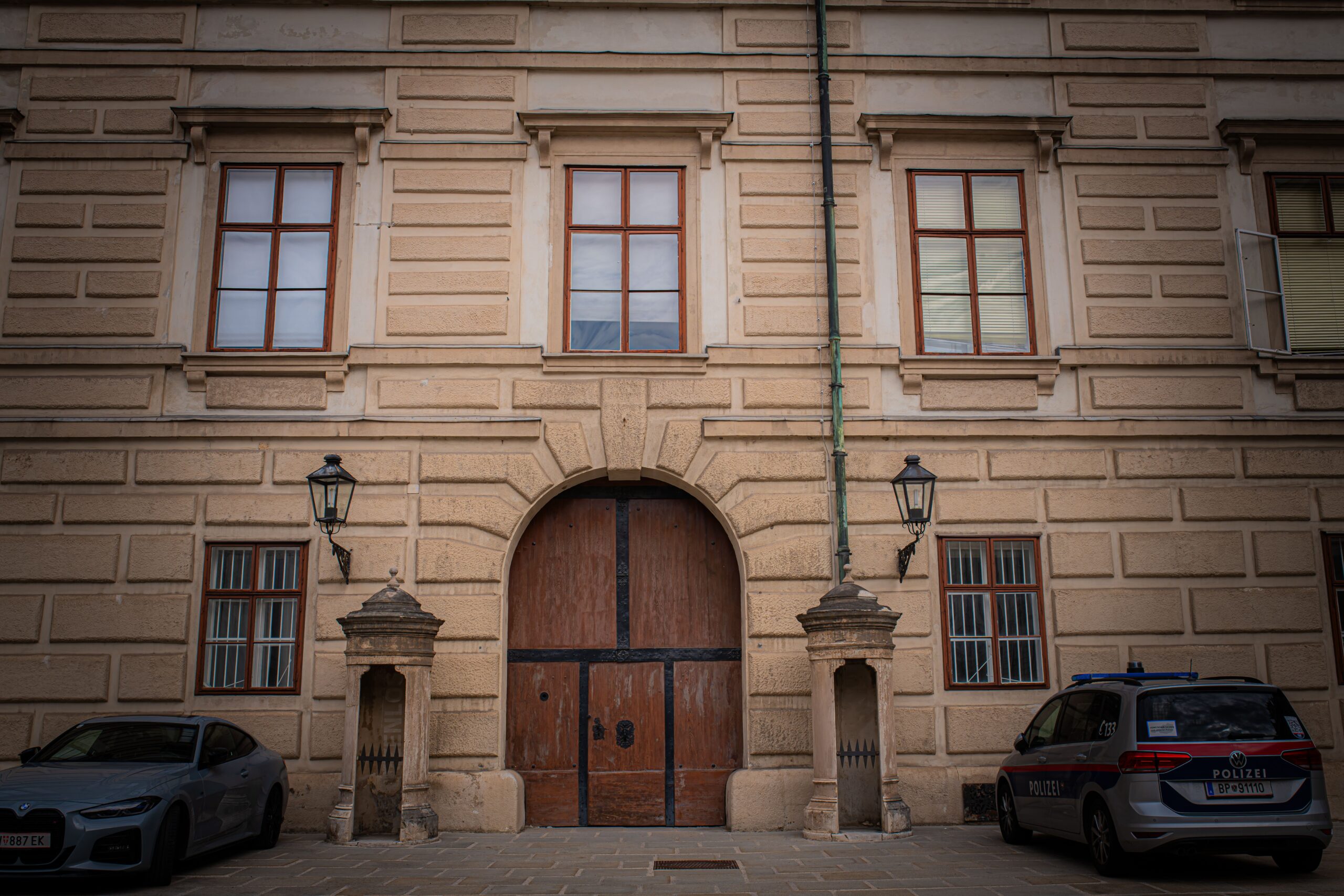
Opposition leaders and international figures have reacted with sharp criticism. Several European far-right politicians, including Britain’s Nigel Farage and Liz Truss, and the Netherlands’ Geert Wilders, condemned the move. Tom Rose, the US ambassador to Poland, posted on X that the events were “very serious,” noting that both sides offered sharply different accounts of the situation. He warned that the gathering of thousands outside the tribunal made the situation “more combustible,” emphasizing that the last thing Poland needed was a confrontation that spiraled into something far worse.
The standoff outside the Constitutional Tribunal has left the country deeply polarized, setting the stage for a dramatic confrontation ahead of next year’s parliamentary election. Polls indicate that the populist-right has a chance to return to power, meaning the outcome of this legal and political struggle will have lasting implications for Poland’s governance and its relationship with the European Union. As of early Saturday, the situation remained unresolved, with the president still inside the building and the legal status of the court’s leadership in flux. The next political development will likely hinge on whether the government can successfully implement its plan to reconstitute the bench or if the opposition’s legal challenges and public protests succeed in halting the process.