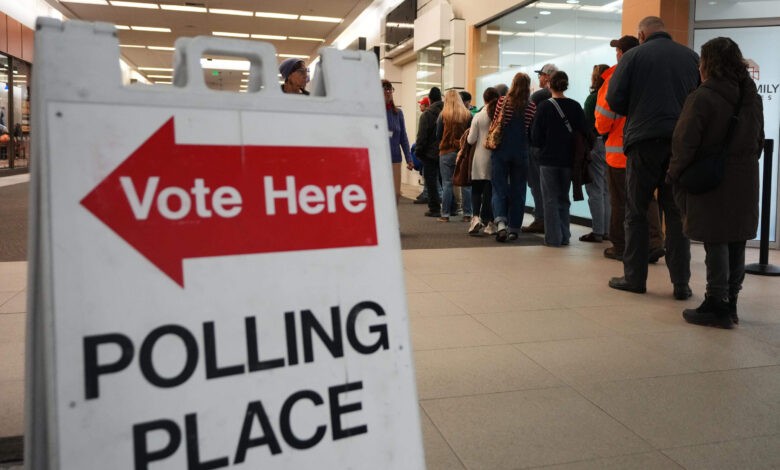
According to reporting by NPR political reporter Stephen Fowler, discussed on WBUR’s Here & Now, early voting figures reveal a notable uptick in turnout among groups that have historically formed the backbone of the Democratic coalition. Specifically, data shows increased participation among Black voters, young people, and other demographics that typically lean Democratic. This surge in early engagement is significant because the U.S. presidential and congressional elections often see lower overall turnout than presidential cycles, making mobilization of these specific voting blocs critical for achieving a majority. The rise in early ballots suggests that Democratic efforts to activate their base are yielding results, potentially offsetting the traditionally high enthusiasm for Republican candidates in midterm cycles.
The implications of this early voting trend are most immediately visible in the race for the U.S. House of Representatives. Current polling indicates that Democrats are winning enough seats to take control of the chamber. In the American political system, the House is the larger body with all 435 seats up for election every two years. Gaining control of the House would grant the Democratic Party the power to set the legislative agenda, control committee assignments, and hold the executive branch accountable through oversight and potential impeachment powers, should they hold the minority position in the Senate or the majority in both chambers. The polling data provides a concrete pathway for Democrats to secure this legislative leverage, suggesting that the early voting surge is translating into a measurable seat advantage.

However, the picture for the U.S. Senate is markedly different and remains highly competitive. The Senate, the smaller 100-member chamber, requires a supermajority of 60 votes to overcome filibusters in many cases, making the exact seat count crucial for governing. According to the available data, control of the Senate remains “up for grabs.” This uncertainty means that while Democrats may secure the House, they may not achieve the unified government or the strong supermajority needed to pass major legislative packages without bipartisan support. The split outcome is a common feature of U.S. midterm elections, where the party not holding the presidency often sees gains, but the magnitude of those gains varies by chamber and district demographics.
The distinction between the House and Senate races is further complicated by the structural differences in how the two chambers are elected. House members represent single districts, which are redrawn after each census and can be more volatile in terms of partisan shift. Senators, on the other hand, represent entire states, and in many states, the winner-take-all nature of the election means that a small margin of error in a key state can flip the balance of the entire chamber. The fact that the Senate remains undecided despite strong early voting numbers in the House suggests that the dynamics driving Democratic turnout may not be evenly distributed across all state-level races, or that Republican efforts in key Senate contests are effectively countering the Democratic advantage.

For citizens, the consequences of these potential outcomes are substantial. If Democrats take the House, they will likely focus on legislative initiatives that align with their platform, including potential reforms to healthcare, infrastructure, and social policy, subject to the constraints of the President’s veto power and Senate rules. Conversely, if the Senate remains controlled by the opposing party or is split, it could lead to a legislative stalemate, limiting the ability to pass comprehensive reforms. The early voting data serves as a preview of this potential gridlock, highlighting that while the Democratic base is highly mobilized, achieving a governing majority in both chambers is not guaranteed by early turnout alone.
As the final days of the campaign unfold, the focus will remain on whether the early voting advantage can be sustained through Election Day. The polling data provides a strong signal for House control, but the Senate race remains the critical variable that will determine the overall balance of power in Congress. The next step is the final counting of ballots, including early and mail-in votes, which will confirm whether the projected House shift materializes and whether the Senate remains too close to call until the very end.