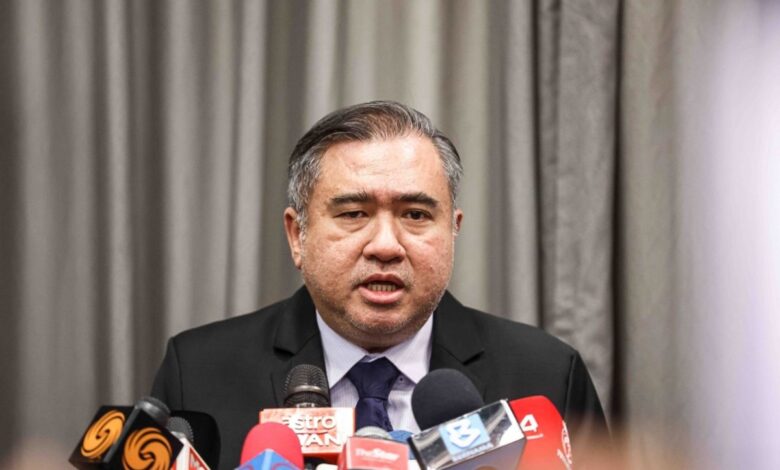
Loke made the declaration at a press conference on Friday, November 6, following reports that Najib had left Kajang Prison. The resignation fulfils a pledge Loke made in September, when the Democratic Action Party (DAP) chief announced he would step down in protest against the conditional royal pardon granted to the former premier.
“The moment Datuk Seri Najib sets foot in his home, that’s when I will resign,” Loke told reporters. He confirmed that he had already submitted a resignation letter to Prime Minister Datuk Seri Anwar Ibrahim, which he described as his party’s decision to convey its disagreement with the pardon. “This is my party’s decision and I will abide by it,” Loke said, adding that he would submit an additional letter to Anwar to formalise the matter once Najib arrived at his residence.
The political impasse was resolved earlier on Friday when Najib’s political party, the United Malays National Organisation (UMNO), confirmed it had paid the RM50 million (approx. US$12.3 million) fine imposed on him. This payment was a critical condition of the royal pardon granted by Sultan Ibrahim Iskandar on September 18. The pardon allows Najib to serve the remainder of his six-year prison term—scheduled to end on August 23, 2028—under house arrest rather than in a correctional facility.
Loke stated that he had been informed the RM50 million payment issue had been settled at the High Court that morning. However, he noted that Home Minister Datuk Seri Saifuddin Nasution Ismail had informed him that Najib had not yet been permitted to return home at the time of the press conference. Loke added that he had received confirmation that Najib was undergoing a scheduled dental examination, which aligned with media reports showing the former prime minister leaving the prison in a grey SUV at 2:45 pm.
Najib, 73, began his original sentence at Kajang Prison on August 23, 2022, after being convicted of misappropriating RM42 million in funds from SRC International. In January 2024, the Federal Territories Pardons Board reduced his 12-year jail term to six years and lowered his fine from RM210 million to RM50 million. He was also convicted on all 25 charges in the 1MDB case on December 26 of the previous year; that verdict is currently under appeal in the Court of Appeal.
The conditional pardon has been a significant point of contention within the governing Pakatan Harapan coalition, which includes both Loke’s DAP and Anwar’s Parti Keadilan Rakyat (PKR). Loke had initially announced his resignation in September but stayed in his post temporarily at Anwar’s request, agreeing to remain until Najib’s transition to house arrest was complete. He expressed appreciation to the Prime Minister for the trust and mandate given to him during his 47 months in office, serving from December 2022 until his departure.
As he prepares to leave, Loke addressed concerns regarding major infrastructure projects under his portfolio, including the China-backed East Coast Rail Link (ECRL) and the Malaysia-Singapore Rapid Transit System (RTS). He assured the public that these megaprojects are “locked in” and will remain on track despite his departure. To ensure a smooth transition, Loke chaired a post-Cabinet meeting at the Transport Ministry on Friday to settle administrative matters. He noted that he would return to the ministry on the following Wednesday for a Deepavali celebration, which he described as likely his last official engagement with the department.
Earlier reports indicated that Najib would serve his sentence alone under the supervision of the prison department, with restrictions on family visits. The transition marks a significant procedural step in the implementation of the royal pardon and concludes a period of high-level political tension within the Malaysian government. Loke’s resignation is expected to trigger a formal review of the cabinet portfolio, with the next formal step being the confirmation of his departure and the appointment of a successor to manage the Transport Ministry’s operations.