
An SSW event occurs when temperatures in the stratosphere rise rapidly, often by as much as 50°C in just a few days. This thermal spike is associated with a dramatic weakening, or even a complete reversal, of the strong westerly winds that circulate anticlockwise around the polar vortex. By disrupting this circulation, such events can allow colder air to spill southwards into the mid-latitudes. The earliest recorded major SSW occurred on 28 November 1968, following the start of reliable records in 1958. A weakening occurring now would mark a notable early-season disruption, with potential implications for weather patterns extending into early winter.
While forecast models strongly favor a significant weakening of the vortex, meteorologists caution that a complete reversal of the winds required for a confirmed major SSW remains uncertain. The distinction is important for immediate forecasting: while the likelihood of colder, more settled conditions across northern Europe may increase, a spell of severe cold appears unlikely over the next two to three weeks. The influence of stratospheric changes on surface weather is not immediate; rather, it tends to bias atmospheric patterns over subsequent weeks, potentially leading to persistent areas of high pressure across the mid-latitudes.
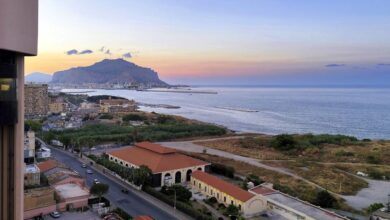
This atmospheric shift is occurring against a backdrop of already unsettled weather in the southern Mediterranean. An area of low pressure that deepened in the Mediterranean Sea last week is expected to bring heavy rain and strong winds to central and southern Italy on Monday. Authorities have issued warnings for these regions, with more than 100mm of rain forecast to fall in just 24 hours across higher ground in southern Italy. The system is expected to move eastwards across the Ionian Sea before reaching Greece, a region still recovering from exceptionally wet and unsettled weather experienced just last week.
The interplay between the weakening polar vortex and active surface weather systems highlights the complexity of short-term climate variability. It is crucial to distinguish between individual weather events, such as the Mediterranean low-pressure system affecting Italy, and long-term climate trends. The current polar vortex weakening is a specific atmospheric phenomenon that may influence regional weather patterns in the short term, but it does not constitute evidence of a long-term trend in polar vortex behavior, which can vary significantly from year to year.
For policymakers and infrastructure managers, the potential for an early SSW event underscores the importance of robust forecasting capabilities. While the immediate threat of severe cold is low, the potential for persistent high pressure and altered wind patterns could impact energy demand, agriculture, and transportation in the coming weeks. As forecasters continue to monitor the stratosphere, the next few days will be critical in determining whether the vortex undergoes a minor weakening or a full-blown SSW event, which would have more profound and lasting effects on Northern Hemisphere weather.
The uncertainty surrounding the exact magnitude of the vortex weakening reflects the inherent challenges in predicting upper-atmospheric dynamics. While models provide strong indications of the current trajectory, the precise outcome remains subject to ongoing atmospheric evolution. Meteorologists will closely watch for signs of wind reversal in the stratosphere, which would confirm a major SSW event. Until then, the focus remains on the immediate weather impacts, including the heavy rainfall expected in Italy and Greece, and the potential for shifting weather patterns across Europe in the weeks ahead.