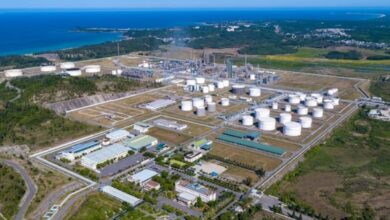
The refinery’s market dominance is evident in August data from the Nigerian Midstream and Downstream Petroleum Regulatory Authority. Domestic petrol receipts surged to an average of 35.9 million litres per day, accounting for approximately 71% of total national petrol receipts. In contrast, imported fuel fell to 14.6 million litres per day, representing just 29% of the market. This domestic output was overwhelmingly supplied by the Dangote facility, which alone delivered an average of 35.87 million litres of petrol daily. The shift has been rapid; domestic receipts jumped 39% from July’s 25.8 million litres per day, while imports dropped 26% from 19.7 million litres.
The Crude Supply Gap
Despite the refinery’s massive throughput, the Nigerian government has admitted that domestic crude oil production is inadequate to service the facility. Finance Minister Taiwo Oyedele stated that Nigeria currently produces 1.8 million barrels of crude oil daily, but this volume is not entirely available for domestic refining. Under production sharing contracts and joint ventures, a significant portion of this output is allocated to international partners, with deductions for production costs and royalties.
“The reality is that today we do not have up to 700,000 free crude to give anyone, including Dangote,” Oyedele said, noting that the government has sustained crude availability almost entirely through the previous fuel subsidy regime.
Oyedele clarified that the refinery imports crude to meet its operational needs, a fact that complicates calls for a “production subsidy” to lower domestic fuel prices. He explained that the government’s “Naira for Crude” policy, designed to stabilize the exchange rate and prioritize domestic supply, has provided some stability but has not yet unlocked sufficient additional barrels to fully service the Dangote refinery and other local refiners.
This supply constraint has fueled ongoing tension between the refinery and petroleum-product importers. Dangote has argued that the continued inflow of foreign petrol undermines the viability of domestic refining by preventing the plant from operating at full capacity and depressing local prices. Conversely, marketers maintain that access to imports is essential for maintaining competition and ensuring supply security in a market where domestic production is still scaling up.
The refinery’s strategy reflects a dual approach to market saturation. While it dominates the local market, the facility is also exporting surplus fuel. In August, Dangote exported an average of 9.73 million litres of petrol per day, a move that underscores the plant’s ability to service foreign markets simultaneously. This export activity is significant given the historical context of Nigeria, Africa’s largest crude producer, which spent decades exporting unrefined oil and importing refined products due to inadequate local refining infrastructure.
As the Dangote Group prepares for the initial public offering (IPO) of the refinery—described by President Aliko Dangote as the “People’s IPO” and the largest in African history—the strategic implications for energy security are becoming clearer. The facility represents a pivotal step toward industrial energy security, with Dangote asserting that Africa cannot industrialize without it. However, the path to full self-sufficiency remains contingent on Nigeria’s ability to ramp up crude oil production. Until domestic output grows to meet the refinery’s 700,000 bpd requirement, the country will remain dependent on a hybrid model of domestic refining fed by imported crude and residual foreign fuel imports.
For the near term, the focus remains on the government’s ability to free up more barrels through production increases and the “Naira for Crude” initiative. The outcome of this balance will determine whether the refinery can transition from a market disruptor to the sole anchor of Nigeria’s fuel supply chain, potentially eliminating the need for imports and reshaping the continent’s energy trade dynamics.