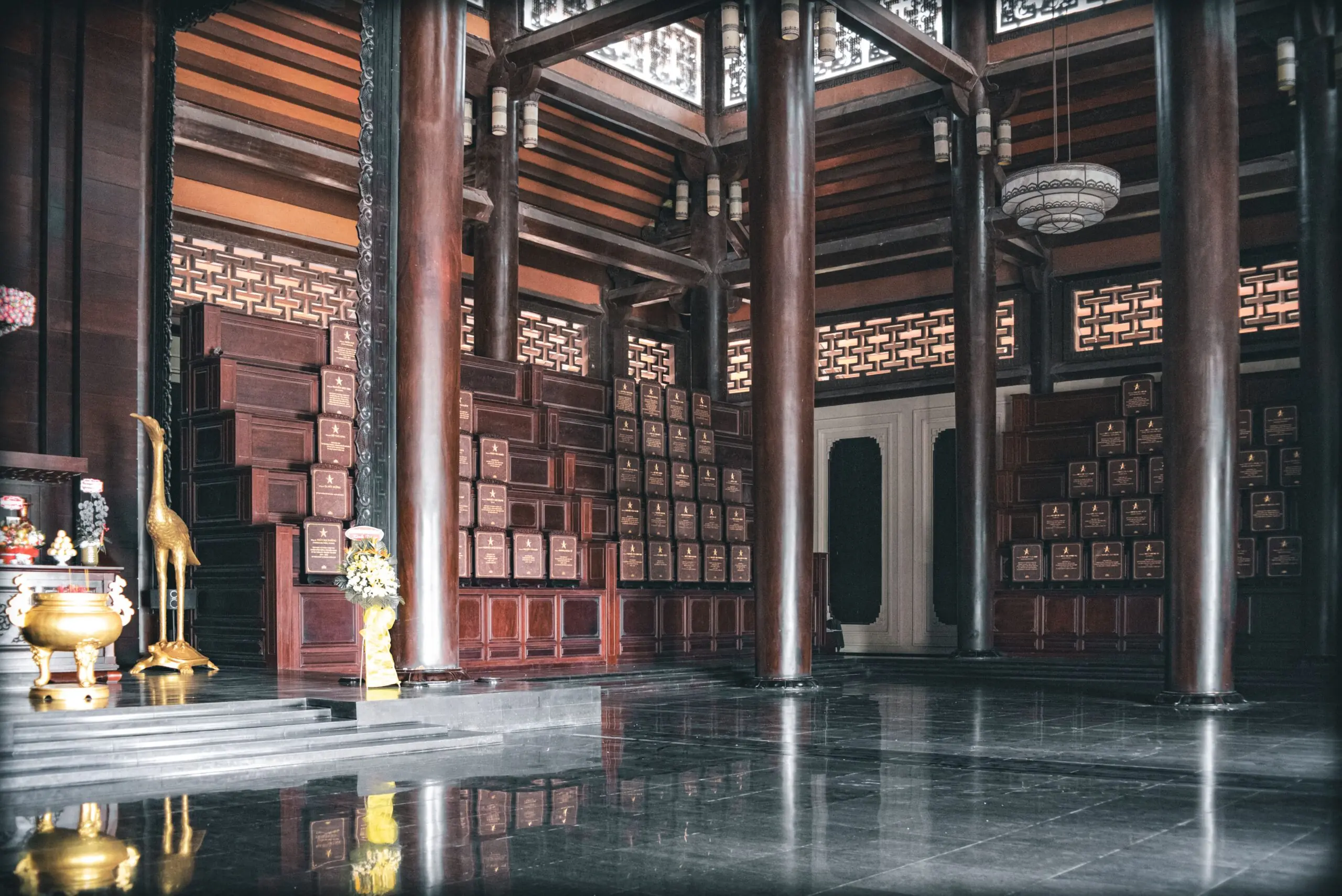
The disappearance was discovered on July 18 by a fan visiting Po Lin Monastery on Lantau Island to pay respects to the singer. The visitor noticed that screws on the door panel of Mui’s columbarium niche had been loosened and that the urn inside was no longer present. The fan immediately notified Mui’s family, who promptly filed a police report. The family noted that no portrait of Mui was displayed at the niche, as the relatives had preferred a low-profile arrangement for her remains.
Since the initial report, the case has been treated by authorities as a “request for police assistance” and is being handled by the Lantau district crime squad. A police spokesman confirmed that the force received the report on July 18 regarding an item suspected to be missing from the monastery. As of the most recent update, no arrests have been made, and no ransom demand has been received. Police stated they would continue to maintain contact with the family and relevant parties to follow up on the matter appropriately.
However, the family stated that the investigation has stalled, with no significant progress reported over the past three months. In their statement, shared on the artist’s social media fan pages, the family expressed that they were “enduring a double blow.” This referred to the compounded grief of the missing ashes and the recent death of Mui’s mother, who passed away in August at the age of 102. The family described the situation as causing “physical and emotional” suffering, prompting the decision to make the incident public in hopes of drawing greater attention and assistance.
The family’s appeal specifically targets individuals who visited Po Lin Monastery on or before July 18, asking them to come forward if they saw anyone acting suspiciously or carrying what appeared to be an urn. Additionally, the family has requested that motorists who drove near the monastery in July, particularly before the date of the discovery, submit dashcam footage that might assist the investigation. The monastery is located on the Ngong Ping plateau, a well-known site home to the Tian Tan Buddha, also known as the Big Buddha.
Reaction from Mui’s fan communities has been swift and critical of the security situation. The Mui Nation, a fan club of approximately 1,000 members, described the incident as “extremely absurd” and “against any moral standards.” The group called for the monastery’s management to review its security arrangements and explain how the urn was removed. Another fan group, the Anita Mui International Fan Club, reposted the family’s statement on its Instagram account, amplifying the call for public vigilance.

Anita Mui Yim-fong remains one of Hong Kong’s most celebrated entertainers, more than two decades after her death. She died in 2003 at the age of 40 following a battle with cervical cancer. Throughout her career, Mui broke numerous records, including achieving the best sales records of her time with her 1985 album *Bad Girl* and staging the largest number of concerts in a single year in 1987. Her rebellious image made her an icon of independence for younger generations, a legacy further cemented by the 2021 biographical film *Anita*, which became one of the top-grossing local films of that year.
The public disclosure of the theft occurred during an annual commemoration of Mui’s birthday, where longtime fans had gathered. Poon Siu-man, a close friend of Mui’s mother, explained during a livestream that the decision to reveal the loss was made to leverage media attention to identify those responsible and recover the urn. While the police continue to investigate the classified request for assistance, the family’s appeal marks a shift from a private matter to a public inquiry, relying on the collective memory and surveillance records of the community to resolve a case that has left the family in a state of prolonged uncertainty.