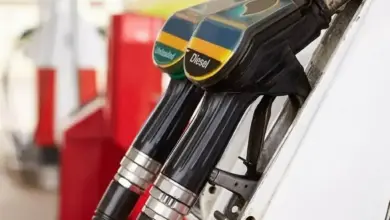
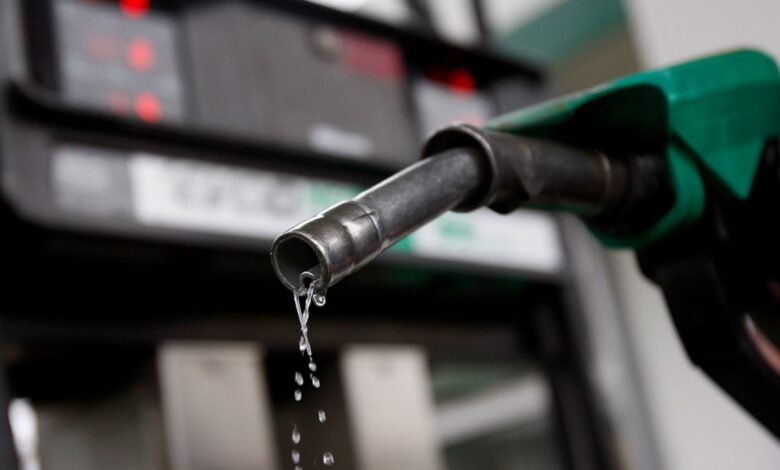
The latest adjustment, verified by checks on Friday, saw NNPC raise its petrol price by ₦35 per litre, moving from ₦1,370 back up to ₦1,405. Fuel pump attendants, speaking on condition of anonymity, confirmed that the increase was announced on Thursday but implemented on Friday. Notably, the state-owned oil company has not provided a technical or market-based explanation for this specific adjustment, leaving the rationale obscure amidst a backdrop of intense political scrutiny.
This price hike follows a sequence of events that began on Monday, when NNPC had reverted its price to ₦1,370 per litre after a previous sharp spike to ₦1,405. The reversal to the lower price appeared to align with the federal government’s recent intervention package, creating a temporary window of stability that has now been reversed.
The context for this volatility lies in the 10-point intervention unveiled by the Minister of Finance and Coordinating Minister of the Economy, Taiwo Oyedele. Announced at a press conference in Abuja, the package was designed to cushion the impact of rising petrol prices and the wider energy crisis. A central component of the plan was a 30-day discount at NNPC filling stations nationwide, with explicit priority given to public transport operators. These operators have been severely affected by rising fuel costs, which directly inflate transportation expenses and, by extension, the cost of living for households across the country.
In addition to the temporary discount, the government introduced a negotiated ceiling of ₦1,350 per litre on the ex-gantry or landing cost of petrol. Oyedele described this mechanism as a tool to moderate the effects of global energy shocks, specifically citing the conflict in the Middle East as a driver of increased global energy prices. The intervention also included forward sales of crude oil to domestic refineries, the removal of illegal levies, and accelerated deployment of Compressed Natural Gas (CNG). Crucially, the minister emphasized that these measures were neither a return to the old fuel subsidy regime nor a rigid imposition of price controls, but rather a market-based moderation strategy.
However, the implementation of these measures has been clouded by a secondary, more politically charged announcement. On Thursday, ahead of the planned 30-day discount period, Oyedele announced a proposed fixed petrol gantry price of ₦1,375 per litre in the run-up to the January 16, 2027, presidential election. This specific target price has become a focal point of controversy, particularly as NNPC’s actual pump price has since exceeded it, reaching ₦1,405.
The discrepancy between the government’s stated targets and the market reality has triggered a sharp political response. Former Governor Amini Abubakar and other political figures, including former Vice President Atiku Abubakar, have characterized the new measures as a “panic move” and a “publicity stunt.” The All Progressives Congress (APC) and other opposition entities have accused the administration of attempting to “bribe” voters, while the Nigerian Labour Congress (NLC) has issued a two-week ultimatum demanding a return to 2024 price levels. Governor Seyi Makinde of Ogun State has described the discount announcement as “deceitful.”
From an energy systems perspective, the situation reveals the limits of administrative price signals in a liberalized market. While the government has leveraged its ownership of NNPC to influence pump prices, the underlying drivers—global crude oil fluctuations, exchange rate dynamics, and refining logistics—remain outside direct state control. The introduction of a “negotiated landing cost” suggests an attempt to manage the import parity price, but the immediate reversion to ₦1,405 suggests that the cost of acquiring and distributing fuel may have risen faster than the negotiated ceiling could accommodate, or that NNPC is adjusting its margins in response to market pressures.
The impact on consumers and businesses is immediate and tangible. For public transporters, who were promised priority access to discounted fuel, the price jump to ₦1,405 undermines the economic relief intended by the 30-day window. If the discount is applied to the base price, the final pump price remains higher than the ₦1,375 target cited in the election-year proposal, and significantly higher than the ₦1,350 landing cost ceiling. This leaves a gap between the government’s policy intent and the operational outcome, raising questions about the sustainability of the intervention.
The uncertainty extends to the reliability of the supply chain. The removal of illegal levies was intended to lower costs, but the effectiveness of this measure is yet to be fully realized in the pump prices. Meanwhile, the push for CNG and the establishment of a National Strategic Fuel Reserve represent longer-term structural adjustments that will not alleviate the immediate pressure on petrol prices.
As the 30-day discount period proceeds, the market will watch closely whether NNPC maintains the ₦1,405 price or adjusts further in line with the government’s negotiated ceilings. The political stakes are high, with the fuel price serving as a barometer for the administration’s economic management ahead of the 2027 elections. For now, the pump attendant stands by the dispenser, the price tag updated, while the broader energy market remains in a state of flux, balancing global shocks against domestic political and economic constraints. The next verified development will likely be the monthly review of the negotiated landing cost, which will determine whether the ₦1,350 ceiling holds or yields to further market pressures.