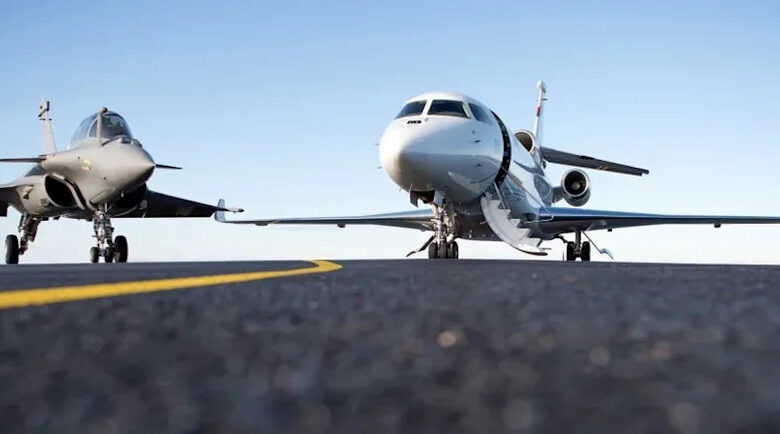
The resolution of this long-standing negotiation follows earlier delays, primarily centered on India’s request for access to the Rafale’s source code to integrate indigenous weapons systems such as the Astra air-to-air missile and the BrahMos anti-ship missile. French authorities had previously withheld full software access due to concerns that sensitive onboard algorithms could be exposed to Russian intelligence, potentially compromising the aircraft’s security. While the current deal addresses the hardware procurement, the technical challenges of integrating non-French weapons without full source code access remain a point of ongoing negotiation and technical evaluation.
The scale of the Indian order carries significant operational and logistical consequences for the Rafale program globally. As of early 2026, Dassault Aviation’s firm order book stood at 220 aircraft, comprising 45 for France and 175 for export customers. The addition of 114 Indian jets would increase the backlog by 52%. With production in 2025 totaling 26 aircraft, the company is projected to ramp up output to a peak of 35 aircraft annually between 2029 and 2030. This surge in demand directly impacts delivery schedules for other customers, including the United Arab Emirates, which ordered 80 aircraft, and Indonesia, which received its first batch of three aircraft in January 2026. The production strain also raises questions regarding the feasibility of Ukraine’s recent letter of intent to acquire up to 100 Rafale jets, a deal that remains contingent on funding and production capacity.
Concurrently, France’s defense procurement agency has awarded multiple contracts to prepare for the Rafale F5 production launch, scheduled for late 2026. The F5 standard represents a major evolutionary upgrade designed to keep the 4.5-generation fighter effective against evolving threats well into the 2030s. Prime contractor Dassault Aviation will develop a very-low-drift inertial navigation system based on resonant hemispherical gyroscope technology, allowing the aircraft to determine position and orientation with high precision without relying on external GPS signals. This capability is critical for operations in contested electromagnetic environments where satellite navigation may be jammed or denied.
Thales has been contracted to develop the RBE2-XG electronically scanned radar, a significant evolution of the current RBE2 system. The new radar utilizes Gallium Nitride technology to offer greater detection range and improved performance against low-radar cross-section targets, including stealth fighters. Thales will also develop a new Inter-Vehicle Data Link, designed to provide high-speed, low-probability-of-detection communications resistant to jamming. Additionally, MBDA France and Thales will enhance the SPECTRA electronic warfare and self-protection system to counter increasingly dense and sophisticated threat environments. A key feature of the F5 standard is the integration of the ASN4G, a nuclear-armed, scramjet-powered air-launched hypersonic cruise missile under development by MBDA France, ensuring the Rafale remains a viable platform for France’s nuclear deterrence strategy.
On the propulsion front, Safran Aircraft Engines has been awarded a contract for the preliminary design of the M88 T-REX engine. This upgrade aims to increase maximum thrust by 20 percent, from 7.5 to 9 tonnes, while retaining the modular architecture and low fuel consumption of the existing M88-2 engine. These enhancements are intended to support the increased data bandwidth and power requirements of the new sensor suite and future Collaborative Combat Aircraft (CCA) capabilities.
Separate from the F5 structural upgrades, Dassault Aviation reported a successful in-flight trial with Harmattan AI, integrating an AI-developed electronic warfare payload on a Rafale platform. This test demonstrates the company’s progression toward software-defined warfare capabilities, positioning the aircraft to operate effectively in networked battlespaces. The successful trial, combined with the F5 upgrades, underscores a strategic shift toward maintaining the Rafale’s relevance through continuous technological insertion rather than relying solely on platform replacement, which is not expected with the Future Combat Air System (FCAS) until 2040.
The Rafale program supports more than 7,000 direct and indirect jobs in France and involves over 400 companies. As the Indian contract moves toward finalization, the next critical milestones will include the signing of the firm agreement, the commencement of localized production processes in India, and the qualification of the F5 standard, which is expected around 2033 before entering service with the French Air and Space Force.