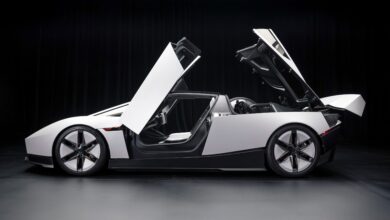
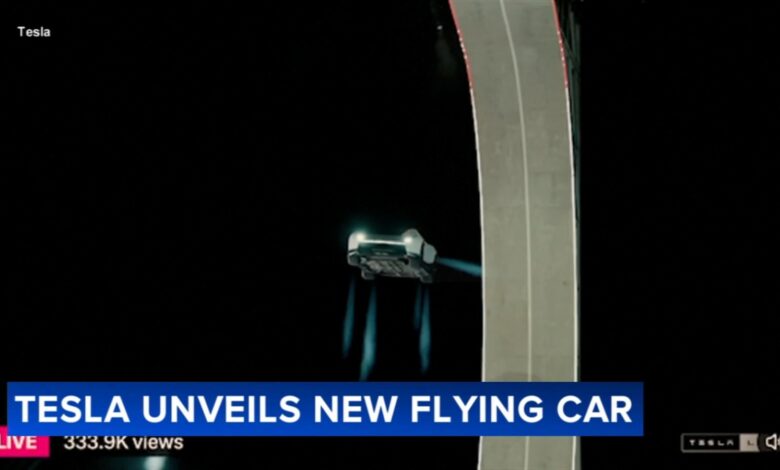
The announcement drew immediate attention for its radical departure from standard electric vehicle (EV) architecture. While previous iterations of the Roadster were focused on maximizing speed, range, and acceleration on paved surfaces, the new concept introduces vertical takeoff and landing (VTOL) capabilities. Musk stated that the car will be able to fly, a feature he noted has historically been confined to speculative fiction and animated entertainment.
However, details regarding the technical implementation of this feature remain sparse. Tesla has not released a white paper, engineering schematic, or regulatory filing that outlines how the vehicle will achieve lift, how it will manage battery density for flight, or how it will integrate with existing air traffic control systems. The distinction between a demonstrated prototype and a conceptual announcement is critical here; as of Thursday, this appears to be a design reveal rather than a tested, flight-verified engineering solution.
The practical significance of such a vehicle is immense, yet the hurdles are equally formidable. For a car to fly, it must overcome fundamental physics constraints related to weight-to-power ratios, energy density, and aerodynamic stability. In the current EV landscape, battery technology is optimized for efficiency over long distances on the ground. Flight requires a dramatically higher energy output for short bursts, which would likely necessitate a different battery chemistry or configuration, potentially impacting the ground performance metrics that have defined the Roadster’s brand identity.
Regulatory implications are also unaddressed. In the United States, the Federal Aviation Administration (FAA) strictly regulates aircraft, including electric vertical takeoff and landing (eVTOL) vehicles. There is currently no clear regulatory pathway for a consumer vehicle that functions as both a highway car and an aircraft. Issues such as airworthiness certification, pilot licensing, and airspace integration would need to be resolved before such a product could be released to the public. Unlike pure eVTOL startups that focus solely on urban air mobility, a hybrid car-plane introduces complex legal and safety vectors that have not been previously tested at a consumer scale.
It is important to distinguish between company claims and independently supported performance. At this stage, the claim that the Roadster “will be able to fly” is a forward-looking statement by the manufacturer. There is no independent verification, proof-of-concept flight, or third-party testing to support the feasibility of this feature in a production-ready vehicle. The automotive industry has seen numerous concepts for flying cars over the decades, but none have achieved widespread commercial availability due to the technical and regulatory barriers mentioned above.
For consumers, the announcement serves more as a marker of Tesla’s long-term technological ambition than an immediate product update. The current Tesla lineup, including the Model S, Model 3, Model X, and Model Y, continues to operate strictly as ground-based electric vehicles. The Roadster, which has been in development for years, is now associated with this more extreme capability. Investors and enthusiasts may view this as a signal of Tesla’s push into advanced aerial mobility, but it does not alter the current supply chain, manufacturing capacity, or software ecosystem of the company’s existing fleet.
The broader context involves the competitive landscape of autonomous and advanced mobility. While other companies focus on self-driving technology on roads, Tesla’s foray into aerial capability, if realized, would represent a shift in the definition of automotive transportation. However, without concrete data on propulsion systems, flight duration, or safety mechanisms, the development remains in the conceptual phase. The industry awaits further details on whether this is a limited-edition performance feature, a standard option, or a separate aerospace division project.
As of now, the next confirmed step is unclear. Tesla has not announced a specific date for a technical deep-dive, a prototype flight test, or a regulatory submission. The immediate focus for the company likely remains on the mass-market production of its current EVs, with the flying Roadster serving as a long-term branding and engineering milestone. The unresolved technical questions surrounding energy density for flight and regulatory compliance remain the primary obstacles to moving this concept from a keynote slide to a drivable—and flyable—product.