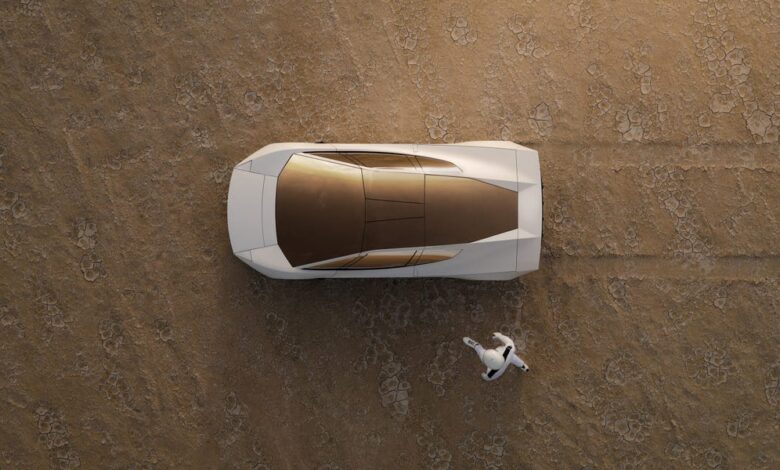
The 2028 Roadster is not a minor iteration of the 2017 concept; it represents a fundamental redesign of both the mechanical architecture and the user experience. While the 2017 prototype was characterized by a traditional three-motor, all-wheel-drive system and a 200 kWh battery pack, the new version utilizes a two-motor, rear-wheel-drive drivetrain. This reduction in motor count coincides with a notable decrease in estimated range, which has dropped from 620 miles in the 2017 specification to between 310 and 320 miles for the 2028 model. The battery size for the new vehicle has not been publicly specified, leaving the energy density and thermal management solutions of the new pack unclear.
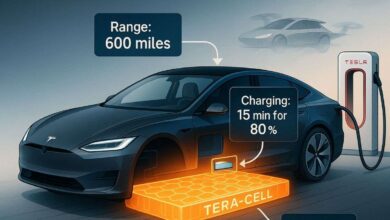
Performance metrics have seen a dramatic improvement. The 0-to-60 mph acceleration time has been reduced from 1.9 seconds in the 2017 version to 0.8 seconds in the new model, making it one of the fastest accelerating production-intended cars in history. However, the top speed has been adjusted downward from “above 250 mph” to 214 mph, which Musk described as a temporary limit “for now.” The charging infrastructure requirements have also been clarified, with the new Roadster capable of charging from 15% to 85% in 10 minutes at a rate of nearly 500 kW. This represents a substantial increase in charging speed compared to the unspecified charging capabilities of the earlier prototype.
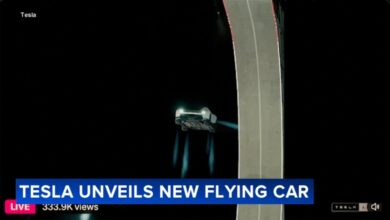
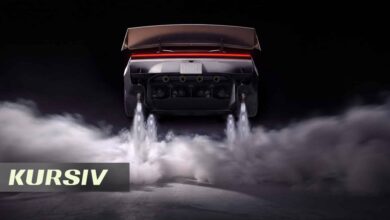
The most distinct feature of the 2028 Roadster is its demonstrated ability to navigate vertical surfaces. During the unveiling, the vehicle was shown driving up a vertical wall, hovering in the air, and performing a “kick flip” maneuver over a line of other Tesla vehicles. This capability, which was not present in the 2017 prototype, suggests the incorporation of advanced traction control systems, possibly involving active aerodynamic elements or specialized tire technology, though the specific technical implementation was not detailed by Tesla. The demonstration was conducted on a track placed at a safe distance from spectators, underscoring the high-risk nature of the vehicle’s capabilities.
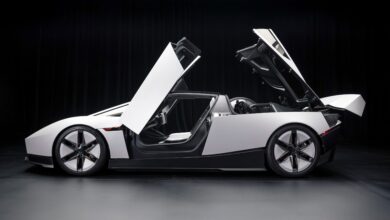
Interior and seating configurations have also been streamlined. The 2017 model offered two front and two rear seats, while the 2028 version is configured with only two front seats. A specific “Rocket” trim level is mentioned as having a single-seat configuration, indicating a focus on individual performance or racing applications. The vehicle will be offered in four variants: Performance, Thrust, Rocket, and a Founder Series. In contrast, the 2017 model offered a Founder Series with an optional “SpaceX” trim. The price for the 2028 Roadster has not been disclosed, whereas the 2017 Founder Series was priced at $250,000. Given the technological advancements and specialized components required for vertical driving, the final price is expected to differ, but Tesla has not provided any guidance on cost increases or decreases.
The announcement has not gone without commentary from competitors. Alef Aeronautics, a California-based company specializing in flying cars, released a video mocking the Tesla Roadster. The video depicted Alef’s flying car soaring over a Tesla Roadster, highlighting the different technological trajectories of the two companies. Alef has been developing its flying car for 11 years, positioning itself in the personal aerial mobility sector, while Tesla remains focused on ground-based electric vehicles. This cross-industry jibe underscores the intensifying competition in the high-end performance vehicle market, where capabilities are stretching beyond traditional automotive boundaries.
For businesses and regulators, the 2028 Roadster presents a complex set of questions. The vertical driving capability, while a marketing spectacle, raises immediate concerns regarding safety standards, insurance liability, and urban infrastructure compatibility. No current regulatory framework exists for passenger vehicles that can operate on vertical surfaces, meaning Tesla will likely need to seek special exemptions or work with regulators to establish new testing and deployment protocols. The reduction in range may limit the car’s practicality for daily use, positioning it primarily as a halo product for enthusiasts and collectors rather than a mainstream high-end EV.
The nine-year gap between the 2017 and 2028 reveals allows for significant technological maturation, particularly in battery technology and power electronics. The drop in range despite a faster acceleration time suggests that the new drivetrain is vastly more efficient, or that the battery pack is optimized for peak power output rather than energy storage. The 500 kW charging rate is a significant step forward for Tesla’s Supercharger network, suggesting that the Roadster may require dedicated, higher-power charging stations to realize its full potential in real-world usage. This could have implications for the deployment of Tesla’s next-generation charging infrastructure, potentially accelerating the rollout of higher-voltage systems.
As Tesla moves toward 2028 production, the company must balance the hype of the vertical driving demonstration with the practical realities of manufacturing such a complex vehicle at scale. The lack of a confirmed price and the unverified nature of the vertical driving system in non-controlled environments leave key questions unresolved. Competitors like Alef Aeronautics will likely continue to highlight the limitations of ground-based hypercars as they push for air mobility. For Tesla, the Roadster remains a critical symbol of its engineering ambition, but its success will depend on whether the 2028 model can translate its laboratory and track demonstrations into a safe, reliable, and commercially viable product for the consumer market.