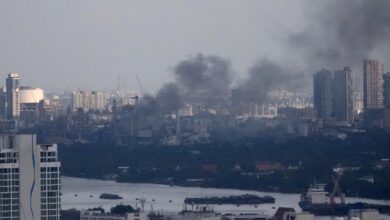
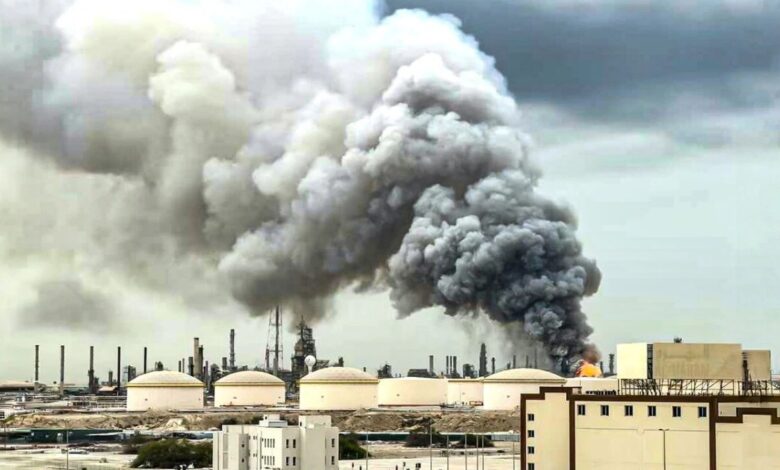
The Jazan refinery is a significant asset in Saudi Arabia’s downstream infrastructure, with a design capacity to process up to 400,000 barrels of crude oil per day. While the immediate suspension of some operations indicates a direct impact on local refining throughput, the full extent of the disruption to Saudi Arabia’s broader export capabilities remains under assessment. The Ministry did not explicitly identify the perpetrators in its initial statement; however, the Saudi-led military coalition, which is engaged in military operations against Yemen’s Houthis, attributed the strike to the Iran-aligned group. The coalition announced that it had destroyed a ballistic missile launch platform in Yemen’s port city of Hodeidah, claiming this was the site used to carry out the attack on the refinery.
This incident marks a continuation of a series of escalating attacks targeting Saudi infrastructure. The latest strike follows events on November 24, when a projectile struck a tower in Riyadh’s King Abdullah Financial District, injuring 11 individuals, including two Indian nationals, two Saudi citizens, three Nepalese nationals, and four Egyptians, according to Saudi Civil Defence. On November 25, the Houthis claimed responsibility for attacks on Ras Tanura, the kingdom’s largest refinery and a primary crude export hub, as well as the Red Sea ports of Jeddah and Jazan. These recurring incidents have already had tangible effects on the region, including the temporary disruption of some Saudi Aramco operations and the cancellation of most international flights to Riyadh. Furthermore, the security environment has forced the postponement or cancellation of major international events, including the AFC Asian Cup and the Future Investment Initiative (FII) conference.
The geopolitical context of these strikes is defined by the intensification of the conflict in Yemen. The Houthis, who control Yemen’s capital Sanaa and its most populous areas, have launched missiles and drones at Saudi airports, oil facilities, and office buildings since the civil war reignited in July. The fighting has escalated further following the Houthis’ seizure of strategic territory along Yemen’s Red Sea coast in September and their subsequent advance toward the Bab el-Mandeb Strait. This strait is a vital shipping route for Gulf oil producers seeking access to the Red Sea, making the security of the Jazan region critical not only for refining but for global energy logistics. The Saudi-led coalition has warned that attacks targeting civilians and civilian infrastructure will be met with a firm military response, a stance underscored by the reported destruction of the launch platform in Hodeidah.
Anadolu Agency reported that the coalition spokesperson, Major General Turki el-Maliki, also confirmed the interception of a drone targeting Saudi Arabia’s southern region, stating that it was destroyed by air defense systems. This dual-front defense—intercepting incoming projectiles and striking launch sites in Yemen—highlights the complex security challenges facing Saudi energy infrastructure. For the global energy market, the key variable remains the duration of the operational suspension at the Jazan refinery. While 400,000 barrels per day is a substantial volume for a single facility, its temporary offline status amidst broader regional instability contributes to a heightened risk premium for energy assets in the Gulf. The market will closely monitor whether the damage assessment reveals structural issues that could extend the downtime beyond the immediate emergency response, and whether further retaliatory strikes escalate the threat to other critical nodes in the Saudi energy network.