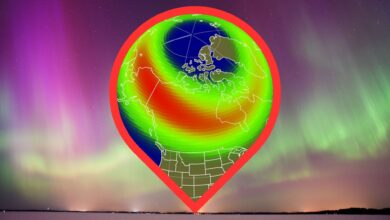
The expansion in visibility is driven by an ongoing geomagnetic storm, which has prompted the extension of a geomagnetic storm watch through the weekend. These storms occur when charged particles from the Sun interact with the Earth’s magnetosphere, causing fluctuations that can push the auroral oval—the ring-shaped region where auroras typically appear—to lower latitudes. As the geomagnetic activity intensifies, the oval expands southward, allowing observers in mid-latitude states to potentially witness the light displays.
Geographic Scope and State-Specific Forecasts
The latest forecasts indicate that the phenomenon will not be uniform across all affected areas. While the alert covers 28 states, the likelihood and intensity of visibility vary significantly by region. Residents in states closer to the northern border, such as Maine, Minnesota, and North Dakota, are positioned within the core of the expanded auroral oval and have the highest probability of seeing the lights. States further south, including Pennsylvania and parts of the Midwest, are included in the broader forecast zone but may experience only faint or brief displays, depending on local conditions.
Specific local forecasts have been updated to reflect these shifting probabilities. For instance, observers in Pennsylvania are advised to monitor the skies, though visibility there remains contingent on the peak intensity of the storm and local light pollution. The distinction between “possible” and “likely” visibility is critical; while the magnetic data supports the expansion of the auroral zone, actual visual confirmation depends on atmospheric clarity and the specific timing of the peak activity.
Viewing Conditions and Timing
For the northern lights to be visible to the naked eye, several factors must align. The sky must be dark, which typically requires observing after astronomical twilight, usually between 10:00 PM and 2:00 AM local time. Cloud cover is a major limiting factor; even strong geomagnetic storms will not produce visible auroras if the sky is overcast. Observers are encouraged to check real-time weather maps for cloud cover in their specific location.
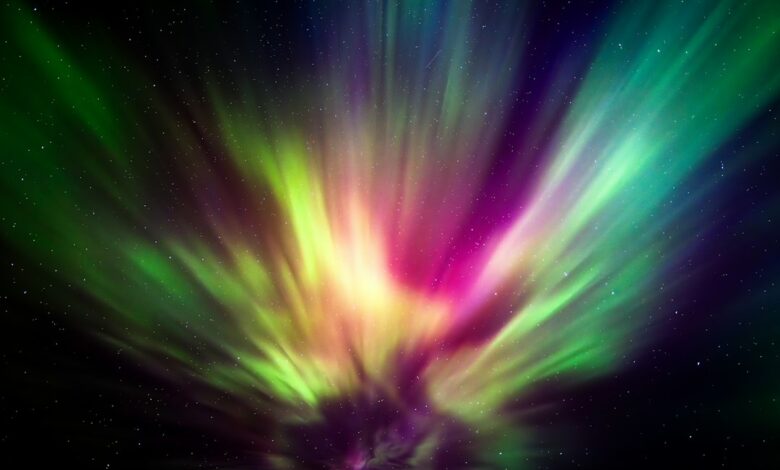
Light pollution also plays a decisive role. In urban areas, the ambient glow from city lights can obscure faint auroral displays. To maximize the chance of observation, individuals in affected states should seek locations away from urban centers, with a clear view of the northern horizon. The lights may range from a subtle green glow to more vibrant reds and purples, depending on the altitude and density of the particle interactions in the upper atmosphere.
Scientific Context and Uncertainty
This event is a manifestation of space weather, driven by solar activity such as coronal mass ejections or high-speed solar wind streams. While geomagnetic storm watches are based on precise measurements of solar wind speed and density, the translation of these magnetic disturbances into visible optical phenomena involves complex atmospheric interactions. Therefore, while the probability of visibility is high for the 28 states included in the alert, it is not guaranteed for every observer within those boundaries.
The extension of the watch through the weekend suggests that the geomagnetic conditions are expected to remain elevated for several days. This prolonged window offers multiple opportunities for observation, particularly if clear skies persist. As with all space weather events, the intensity of the aurora can fluctuate rapidly, meaning that brief periods of strong activity may occur at unpredictable times throughout the night.
Residents in the 28 affected states are advised to remain flexible with their viewing plans. The combination of extended storm duration and broad geographic coverage makes this a notable event for aurora enthusiasts. However, patience and accurate local weather knowledge remain essential, as the actual visibility of the northern lights will ultimately be determined by the intersection of magnetic activity, atmospheric transparency, and local light conditions.