

The delay creates immediate pressure on launch customer Lufthansa, which has been preparing to receive its first 777-9 in early 2027. Boeing’s progress on the aircraft itself, however, remains steady. In May, the first production-standard 777-9 destined for Lufthansa completed its maiden flight from Everett, Washington. Unlike earlier prototypes, this aircraft features a fully installed passenger cabin, including Lufthansa’s new Allegris Business Class product. It is currently undergoing operational testing of onboard systems, inflight entertainment, connectivity, and cabin services to validate the aircraft under realistic airline conditions.
Boeing has entered the final and most significant stages of its certification campaign by resuming Extended-range Twin-engine Operational Performance Standards (ETOPS) testing. ETOPS approval is a critical hurdle for any long-haul twin-engine aircraft, as it demonstrates the ability to safely continue flying for an extended period following the failure of one engine. This certification allows airlines to operate routes far from diversion airports across oceans, deserts, and polar regions. Without it, carriers like Lufthansa and Emirates would face significant restrictions on route planning, limiting the 777-9’s utility on the longest global routes.
To support this final phase, Boeing added a seventh flight-test aircraft to the program, which will focus on function and reliability trials alongside ETOPS flights. The program has now accumulated approximately 4,800 flight-test hours, making it one of the most extensively tested aircraft Boeing has ever developed. This extensive testing follows a period of increased regulatory scrutiny and a temporary grounding of the test fleet in 2024 after structural issues were discovered in engine thrust link components. Since then, Boeing has incorporated modifications and additional inspections required by the FAA.
While the flight-testing campaign is nearing completion, uncertainties remain regarding the propulsion system. GE Aerospace is analyzing a potential durability issue involving a seal in the GE9X engine, which could require redesign or retrofit work during maintenance. Boeing Chief Executive Kelly Ortberg stated that the company expects to complete most of its flight-testing by the end of the year, with ETOPS testing continuing into 2027 before final approvals are secured. The manufacturer maintains that deliveries can still begin in 2027, contingent on regulatory progress and airline readiness.
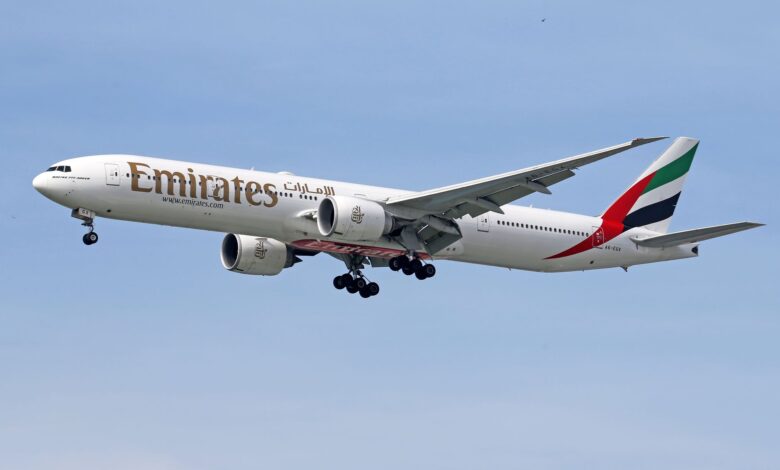
The commercial implications of the 777-9 extend beyond the initial delivery to Lufthansa. Emirates, the program’s largest customer, is expected to follow shortly after, though it has indicated that some earlier-built aircraft may require substantial modification before acceptance. The aircraft is designed to replace ageing 777-300ERs and complement fleets of Airbus A350s, playing a central role in the long-haul strategies of major carriers in Asia and the Middle East.
In preparation for the aircraft’s eventual rollout, training infrastructure is being deployed to key markets. CAE is installing Asia-Pacific’s first Boeing 777X full-flight simulator at the Singapore-CAE Flight Training Centre. The 7000XR simulator will allow regional airlines, including Singapore Airlines, Cathay Pacific, ANA, and Air India, to train crews locally. This deployment reflects the strong expected demand for the aircraft in the region, positioning training capacity where fleet renewal and growth are driving the need for widebody pilot preparation.
As the 777-9 approaches the threshold of commercial service, the focus has shifted from proving basic performance to demonstrating operational reliability under airline conditions. The function and reliability testing effectively allows the aircraft to operate as though it were already in commercial service, exposing it to normal schedules and airport turnarounds. While the FAA’s timeline adjustment introduces a layer of uncertainty, the completion of the production-standard flight and the resumption of ETOPS testing indicate that the program is in its final, albeit protracted, stages of validation.