
The aviation shutdown was not an isolated incident but part of a broader week of technical failures that rippled through key economic sectors. By Monday, United Airlines announced a widespread outage affecting departing flights, while major financial institutions, including JPMorgan Chase, reported significant slowdowns in transaction processing. A spokesperson for Chase stated, “We are working to resolve this as quickly as possible,” a message that became familiar to consumers over the course of the week. The convergence of these failures—from grounded jets to banking glitches and massive cloud service interruptions—led to public speculation about the underlying causes, with some questioning whether the events signaled a systemic attack or a catastrophic breakdown in digital infrastructure.
Official explanations, however, pointed to mundane but dangerous causes: aging equipment overwhelmed by necessary upgrades. Administration officials attributed the four-hour-plus ground stop to a technology upgrade on the nation’s air traffic control system that overloaded antiquated hardware, causing intermittent communications and radar gaps. Similarly, Microsoft, whose outage affected millions of users globally, stated that its services were fully restored by Saturday. The company identified the root cause as an issue introduced during an earlier network capacity upgrade that surfaced following a recent network change. Both the FAA and Microsoft emphasized that there was no evidence of malicious activity or cyberattacks behind the disruptions.
The economic implications of these outages extend beyond individual inconvenience, touching on the reliability of critical supply chains and financial systems. The aviation sector, for instance, is currently undergoing a major modernization effort. The FAA has already replaced thousands of copper wire connections with fiber optic lines and upgraded hundreds of radio systems as part of an overhaul that began last year. This work was funded by $12.5 billion in congressional approval. However, the recent failures have intensified the debate over the sufficiency of this funding. Secretary of Transportation Sean Duffy has pleaded for an additional $30 billion to complete the necessary upgrades to the country’s notoriously outdated air traffic system.
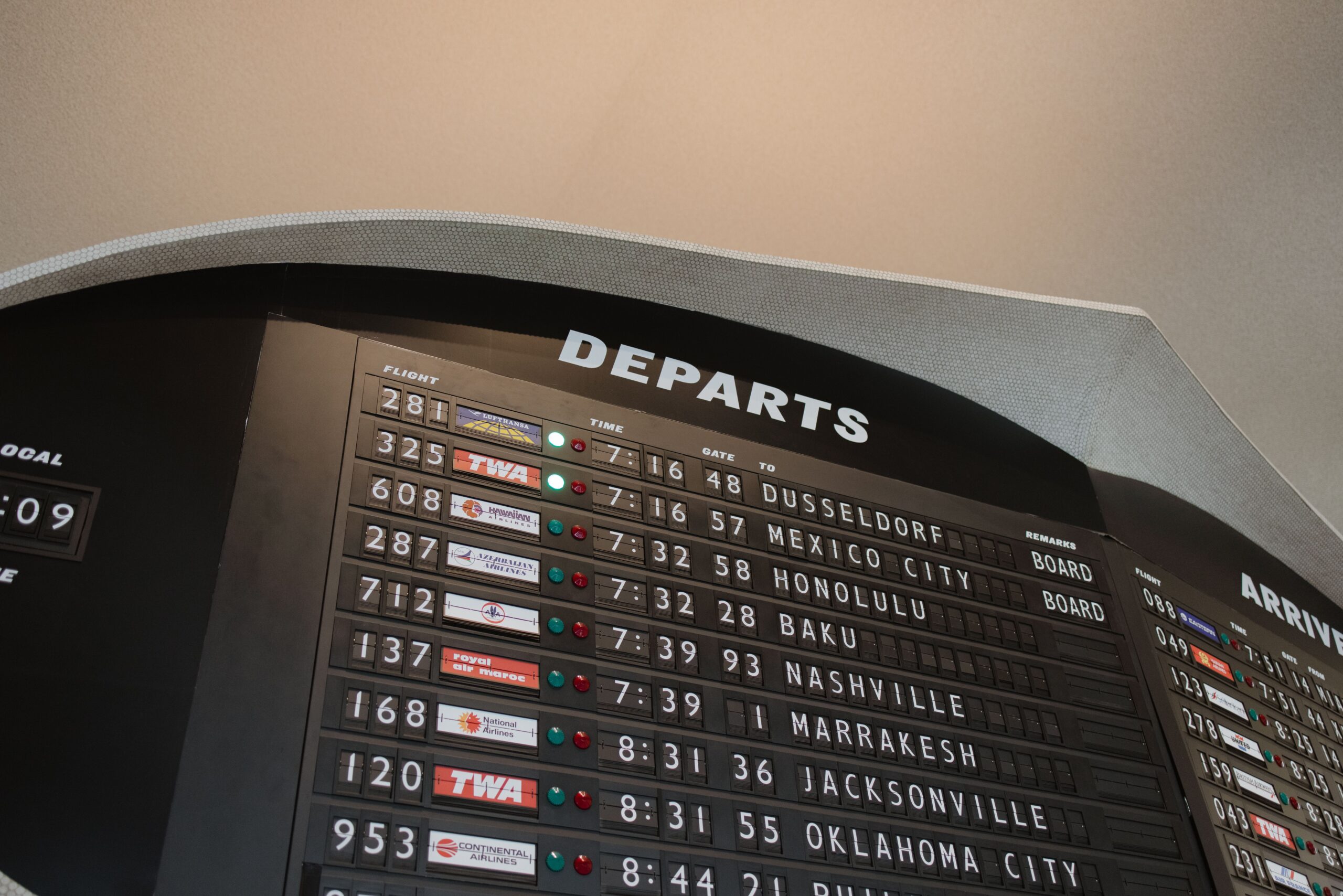
The strain on infrastructure is visible in the daily experiences of travelers and workers. Tori Perkins, a 34-year-old resident of Hawaii, was delayed on a layover at San Diego International Airport. On Saturday morning, 11 of the 62 flights at the terminal were listed as canceled, with an equal number delayed. Perkins expressed a common sentiment of distrust regarding official narratives: “I don’t necessarily believe what the government says… I don’t know what’s true because there are so many people saying different things.” Her reaction to the plea for more funding was skeptical, describing it as “more of the same.”
The banking disruptions added another layer of uncertainty. The technical issue at JPMorgan Chase caused ripple effects throughout the financial system, with some transactions failing to go through. While Chase assured customers that the problems were not the result of a cyberattack, the incident highlighted the interconnectedness of the financial network. For consumers relying on real-time digital payments, even brief outages can have tangible economic consequences, disrupting business operations and personal financial management.
Despite the frustration, some witnesses noted moments of resilience and community. Corbyn Wascher, a 37-year-old high school teacher from Moline, Illinois, was stuck on the tarmac at Charlotte Douglas International Airport for four hours while returning from Miami. He observed that the delays fostered a cordial atmosphere among passengers, who talked to one another and stretched their legs. He was particularly impressed by the American Airlines staff, who managed to distribute water, pretzels, and biscotti snacks despite being under significant stress. “The stewardesses were amazing,” Wascher said.

For others, the disruptions compounded to create a sense of helplessness. Maxine Gustafson, a 34-year-old physician assistant from Minneapolis, was in line to pick up a rental car at Chicago’s O’Hare airport on Friday afternoon to return home from work training. The week’s mishaps left her feeling afraid and lacking control. “It makes you think, like, is this a cyberattack? We don’t have control over a lot of this stuff,” Gustafson said. Similarly, Caroline Ruiz, waiting at Newark for a flight to Australia, had spent two days being “betrayed by technology.” She found herself sleeping by a heating vent, unsure of the time, while waiting for a promised meal after the cancellation of the first leg of her 24-hour trip. Ironical as it was, she noted that the Microsoft outage had inadvertently given her a “free day” of rest.
The broader economic narrative here is one of maintenance versus modernization. The U.S. economy relies heavily on digital infrastructure that is, in many critical areas, decades old. The recent outages serve as a stark reminder of the risks associated with deferring necessary upgrades. The proposed additional $30 billion in funding for the air traffic control system is a significant political and economic decision that will likely face scrutiny in the coming months. The immediate aftermath of these outages has been a return to normalcy, with FAA administrator Bryan Bedford stating that airline schedules should have been back to normal by late Sunday. However, the underlying vulnerabilities remain until the physical infrastructure is fully modernized.
As travelers like Amasio finally board their flights and banks resume full transaction processing, the focus shifts to the next phase of infrastructure investment. The question for policymakers and businesses alike is whether the current pace of upgrades is sufficient to prevent similar disruptions in the future. The cost of inaction, as demonstrated by the grounded jets and halted transactions, is measured not just in lost revenue or delayed travel, but in the erosion of public trust in the reliability of the systems that underpin the modern economy. The next data point to watch will be the legislative response to the transportation funding plea and the long-term reliability metrics of the upgraded air traffic control systems.



2 Comments