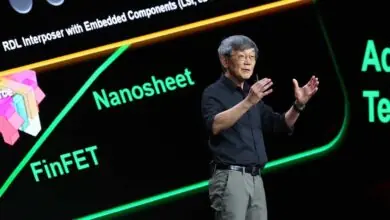
This stance places Huang at odds with other major AI leaders, including Sam Altman of OpenAI and Dario Amodei of Anthropic, who have called for stricter government regulation. However, Huang’s call for dialogue aligns with recent diplomatic movements. In September, U.S. Treasury Secretary Scott Bessent discussed a possible U.S.-China AI dialogue with Chinese counterpart He Lifeng, including a channel for incidents up to a national security level. A Chinese readout of the Trump-Xi meeting also cited Xi as saying the two sides could continue talking about AI’s risks and benefits to prevent misuse.
While addressing geopolitical strategy, NVIDIA is actively expanding its industrial footprint in Europe. The company is currently showcasing technology across the region, culminating in the GTC Berlin conference scheduled for October 20-22. In Sweden, Huang attended an AI Ecosystem Reception in Stockholm, where he emphasized the need to move from general intelligence to specialized domain expertise. “AI needs domain expertise. General intelligence is not sufficient to come into manufacturing, into drug discovery and become proficient,” Huang said. He encouraged local infrastructure companies and startups to connect to leverage available compute capacity, stating, “We have the momentum now starting to build, and once the flywheel goes, the sky is the limit.”

During the same Sweden visit, Volvo Cars announced an expanded partnership with NVIDIA to enhance safety in automated driving technology for future vehicles. The collaboration builds on a decade-long relationship between the two companies. A Volvo vehicle, displayed outside the reception venue, showcased autonomous driving technology built on NVIDIA AI and accelerated computing platforms. This announcement highlights NVIDIA’s continued integration into the automotive sector, focusing on specialized applications of AI rather than general-purpose models.
NVIDIA shares traded down 1.90% intraday as of 11:00 a.m. ET on the day of Huang’s London briefing. As the company prepares for GTC Berlin, the focus remains on bridging the gap between general AI capabilities and specific industrial applications. The upcoming conference will likely feature further details on how these specialized models are being deployed in manufacturing and other high-stakes industries. The dialogue between U.S. and Chinese tech sectors will remain a central theme, with both governments and private industry leaders seeking to establish frameworks for safe and cooperative development.