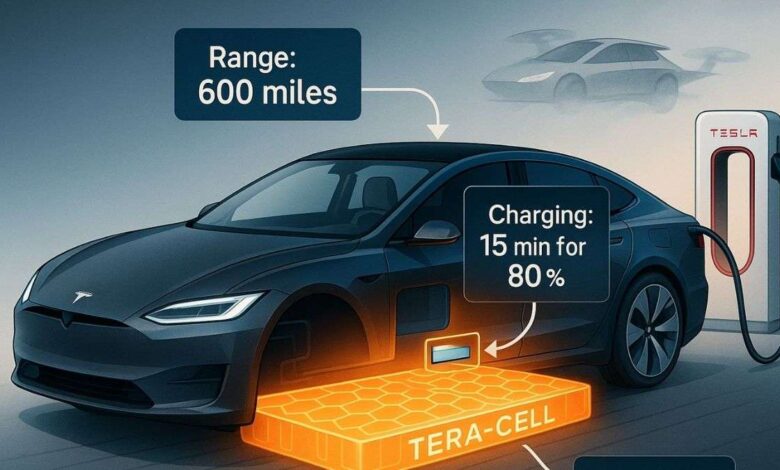
These specifications address two primary barriers to mass EV adoption: limited driving range and long charging times. Current mainstream EVs typically offer between 250 and 350 miles of range, a figure that can be reduced by highway speeds, cold weather, or towing. A 600-mile range would allow drivers to complete long-distance trips, such as a round trip between Los Angeles and San Francisco, on a single charge. Furthermore, the 15-minute charging window for an 80% charge is comparable to the time required to refuel a conventional gasoline vehicle. This reduction in charging time may improve the viability of EVs for high-utilization consumers, including ride-sharing services and fleet operators, by minimizing downtime.
Tesla also linked the Tera-Cell technology to its long-term ambitions in aviation. Elon Musk has previously discussed the development of a Tesla flying car, noting the extreme energy requirements for electric vertical take-off and landing (eVTOL) aircraft. Vertical lift requires substantial energy, often referred to as a “thrust tax,” which limits payload and range in current eVTOL designs. The reported 40% increase in energy density provides a more compact and lighter power source, potentially enabling greater flight duration and payload capacity. While the flying car remains a future concept, the Tera-Cell is positioned as a foundational component for such applications.
The announcement also counters recent narratives that Chinese manufacturers hold a definitive lead in battery innovation. Companies such as CATL and BYD have advanced Lithium Iron Phosphate (LFP) and solid-state battery concepts, offering lower costs and improved safety profiles. By revealing the Tera-Cell, Tesla aims to reassert its technological position in the global market. The reported energy density gain addresses the specific performance metrics—range and charge speed—that have been critical differentiators in the EV landscape. The technology represents a shift from incremental improvements to a substantial leap in energy storage capability, with implications for both terrestrial and aerial transportation sectors.