
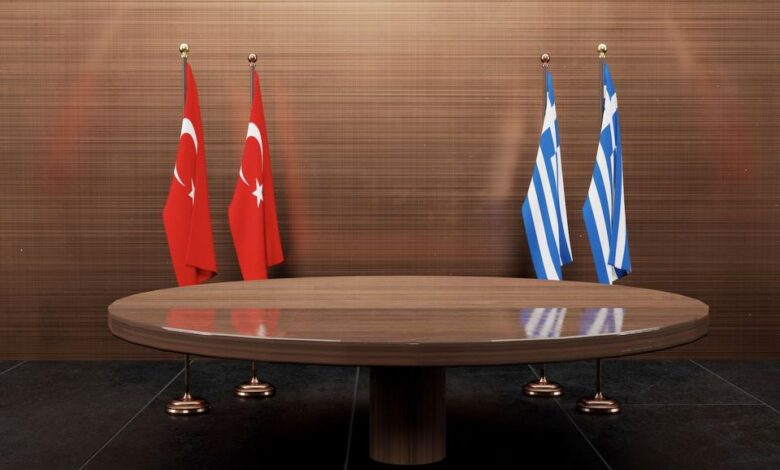
The timing of the Turkish decree, issued in August 2026, is viewed in Athens as deliberate. It follows closely on the heels of Greece’s announcement of its own Special Spatial Planning Framework for Tourism and the establishment of two marine parks in the Ionian and Cyclades islands earlier in the year. While Greece’s parks were situated within its recognized territorial waters, Turkey’s new zones cover spaces between Greek islands, effectively creating a maritime cordon that restricts communication and navigation between them. In the case of the southern park, located east of Rhodes, the designation surrounds the Greek island of Kastellorizo, raising concerns that Turkey seeks to isolate the island from the rest of Greece by imposing conditions on sea access.
Greece’s Foreign Ministry responded swiftly, stating that the establishment of marine parks in areas outside Turkey’s territorial waters has no legal validity. Under the Law of the Sea, marine protected areas defined unilaterally by a state cannot exceed the extent of its territorial waters. In disputed international waters, joint agreement between neighboring states is required. By overriding this principle through a presidential decree, Ankara is effectively transforming international waters into a zone where it exercises special powers, potentially restricting high seas freedoms such as fishing and marine scientific research.

This development is part of a broader shift in how Turkey approaches its disputes with Greece. Historically, Ankara centered its grievances on the sovereignty of Greek islands and the width of territorial waters. Today, the conflict has expanded to include energy infrastructure and environmental policy. Greece’s new renewable energy framework, which includes plans for offshore wind farms, has drawn fresh objections from Turkey. Ankara argues that Greece cannot develop such projects in areas where sovereignty is disputed, challenging the practical effect of Greek jurisdiction. Similarly, the routing of electrical cables and the operation of cable ships in these waters force both governments to act on competing claims, making diplomatic postponement difficult.
The escalation occurs against the backdrop of a fragile détente that began in early 2023 following the devastating earthquake in Turkey, which prompted substantial aid from Greece. The two nations signed the Athens Declaration on Friendly Relations and Good-Neighbourliness in December 2023, expanding cooperation in migration, trade, and tourism. However, this improved atmosphere did little to resolve the underlying maritime disputes. Instead, it may have emboldened Ankara to pursue its “Blue Homeland” (Mavi Vatan) doctrine more aggressively. This revisionist concept claims exclusive economic zones for Turkey in the Aegean and Eastern Mediterranean, challenging the sovereignty of numerous Greek islands and islets. Until now, the doctrine remained largely theoretical, but the use of marine parks represents a move to formalize these claims through legislative and administrative actions.
Military tensions have also risen in parallel with the diplomatic dispute. Greek authorities have recorded frequent flights by Bayraktar drones around Limnos and Samothraki since mid-August. President Recep Tayyip Erdoğan has warned Athens against reinforcing islands that Turkey considers demilitarized under international treaties, a position Greece firmly rejects. In response, Greece is proceeding with the Achilles Shield program, an air and missile defense initiative developed with Israel, reflecting its concern over Turkey’s significant military superiority in the region.
While Erdoğan has publicly insisted that Turkey is not Greece’s enemy, the actions on the ground suggest a different trajectory. The designation of marine parks at the farthest limits of Greek maritime borders is seen as a potential precursor to further unilateral moves. If successful, this strategy could create a suffocating cordon around Greek islands, making them vulnerable to Turkish pressure. The immediate consequence is a halt to the cooperative momentum of the past three years, with both nations now navigating a renewed standoff where environmental protection serves as a proxy for asserting geopolitical dominance.