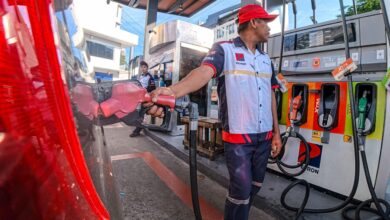


The proposed increase represents a significant jump in consumer costs. For a standard 50-litre tank, the cost of filling up with 93-unleaded petrol would rise by roughly R133, pushing the total price towards R1,471. In coastal areas, where prices are typically lower due to different logistics and tax structures, 95-octane petrol could increase to approximately R28.88 per litre from the current R26.05 per litre. Similarly, 95-octane petrol inland is projected to climb to R29.75 per litre from R26.92 per litre.
Diesel Prices Surpass R33 Inland
Diesel users face similarly substantial increases, with the higher-grade 0.005% sulphur diesel projected to reach approximately R33.06 per litre inland, up from R30.05 per litre. The more common 0.05% diesel is expected to rise to R31.72 per litre inland, compared with the current R29.11 per litre. At the coast, the 0.005% diesel price could reach R31.80 per litre, while the 0.05% variant is projected at R30.85 per litre.
The CEF’s latest data, published on September 21, shows that the projected increases have grown since the previous assessment on September 14. At that earlier point, the under-recovery for 93-octane petrol was approximately R2.29 per litre, compared with the current R2.66 per litre. The under-recovery for 95-octane petrol has also widened, moving from R2.41 per litre to R2.83 per litre. Diesel under-recoveries have followed a similar trend, with the 0.05% diesel under-recovery increasing from R2.04 per litre to R2.61 per litre, and the 0.005% diesel under-recovery rising from R2.41 per litre to R3.01 per litre.
Geopolitical Factors Drive Costs
The primary driver behind these rising costs is the international petroleum product price, which has been pushed higher by escalating tensions in the Middle East and shipping disruptions around the Strait of Hormuz. These geopolitical risks have increased the cost of importing refined fuels into South Africa. While movements in the South African rand have provided some offset to the rising international prices, this relief has been relatively small compared to the magnitude of the global price surge.
The CEF mechanism adjusts fuel prices monthly to reflect changes in international crude oil and product prices, as well as currency movements. The “under-recovery” figures cited in the data represent the difference between the current retail price and the calculated price based on international benchmarks. When this figure is positive, it indicates that retail prices are lagging behind the true cost of imports, necessitating an increase to restore the fund’s balance. Conversely, a negative figure would lead to a price cut.
It is important to note that these figures are projections based on data available as of September 21. The final adjustments remain subject to change before the end of the month, as international petroleum product prices and the rand exchange rate continue to fluctuate. Market participants and consumers will need to monitor these variables in the coming days to determine the exact magnitude of the October hike.
Impact on Consumers and Industry
The projected increases will place significant pressure on household budgets and industrial operations. Transport costs, which are a major component of the cost of goods and services, are likely to rise, potentially feeding into inflation. For the logistics sector, the jump in diesel prices could further squeeze margins for trucking and freight companies, which operate on thin profit margins and are highly sensitive to fuel cost volatility.
The timing of the increase, coinciding with a period of heightened global energy uncertainty, underscores the vulnerability of South Africa’s fuel supply chain to external shocks. While the country produces its own crude oil and gas, a significant portion of its refined petroleum products must be imported, exposing domestic prices to global market dynamics and geopolitical risks in key shipping routes.
As the month progresses, the final price determination will depend on the closing values of international benchmarks and the rand-dollar exchange rate. If the current trend of rising international prices continues, the final hike could exceed the current projections, adding to the economic burden on South African consumers and businesses already grappling with high living costs.