
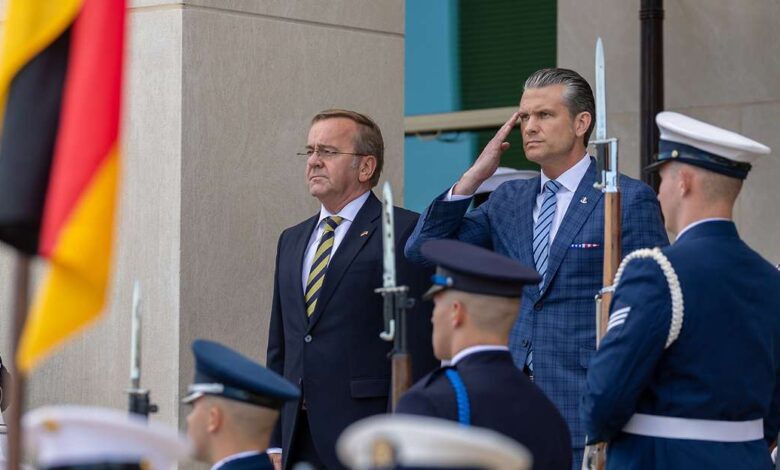
The declaration outlines plans to strengthen supply chains and improve technology sharing between the two nations. It includes provisions for licensed production and closer cooperation on maintenance and servicing to ensure that advanced systems are available more reliably. Both ministers stated that these measures are designed to address the heightened demand for weapons and ammunition, allowing for a more robust response to current security requirements.
Hegseth emphasized the importance of leveraging German industrial capabilities to support broader NATO defence goals. During the meeting, he highlighted Germany’s contribution to strengthening the alliance’s collective security posture. The two officials agreed that closer industrial links would enable a more efficient allocation of production resources, reducing bottlenecks in the supply chain for critical military hardware.
“Germany has a strong industrial base, highly skilled workers and cutting-edge technological expertise,” Pistorius said. “This will enable us to create additional production capacity.” His remarks underscored the role of Germany’s manufacturing sector as a key asset in the transatlantic partnership. The declaration builds upon existing collaborative efforts, providing a structured approach to scaling up production capabilities in the near term.
Germany and the United States already cooperate on several significant defence projects. Notable examples include the production of the F-35 stealth fighter and the planned manufacture of guided missiles for the Patriot air defence system in Germany. The new agreement extends this cooperation by formalizing the intent to share technology and expand joint research and development initiatives. By aligning production schedules and standards, the two nations aim to streamline the procurement process for complex military equipment.
The move reflects a broader strategic shift toward diversifying and securing defence supply chains. As demand for military hardware rises, both governments view industrial integration as a critical component of their defence strategy. The declaration does not introduce new weapons systems but rather creates the administrative and industrial mechanisms necessary to produce existing and future platforms more efficiently.
With the signing of the declaration, the focus now turns to the implementation of specific joint projects. Officials are expected to identify priority areas for licensed production and technology transfer in the coming months. This industrial cooperation is intended to complement existing military deployments and ensure that allied forces have consistent access to modern defence capabilities.