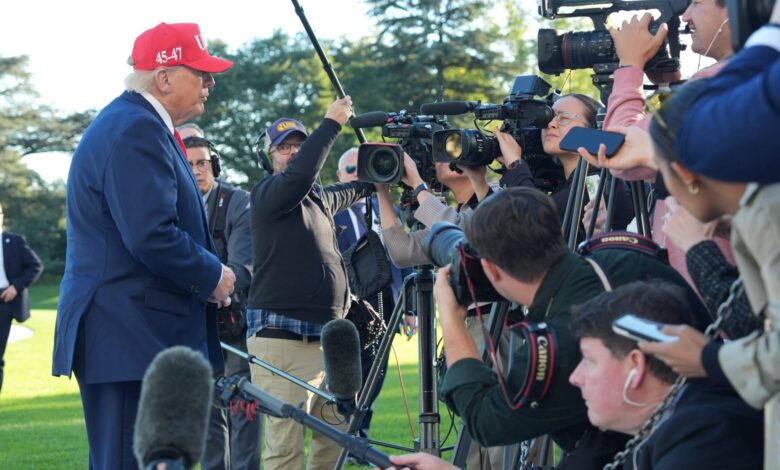
U.S. President Donald Trump addressed the situation on Tuesday, revealing he has scheduled a call with Russian President Vladimir Putin to discuss the case. “We’ll be able to report about it, probably tomorrow,” Trump told reporters at the White House, noting that the U.S. intelligence community is engaged in “very deep discussions” regarding the incident. When asked about the nature of the threat, the President explicitly stated that the United States does not believe the suspected plague cases are the result of a bioweapon. “We don’t think so,” he said, adding that Russian authorities have indicated the situation is “under control” and that they are sharing information with U.S. counterparts.
Clinical Context and Initial Reports
Health authorities in Russia initially attributed the death of the female employee to pneumonia of unknown cause. However, the location of her workplace—a specialized institute dedicated to combating plague—led to broader scrutiny. Reports have since emerged regarding a potential second case of the disease, prompting the UN health agency to call for greater transparency from Russian officials. Despite these developments, Russian authorities have played down public concern, asserting that the general population faces no risk.
Plague, caused by the bacterium Yersinia pestis, is a zoonotic disease that can manifest in different forms, including bubonic, septicemic, and pneumonic plague. While historical outbreaks have posed significant threats, modern medical surveillance and treatment have made large-scale epidemics rare in developed regions. The distinction between a natural outbreak and a deliberate release remains a critical point of analysis for international health security experts.
International Obligations and Transparency
As a member of the international community, Russia is bound by the International Health Regulations (IHR), which require countries to detect, assess, and report events that may constitute a public health emergency of international concern. However, these regulations are legally binding agreements that do not carry financial fines or penalties for non-compliance or delays in reporting. This lack of enforcement mechanisms has historically complicated efforts to ensure timely and complete data sharing during emerging health threats.
The WHO emphasized its communication with Russian authorities following the initial reports last week. The organization’s position that the risk outside Russia is “very low” suggests that current data indicates limited transmission potential beyond the immediate area of the incident. Nevertheless, the agency’s call for more transparency underscores the importance of open data exchange in accurately assessing the scope and nature of the outbreak.
Diplomatic and Geopolitical Context
The diplomatic engagement over the plague case occurs against a backdrop of heightened geopolitical tension. The Trump administration faces an October 18 deadline to determine which Russian entities will be sanctioned under the Lindsey O. Graham Sanctioning Russia and Iran Act, signed into law on September 18. Ukraine has provided a list of Russian companies, vessels, and individuals it recommends for sanctions. While the health incident is being treated as a separate matter of scientific and diplomatic interest, the concurrent timing adds a layer of complexity to U.S.-Russia relations.
President Trump described plague as a “rough disease,” reflecting a historical perspective on a pathogen that has been largely controlled through public health measures and antibiotics. He noted that while the disease was once more manageable, current conditions require careful monitoring. His remarks suggest a willingness to engage with Moscow on the health crisis, even as other diplomatic channels remain strained.
Uncertainties and Next Steps
Key questions remain regarding the exact cause of the initial death and the status of the reported second case. Whether the cases are linked to the research institute’s operations or represent a natural occurrence is under investigation. The absence of confirmed widespread transmission supports the WHO’s low-risk assessment, but the situation remains fluid. International health experts will likely await further data from Russian epidemiologists to confirm the scope of the outbreak and to ensure that appropriate containment measures are in place.
For now, the focus remains on verifying the nature of the pathogen and ensuring that transparent information flows between national health authorities and international bodies. The upcoming dialogue between the U.S. and Russian presidents is expected to clarify the current status of the investigation and the level of cooperation between the two nations in addressing this public health concern.