The initial reports indicated that at least eight people had been killed in the strikes. However, as rescue operations continued and the full extent of the damage became clearer, the death toll rose. Ivan Fedorov, co-chair of the Zaporizhzhia Regional Council of Defense, updated the figures, confirming that the number of fatalities had increased to 11. Among the dead were three children. The attack also resulted in 16 injuries, including three more children, with two reported to be in a critical condition.
The use of guided aerial bombs against residential infrastructure underscores the continuing pattern of Russian military strategy in the region, which has frequently targeted civilian housing and utility networks. The specific engagement of multi-story apartment buildings indicates a high-precision strike capability, designed to maximize impact on populated areas. Such tactics not only inflict immediate human loss but also create long-term logistical and humanitarian challenges for the affected community, requiring extensive debris clearance and structural assessment before residents can safely return.
In the immediate aftermath of the bombing, the fate of several residents remained unknown. At the time of the initial update, 12 people were listed as missing. As the death toll climbed to 11, authorities did not immediately clarify how many of those missing were confirmed dead or still trapped. Search and rescue teams continued to comb through the rubble of the destroyed buildings, working to locate survivors or recover the remains of the deceased. The uncertainty surrounding the missing persons adds a layer of psychological strain to the physical destruction, as families wait for confirmation of their loved ones’ fates.
The attack has prompted a formal response from local authorities. On July 11, the city of Zaporizhzhia declared a day of mourning for those who perished in the Russian strike. This public acknowledgment serves to unite the community in grief and to formally recognize the severity of the incident. The declaration of mourning is a significant administrative and social step, pausing normal civic activities to honor the victims and support the bereaved families.
The incident in Zaporizhzhia is part of a broader intensification of hostilities across the front line. While the specific details of the air defense response in Zaporizhzhia were not detailed in the immediate reports, the successful impact of the bombs suggests that either air defense systems were overwhelmed, bypassed, or unable to intercept the specific trajectory of the guided munitions. The deployment of such weapons against urban centers highlights the persistent threat to civilian populations in cities that remain under active attack, complicating efforts to maintain normalcy and economic activity in these regions.
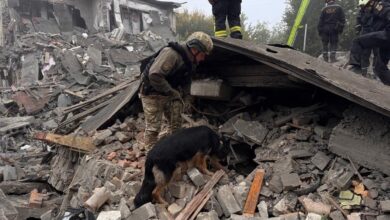
Rescue efforts continue at the site of the destroyed apartment blocks. The nature of the damage—caused by high-explosive guided bombs—means that structural collapse is extensive, making rescue operations slow and dangerous. International and domestic humanitarian organizations often step in to assist with debris removal and medical support in such scenarios, though the primary responsibility for the immediate search and recovery lies with local emergency services and military engineering units.
The loss of life, particularly the deaths of children, has drawn stark attention to the human cost of the conflict. The attack on Zaporizhzhia serves as a grim reminder of the vulnerability of civilian infrastructure in modern warfare, where precision-guided munitions can turn residential neighborhoods into zones of destruction. As the day of mourning proceeds, the focus remains on the recovery of the missing and the support of families who have lost loved ones in one of the deadliest strikes on the city in recent weeks.
Further investigations into the specific types of munitions used and the origin of the launch platforms are likely to follow, but the immediate reality for the residents of Zaporizhzhia is one of loss and uncertainty. The next confirmed development will be the final count of the missing and the commencement of reconstruction efforts, a process that will likely take months or years to complete.