
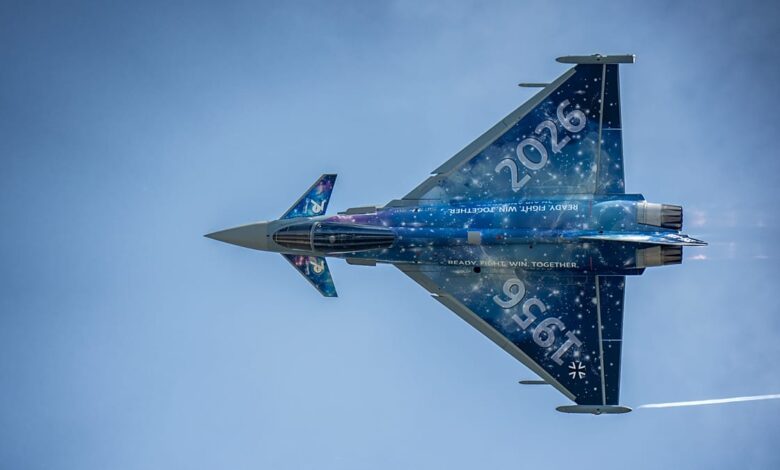
The dissolution of the joint New Generation Fighter program was confirmed by the German government in a parliamentary response summarized on September 15, 2026. The administration stated that the Next Generation Weapon System (NGWS) program, the core technical framework of FCAS, is expiring under its existing contracts. An early conclusion of the fighter portion of the agreement is currently under negotiation, with Airbus indicating that Phase 1B contracts conclude at the end of 2026. This abrupt ending leaves a void in the European defense architecture that Team Gen 6 is designed to fill, potentially altering the balance of power among European aerospace giants.
While the manned fighter component of FCAS has unraveled, the unmanned wing of the program has achieved a distinct technical milestone. MBDA, in collaboration with MBDA France, MBDA Germany, and Spanish partner SATNUS, has cleared the preliminary design review (PDR) for the Remote Carrier Compact (RC) demonstrator. This collaborative combat drone is designed to operate alongside crewed platforms rather than as a standalone asset, with mission areas focused on escort, reconnaissance, and direct engagement of high-value targets.
The PDR was validated in the summer of 2026, following extensive technical meetings in Spain, France, and Germany. Participating air force personnel, including military pilots from the three nations, reviewed the design and provided feedback. To reach this stage, MBDA completed the demonstrator’s design, produced representative mock-ups, and built a digital twin of the aircraft. Ground testing covered subsystems, structural integrity, and integration, while wind tunnel tests and simulations were utilized to validate the design and initial algorithms. Illustrations released alongside the announcement depict the vehicle being launched from both an Airbus A400M transport aircraft and a FREMM frigate, highlighting its multi-domain potential.
Despite the positive technical progress, the future of the Remote Carrier Compact is clouded by the same political and industrial uncertainties that killed the FCAS fighter program. MBDA acknowledged that the initial NGWS framework, which funded the work, is ending. While Lionel Mazenq, Vice President of MBDA’s programs incubator, stated that the company is committed to carrying on the development, the announcement did not specify how the production and flight-testing phase would be funded once current contracts expire. The company has maintained a 2029 first-flight target, a date unchanged since the concept was first presented at the Paris Air Show in June 2023.
The divergence between the successful technical review of the drone and the collapse of the manned fighter program illustrates the fragility of large-scale European defense collaborations. While the RC demonstrator has cleared its key hurdles, its operational future now depends on whether a new funding mechanism can be established outside the now-terminating FCAS structure. For Europe, the launch of Team Gen 6 in Berlin signals a move toward a more fragmented but potentially more agile approach to next-generation air dominance, though the long-term implications for continental defense integration remain open to debate.