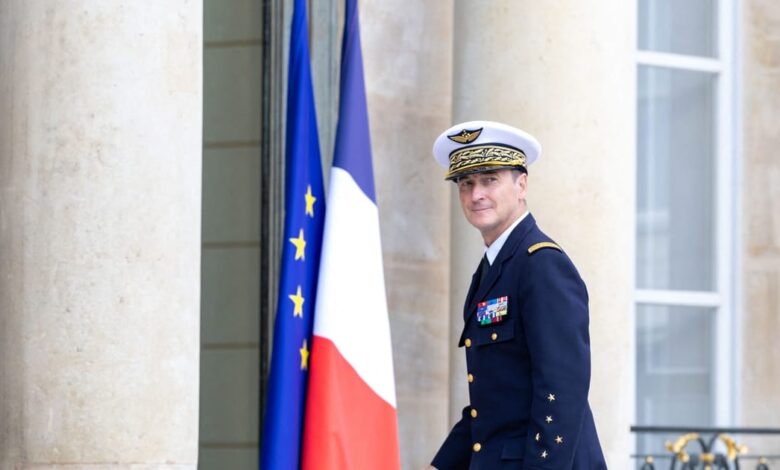
Mandon stated that while the outcome was not ideal, the joint work performed by both nations’ land forces over several years to define the concept for a future tank was not wasted. “The basic principles for creating the tank have been approved, this work was not in vain,” Mandon said, while noting that from an industrial standpoint, the development was “not very good news.” He described the situation as an “important choice by Germany” rather than a complete failure of the initial collaborative efforts.
The MGCS initiative was designed to replace the French Leclerc and German Leopard 2 main battle tanks with a single integrated land combat system. The industrial consortium behind the project included KNDS France, KNDS Germany, Rheinmetall, and Thales. However, the program faced prolonged delays, industrial disputes, and political tensions throughout its development. Disagreements among participants concerned the distribution of tasks between French and German companies, the financing of the program, and the selection of technologies, which caused the implementation schedule to shift repeatedly.
One significant factor in the project’s demise appears to be a mismatch in timelines for operational readiness. German companies are already working on their own Leopard 3 tank, with the first examples planned to enter service in the early 2030s. In contrast, the MGCS tank was not expected to reach combat readiness before the 2040s. This discrepancy likely contributed to Berlin’s decision to pursue its own path, effectively ending the joint venture.
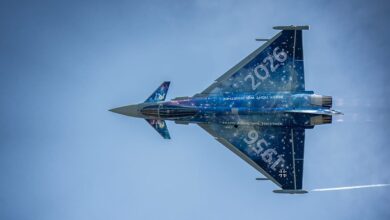
The collapse of the MGCS project comes just four months after the abrupt termination of another high-stakes Franco-German defense industrial program, the Future Combat Air System (FCAS). The FCAS, aimed at developing a next-generation fighter jet, was halted in the summer of 2026 after French President Emmanuel Macron and German Chancellor Friedrich Merz concluded that Dassault and Airbus would be unable to reach a compromise on the development of a joint combat aircraft.
While Paris and Berlin have previously insisted that the MGCS project was still alive, General Mandon’s admission marks one of the first times a French official has publicly acknowledged that the plans have faltered. The project was launched in 2017, but development slowed significantly after Rheinmetall joined the consortium in 2019, as industrial and political disagreements deepened between the two nations.
The failure of the MGCS adds to a series of setbacks for European defense integration. With the loss of both the joint tank and the joint fighter jet programs, France and Germany must now navigate their respective defense industrial strategies independently. For France, this means reassessing its ground force modernization plans without the anticipated German partnership. For Germany, the focus remains on the domestic Leopard 3 program, which is set to advance toward service entry in the coming decade.
German defense officials have not provided an immediate public comment on the specific details of the withdrawal, though the decision aligns with Berlin’s broader strategic shifts in recent months. The loss of the joint industrial framework may have implications for other defense collaborations between the two NATO allies, as trust in joint procurement mechanisms is tested by these consecutive project terminations.