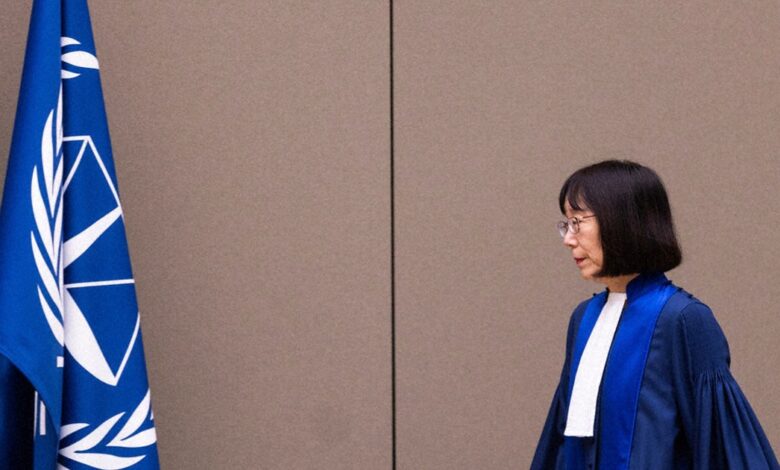
The Japanese government’s protest came in direct response to extradition requests submitted by Russia’s Prosecutor General’s Office on Thursday. Moscow has sought the extradition of nine ICC staff members, including court President Tomoko Akane, a Japanese national, and eight other officials based in the Netherlands. These demands follow warrants issued by the Moscow City Court, which sentenced the nine individuals in absentia to prison terms last year.
The root of this legal confrontation lies in the ICC’s 2023 arrest warrant for Russian President Vladimir Putin, issued in connection with the war in Ukraine. Russian authorities have consistently accused the ICC of violating fundamental principles and norms of international law by issuing warrants against Russian citizens without evidence. For Tokyo, the move by Moscow represents not just a legal dispute, but a broader threat to the integrity of international judicial institutions in which Japan has invested considerable diplomatic capital.
Ozaki stated that Japan had already registered its objections through official channels with Moscow and indicated it would “respond appropriately, including lodging additional protests.” This firm stance underscores the delicate position Japan occupies in the current geopolitical landscape. The nation has long supported the ICC as a cornerstone of international rule of law, yet it must balance this commitment with its complex bilateral relationship with Russia and its critical security alliance with the United States.
Relations between Tokyo and Moscow have deteriorated significantly in recent months. Tensions spiked after Putin visited a Pacific Island chain claimed by Japan in August. The Soviet Union captured these islands from Japan in the final days of World War II, a historical grievance that has prevented the two nations from signing a peace treaty formally ending their hostilities. The extradition requests add a new layer of friction to an already strained diplomatic environment, complicating any potential future negotiations regarding the disputed territories or broader regional stability.
Amidst this trans-Pacific dispute, a parallel development in Washington added further complexity to Japan’s strategic calculus. Later on Friday, the United States announced sweeping new sanctions against the ICC, joining earlier measures that targeted Akane and approximately a dozen other court staffers. The U.S. has campaigned to dismantle or weaken the tribunal due to investigations into the United States and its allies, including Israel. This creates a unique diplomatic bind for Japanese Prime Minister Sanae Takaichi, who has faced domestic criticism for navigating the tension between her close alliance with the U.S. and Japan’s backing of the Netherlands-based court.

Reacting to the new U.S. sanctions, Takaichi reiterated Japan’s commitment to the ICC and the rule of law in a statement posted on social media late Friday. She described the U.S. measures as “incompatible with Japan’s consistent position” and expressed deep concern. However, she clarified that Tokyo would continue reaching out to Washington, aiming to maintain the alliance while providing necessary support to ensure the ICC can function and fulfill its role. She also confirmed that Japan would keep communicating with Akane, the court, and related countries.
The situation highlights a growing fracture in the international community regarding the scope and authority of global judicial mechanisms. For Japan, the immediate priority is to shield its national, Akane, from Russian legal overreach while carefully managing the fallout from its largest security partner’s punitive actions against the same institution. As Tokyo lodges further protests in Moscow and engages with Washington, the fate of the nine ICC officials and the broader standing of the court in international politics remain in limbo, caught between competing geopolitical interests.