The 2026 prize was awarded to Navi Pillay, an 85-year-old South African jurist and former United Nations High Commissioner for Human Rights. The Norwegian Nobel Committee recognized Pillay for her lifelong work in advancing international human rights law and ensuring accountability for mass atrocities. Her career includes service as a judge on the International Criminal Court (ICC), presiding over the International Criminal Tribunal for Rwanda, and chairing a recent independent UN commission of inquiry that examined civilian casualties and violations in Gaza. Chair Jørgen Watne Frydnes noted that Pillay’s contributions were instrumental in the global prosecution of war crimes, crimes against humanity, and genocide.
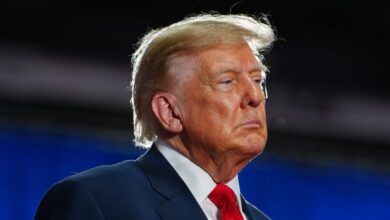
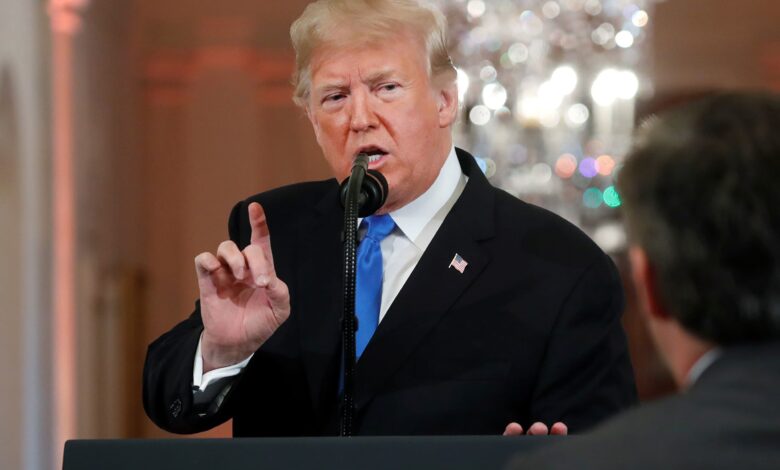
Trump’s reaction to the announcement was immediate and pointed. During his speech, he dismissed Pillay as a “mystery person,” stating, “I never heard of the person. Nobody did.” He accused a “handful of radical ideologues” within the selection body of harboring anti-democratic biases, declaring that the Nobel Peace Prize had been “forever discredited” by their actions. “We will not forget, Norway,” Trump told the crowd, a phrase that underscored the personal nature of the diplomatic snub.
In defending his own candidacy for the prize, the President enumerated a list of foreign policy accomplishments, claiming credit for settling eight wars and preventing conflicts between major powers, including between North and South Korea, Japan and North Korea, and China and Taiwan. He also cited the release of Israeli hostages and the resolution of a conflict in Venezuela. However, these claims were made without citing specific treaties or agreements. The lack of cited evidence has been a consistent feature of his rhetoric regarding these diplomatic interventions, drawing scrutiny from international observers who monitor the verifiability of such geopolitical claims.
The friction between the Trump administration and the Nobel Committee is not new. A similar controversy erupted in 2025 when the committee recognized Venezuelan opposition leader María Corina Machado. At the time, Machado symbolically handed her medal to Trump during a White House meeting, a gesture the President praised as one of mutual respect. The Nobel Committee subsequently issued a formal clarification stating that its honors are legally non-transferable, noting that once a prize is conferred, it cannot be shared, revoked, or transferred. That episode set a precedent for the current tension, where the President views the award not as a neutral recognition of humanitarian work, but as a political statement against his administration.
For Pillay, the announcement was met with a mix of surprise and humor. Reacting from Nuremberg’s historic Palace of Justice in Germany, she initially joked that the announcement “must be a joke.” As applause from supporters grew, she quipped, “If you clap a little bit more, I may share this prize with Trump.” This lighthearted response stands in stark contrast to the President’s heated rhetoric, highlighting the differing perceptions of the award’s significance. For the International Community, the prize serves as a recognition of legal accountability and human rights advocacy, while for the U.S. President, it has become a focal point for asserting his own diplomatic legacy.
The decision to award the prize to Pillay, a figure deeply embedded in the machinery of international justice, signals the Committee’s continued focus on legal accountability for atrocities. By selecting a former ICC judge who oversaw investigations into genocide in Gaza, the Committee reaffirmed its commitment to international law. Trump’s reaction, while politically charged, underscores the growing divergence between the U.S. administration’s foreign policy narrative and the values represented by the Nobel Peace Prize. As the year closes, the “indelible stain” Trump alleged may prove to be a temporary diplomatic flare, but it has further cemented the Nobel Prize in the eyes of the American public as a contested symbol of geopolitical influence rather than a neutral accolade.