Legal Basis of the Judgment
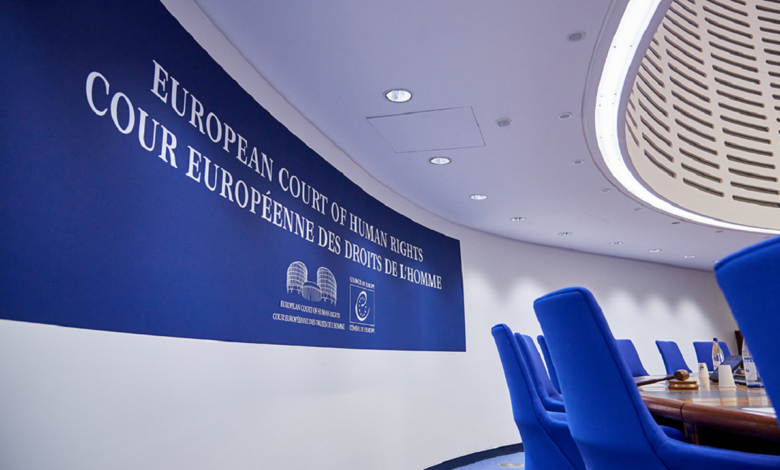
The Grand Chamber’s examination extended beyond the prior rulings to assess the fairness of the entire criminal process that led to Kavala’s conviction. The court found violations of Article 5 § 1 regarding the right to liberty and security, and Article 18, which prohibits the use of restrictions on rights for purposes other than those prescribed by law. Additionally, the court ruled that Turkey violated Article 6 § 1 (right to a fair trial), Article 10 (freedom of expression), Article 11 (freedom of assembly and association), and Article 3 (prohibition of torture).
The violation of Article 3 was grounded in the nature of Kavala’s sentence. The court determined that his aggravated life sentence, which offers no prospect of conditional release and lacks a mechanism for reviewing the justification of continued imprisonment, amounted to inhuman and degrading treatment. The ruling explicitly stated that Turkish courts had, in bad faith, deprived Kavala of his liberty, noting that the measures taken against him were predominantly motivated by an ulterior purpose: to punish him for his role in the 2013 Gezi Park demonstrations and to silence him as a human rights defender.
Procedural History and Political Context
Kavala has been detained since October 2017. His legal battle before the ECtHR spans three distinct proceedings. The first judgment, issued in December 2019, found that his pre-trial detention was unlawful and ordered his immediate release. When Turkey failed to comply, the Council of Europe’s Committee of Ministers initiated infringement proceedings, leading to a 2022 Grand Chamber ruling that Turkey had failed to fulfill its obligations under the Convention. The current 2026 judgment addresses a new application filed in January 2024, focusing on developments after the 2019 ruling, including his April 2022 conviction for an alleged attempt to overthrow the government and the subsequent upholding of his aggravated life sentence in September 2023.
The court’s judgment highlights a “systemic problem” in Turkey, identifying structural shortcomings that affect the independence and impartiality of the judiciary. It noted that the prosecution failed to establish a concrete link between Kavala and acts of violence during the protests, instead relying on evidence related to his protected civil society work and advocacy.
Reactions and Implementation
The immediate reaction from Turkish authorities indicated resistance to the ruling. Mehmet Ucum, a legal adviser to President Recep Tayyip Erdoğan, characterized the decision as politically motivated and suggested that Turkey could reconsider its participation in the European human rights protection system, though no official announcement of withdrawal from the Convention has been made. The Turkish government continues to maintain that its courts are independent.
In contrast, Kavala called on Turkey to comply with the order, stating that implementing the decision is a fundamental obligation of the rule of law. He emphasized that a person cannot be deprived of the right to live freely without convincing evidence of a crime. The court awarded Kavala €70,000 in compensation for non-pecuniary damage and €43,342.57 in legal costs.
The ruling coincides with Turkey’s “Terror-Free Türkiye” initiative, a political project aimed at addressing the Kurdish issue through parliamentary reform. While this initiative includes discussions on rule of law and democratization, analysts note a contradiction in failing to implement ECtHR judgments concerning political figures while seeking to align with European democratic standards. As the next confirmed legal step, Turkey is now under a binding obligation to execute the Grand Chamber’s final judgment, a process that has historically faced significant delays in this specific case.