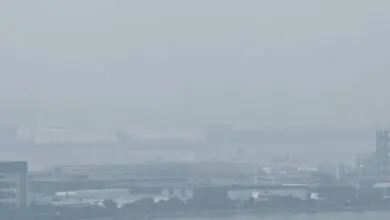
The PSI is a 24-hour rolling average of six key air pollutants. A range of 101 to 200 classifies air quality as unhealthy. In contrast, hourly PM2.5 readings serve as a gauge for current air conditions; scores from 0 to 55 represent normal values, 56 to 150 indicate an elevated concentration of fine particles, and 151 to 250 are considered high. Throughout October 12, hourly PM2.5 levels in the western and central regions fluctuated between these elevated and high bands. In the west, readings briefly dipped back into the elevated band at 4 p.m. before entering the high band again at 5 p.m., reaching 156 micrograms per cubic meter.
Transboundary Smoke and Meteorological Factors
The National Environment Agency (NEA) attributed the persistent haze to moderate to dense smoke plumes observed from fires in Kalimantan and southern Sumatra. Prevailing south-easterly winds have been driving this smoke toward Singapore. While showers fell over parts of Singapore and the surrounding region on October 12, the NEA noted that dry conditions were forecast to persist over parts of southern Sumatra and Kalimantan.
In its evening advisory, the NEA forecast that air quality would continue to be in the unhealthy range over the next 24 hours, a projection similar to the forecast issued the previous day. The agency warned that while local showers may bring some improvement to the hotspot and smoke haze situation, there remains a risk of transboundary haze occurrence, particularly over areas experiencing prolonged dry conditions.
This episode marks a significant shift in regional air quality trends. Air quality in Singapore first breached unhealthy levels on September 4, 2026, the first time this threshold was crossed since October 2023. The highest hourly PM2.5 reading recorded in 2026 to date was 171 micrograms per cubic meter in the western region on October 9.
Public Health Measures and Contingency Plans
As the haze persists, the government has activated health-related interventions. On October 12, subsidised treatments for haze-related conditions came into effect at Public Health Preparedness Clinics (PHPCs) and polyclinics. Health Minister Ong Ye Kung announced that all Singaporeans would be eligible for subsidies at polyclinics, while eligibility at participating PHPCs would be limited to specific groups, including children and seniors.
Earlier in the week, on October 9, the government’s Haze Task Force outlined a series of escalation measures should air quality deteriorate further. If the 24-hour PSI exceeds 200, moving into the “very unhealthy” range, N95 masks will be distributed to more vulnerable individuals. The Ministry of Education (MOE) will consider closing schools if the air quality forecast for the following day indicates the hazardous range, defined as a 24-hour PSI exceeding 300. In the event that school closures coincide with national examinations, the affected papers will be rescheduled and the examination period extended.
Residents have been observed taking protective measures, with many wearing masks in public areas such as Orchard Road as hazy conditions reduced visibility and air clarity. The situation remains under close monitoring by the NEA, which continues to issue daily advisories based on satellite data and ground-level sensor readings from regional fire hotspots.