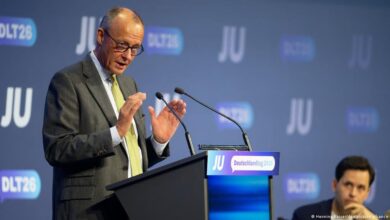
The impasse is rooted in deep ideological divides within the governing coalition. Bart De Wever, the Prime Minister, has issued stark warnings regarding the trajectory of the nation’s public debt. He has argued that political parties unwilling to abandon entrenched ideological “taboos” risk allowing debt levels to rise to a point where they can no longer be managed without significant loss of prosperity. This framing positions the current budgetary standoff not merely as a technical disagreement, but as an existential threat to Belgium’s economic stability. De Wever’s rhetoric underscores the pressure on coalition partners to compromise on sensitive fiscal issues, a task that has proven elusive during negotiations.
The failure to secure a full agreement has immediate procedural implications. By adopting a one-year budget, the government bypasses the need for a permanent multi-year fiscal framework. This allows the administration to continue functioning and executing current spending levels, but it defers the difficult decisions regarding long-term structural adjustments. In the Belgian political system, where federal powers are divided among the central state and its regional and community entities, such a temporary measure introduces uncertainty for policymakers and citizens alike. It leaves open the question of how debt sustainability will be addressed in the medium term, a concern that has been central to De Wever’s political messaging.
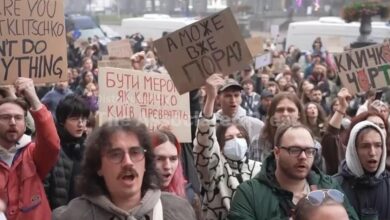
Concurrently, the political standoff has fueled significant social unrest. A national strike against planned government budget cuts has led to violent clashes between protesters and police in Brussels. These disturbances highlight the tangible impact of the proposed austerity measures on ordinary citizens, who are reacting to the prospect of reduced public services or increased costs. The presence of violent confrontations in the capital underscores the tension between the government’s fiscal constraints and public expectations for state support. The strikes and protests serve as a direct challenge to the government’s ability to implement its economic agenda, adding a layer of social instability to the existing political deadlock.
While the sources do not provide specific figures on the scale of the debt or the precise details of the “taboos” in question, the qualitative assessment from leadership is clear: the current path is unsustainable without compromise. The lack of a full agreement suggests that coalition partners remain entrenched in their respective positions, prioritizing their core policy stances over immediate fiscal consolidation. This dynamic is not uncommon in Belgium’s complex federal system, where consensus-building is often slow and fraught with veto points.
The one-year budget serves as a bridge to the future, but it is a precarious one. It allows the government to avoid an immediate fiscal crisis while kicking the most contentious issues down the road. However, the simultaneous occurrence of political gridlock and street-level unrest indicates that the underlying tensions are not being resolved but merely deferred. The government now faces the dual challenge of maintaining political stability within the coalition and managing public dissatisfaction with the status quo.
For citizens, the immediate consequence is a period of uncertainty. The planned budget cuts that triggered the strikes remain a point of contention, and the lack of a permanent agreement means that the scope and timing of these cuts may still be subject to change. The government’s reliance on a provisional framework suggests that it is prioritizing continuity over reform, a strategy that may buy time but does not address the structural imbalances that De Wever has warned against.
The next formal step in this political process will likely involve renewed negotiations as the one-year period progresses. Coalition partners will need to find a way to bridge the gap on fiscal policy, or risk further erosion of public trust and political capital. The outcome of these negotiations will determine whether Belgium can steer toward long-term fiscal sustainability or continues to drift toward the economic risks outlined by its leadership. Until then, the combination of a temporary budget and ongoing social protests remains the defining feature of the Belgian political landscape.