Georgescu’s political trajectory was abruptly halted in December of the previous year when the Romanian Constitutional Court annulled the November election results. The court barred him from participating in a potential second round, citing his campaign’s links to a Russian influence operation. Despite this disqualification, Georgescu had secured 23% of the vote in the first round, a result that snapped expectations and propelled him to prominence. Now, as he faces a battery of criminal cases, his legal status has shifted further with the latest fraud allegations.
The current investigation, led by DIICOT and Romanian police, focuses on allegations that Georgescu was part of an organized criminal group. According to a DIICOT press release, the group allegedly defrauded a Romanian businessman by promising access to multimillion-euro foreign bank financing in exchange for cash guarantees. The prosecutors state that the perpetrators acted by misleading and deceiving the victim, aiming to obtain financial guarantees deposited to access credits. The group allegedly failed to deliver on these promises, resulting in the victim losing more than €1.1 million.
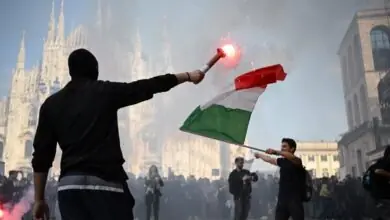
This fraud case is not the only legal burden weighing on Georgescu. He is simultaneously facing two other distinct criminal investigations. One case alleges that he acted against Romania’s constitutional order by planning a violent coup in Bucharest. A separate investigation examines allegations that he promoted fascist ideology. In response to the earlier investigations, Georgescu has protested his innocence, characterizing the cases as “politically motivated.” His supporters, numbering in the dozens, gathered in front of the DIICOT headquarters on Monday, the day he was detained, to show solidarity as he was brought in for questioning.
The political context of Georgescu’s detention is inextricably linked to the annulment of the November election. The Constitutional Court’s decision to disqualify him was based on the finding that his campaign was influenced by Russian operations. This ruling not only invalidated the first-round results but also set the stage for the current legal scrutiny. The convergence of election fraud allegations, coup plotting, and criminal fraud suggests a comprehensive legal strategy by Romanian authorities to address what they describe as organized threats to the state’s integrity.
Opposing views on these legal actions are sharply divided. Georgescu and his supporters view the proceedings as part of a broader political purge, arguing that the criminal cases are designed to silence a legitimate political alternative. They point to the timing of the investigations and the severity of the charges as evidence of bias. Conversely, Romanian authorities and prosecutors maintain that the actions are grounded in factual evidence of criminal conduct, including the specific financial deception documented in the DIICOT release. The distinction between political opposition and criminal culpability remains a central point of contention in the public discourse.
The institutional process at play here involves the DIICOT, a specialized body within the Prosecutor’s Office dedicated to investigating organized crime and terrorism. The involvement of this specific agency, rather than a standard local prosecutor, underscores the severity with which the state views the alleged actions. The move to house arrest, ordered by the appeals court, indicates a judicial assessment that Georgescu poses a risk of flight or interference with the investigation, yet warrants a measure less restrictive than continuous custody.
As the case proceeds, the uncertainty remains high. The outcome of the fraud investigation could have significant implications for Georgescu’s future political viability, should he ever be permitted to run again. Moreover, the parallel investigations into coup planning and ideological promotion could lead to additional charges or convictions. The legal system is currently tasked with determining whether the evidence supports the allegations of an organized criminal group and whether the actions constitute a threat to the constitutional order.
For the Romanian public, the detention of a high-profile presidential candidate serves as a stark reminder of the volatility in the country’s political landscape. The intersection of electoral law, criminal law, and national security concerns creates a complex legal environment where the boundaries between political dissent and criminal activity are being rigorously tested. The next phase will likely involve further hearings and potentially the consolidation of the separate criminal cases into a unified trial, which could define the legal precedent for handling political figures accused of subverting the state.
Georgescu’s situation encapsulates the broader tensions in Romanian politics, where the fight for power is increasingly mediated through legal channels. As the house arrest period continues, the focus will remain on the DIICOT’s findings and the courts’ interpretation of the evidence. The resolution of these cases will not only determine Georgescu’s personal fate but also shape the future of democratic norms and legal standards in Romania.