Chandrasekaran’s position is anchored in regulatory necessity. As an upper-layer Non-Banking Financial Company (NBFC), Tata Sons faces a listing requirement from the RBI to retain its regulatory status. To address this, the board approved a five-year extension of Chandrasekaran’s chairmanship on September 17, a move supported by Vice Chairman Venu Srinivasan despite objections from Noel Tata. The board has also considered a restructuring proposal presented by the Tata Trusts on September 28, which aims to alter the company’s regulatory classification to avoid a mandatory listing. However, this proposal remains subject to board approval and necessary regulatory clearances.
Simultaneously, Noel Tata is navigating significant legal and administrative hurdles. He requires permission from the Maharashtra Charity Commissioner to convene a board meeting of the Sir Ratan Tata Trust (SRTT) to appoint a joint nominee with the Sir Dorabji Tata Trust (SDTT). This nominee is essential to achieve quorum at the Tata Sons annual general meeting (AGM), where the Trusts, which collectively own 66% of Tata Sons, could vote against Chandrasekaran’s reappointment. Sources indicate the Commissioner has yet to grant this permission, with Trusts representatives reporting no feedback from authorities.
The dispute has fractured the unity of the Tata Trusts, the group’s controlling shareholder. Two SDTT trustees, Venu Srinivasan and Vijay Singh, have challenged the process by which the Trusts backed the restructuring proposal. In a letter dated September 30, they stated that no SDTT meeting was held to discuss the proposal before it was sent to the Tata Sons board, and they learned of the accompanying public statement from external sources rather than through internal authorization. They questioned whether the letter represented the collective position of the Trust.
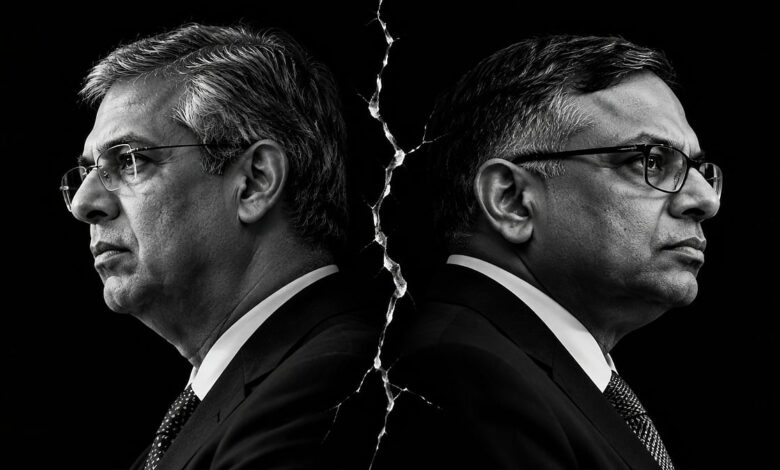
In response to these internal disputes, complaints have been lodged with the Charity Commissioner alleging governance failures and conflicts of interest. Noel Tata and his son, Neville Tata, recently filed caveats in the Bombay High Court and city civil court in response to specific complaints lodged by Srinivasan and Singh. The situation creates a complex governance minefield: Chandrasekaran seeks an independent board structure that would dilute the influence of the principal shareholder, while the Trusts seek to retain veto power over the holding company’s direction.
The immediate next step hinges on the Maharashtra Charity Commissioner’s decision regarding the SRTT board meeting. If permission is granted, the Trusts can appoint a representative for the AGM, potentially allowing them to block Chandrasekaran’s third five-year term. If denied, the momentum favors Chandrasekaran’s path toward an IPO and a restructured board composition.