The central legal question surrounding this indictment is the extent of jurisdiction and the operational reach of criminal networks that coordinate violence across international borders. The FBI’s decision to term the group an OCG underscores the severity of the threat, characterizing the organization not merely as a local gang but as a sophisticated entity capable of recruiting shooters abroad and supplying sophisticated foreign-made weapons to operatives in India. Intelligence officials and investigators have noted that the network utilizes encrypted messaging applications to maintain operational security while directing attacks that generate fear and financial gain.
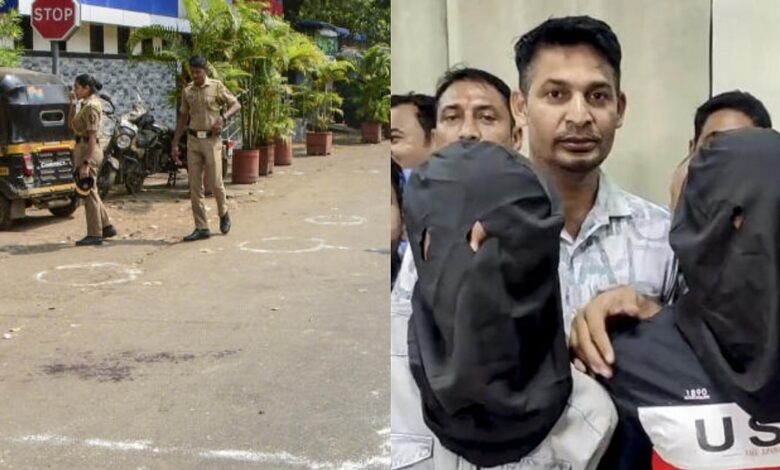
The legal and factual basis for the indictment draws upon a series of verified incidents and police investigations. In the United States, the indictment links Bishnoi and Brar to a global criminal enterprise. In India and abroad, the network’s activities have included targeted shootings and extortion campaigns. A key figure in these operations is Anil Pandit, a 32-year-old native of Haryana’s Panipat district, who is suspected of operating from California. Pandit, who fled India in 2023 after traveling through Thailand and Canada, has been identified by investigators as a coordinator who uses his overseas base to direct shooters in India. His name has emerged in multiple cases, including the June 2026 firing outside a gym in Delhi’s Paschim Vihar area associated with singer Guru Randhawa, and a subsequent shooting in Pune. In these instances, arrested suspects allegedly communicated with Pandit via the Signal messaging app, and foreign-made weapons were recovered, providing a direct evidentiary link to the transnational network.
The most prominent legal and public consequence of the alleged network’s activities is the assassination of Sidhu Moose Wala in May 2022. The 28-year-old musician was killed when his vehicle was blocked and opened upon by gunmen in Punjab. Hours after the killing, Goldy Brar posted on social media claiming credit for the hit. While Brar cited various motives, including the death of an associate named Vicky Middukhera and alleged retaliatory reasons, investigators have noted that a direct, irrefutable link between Moose Wala and those specific prior killings has not been definitively established in public records, though the indictment proceeds on the broader charge of coordinating such violence. This case illustrates the pattern of using high-profile targeted violence to establish dominance and fund operations through extortion of businessmen in the diaspora.
Recent incidents further demonstrate the network’s ongoing operational capability. In early 2026, assailants fired at the car of actor Tiger Shroff in Mumbai’s Juhu district. Two alleged operatives of the Bishnoi gang claimed responsibility for the attack in social media posts, and US-based Anil Pandit also took responsibility. Intelligence officials have assessed Pandit’s claim as genuine, noting that he has sought media attention to divert focus from Brar, whom the FBI is actively searching for. Prior to the Shroff incident, the network allegedly targeted other celebrities, including Ranveer Singh, whose manager received a voice message from a US-registered number demanding Rs 20 crore or threatening the actor’s family. Similar threats and shootings have been associated with Rohit Shetty and Baba Siddique, a Maharashtra politician killed in October 2024. One suspect in the Siddique case was also linked to the Rohit Shetty incident, suggesting a continuous thread of violence orchestrated by the same network.
Legally, the distinction between allegations, media reports, and judicial findings is critical. While Bishnoi denies involvement, the FBI’s indictment represents a formal legal accusation by U.S. authorities. In India, Bishnoi was acquitted in four of seven First Information Reports (FIRs) registered against him in Chandigarh between 2010 and 2012, with three cases remaining pending. However, the current U.S. indictment charges him with a broader, transnational criminal enterprise that transcends these earlier local cases. The Bishnoi Gang itself is listed as a Terrorist Entity by Canada due to its alleged involvement in extortion and shootings targeting the South Asian diaspora in the United States and Canada. This listing adds another layer of international legal scrutiny, restricting the group’s ability to operate or move assets across Canadian borders.
The case highlights the challenge for law enforcement in dismantling networks that remain active despite the incarceration of their alleged leaders. Bishnoi, who completed an LL.B. from Punjab University before his criminal career escalated, is said to coordinate from his prison cell, maintaining influence through subordinates like Brar and Pandit. The FBI’s designation of the group as an OCG signals a shift in how international agencies perceive Indian organized crime, moving from a focus on local dacoity or banditry to a model of global syndicate operations similar to those seen in other parts of the world. The network’s ability to recruit local shooters, fund operations through extortion, and use digital tools to evade detection represents a modernized approach to criminal enterprise that poses a significant threat to public safety and international trade relations.
What remains disputed and unresolved is the full extent of the network’s reach and the specific motives behind each individual attack. While the FBI has indicted the leaders, the actual execution of these crimes relies on a decentralized structure of shooters and facilitators in India and abroad. The investigation into the Tiger Shroff attack, the Guru Randhawa incident, and the Moose Wala assassination continues, with investigators examining the wider network of encrypted communications and weapon supply chains. The next confirmed legal step will likely involve the extradition process or further coordinated law enforcement actions between U.S., Canadian, and Indian authorities to apprehend remaining fugitives like Goldy Brar and dismantle the financial infrastructure supporting the OCG.