
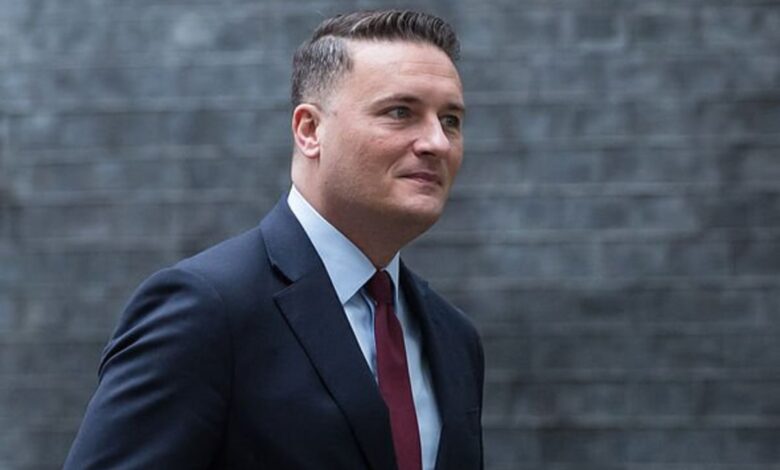
While the resignation is a political event, it has brought into sharp focus the state of the National Health Service (NHS) and the tension between governmental claims of recovery and the lived experiences of patients. In a letter to Prime Minister Starmer, Streeting outlined a series of metrics indicating improvement in the health system since Labour took power in the July 2024 general election. He stated that waiting lists fell by 110,000 in March, which he described as the biggest monthly drop outside of the pandemic period since 2008. Streeting further claimed that ambulance response times for heart attacks and strokes were the fastest in five years, and that Emergency Department (A&E) waiting times, specifically the four-hour metric, were the best in five years.
Streeting also highlighted workforce and satisfaction data, asserting that 2,000 more General Practitioners (GPs) had been recruited and that patient satisfaction had risen from 60% to 74.5% since the government came into office. Additionally, he noted that the government met its target of recruiting 8,500 mental health staff three years early and achieved a 2.8% productivity increase, surpassing the 2% target. “The only question that matters in government is whether we leave our successors a better situation than we inherited,” Streeting wrote, arguing that the NHS was “on the road to recovery.”
However, these official statistics stand in contrast to anecdotal evidence of continued strain on the system. On a recent episode of the BBC program Question Time, host Fiona Bruce was reportedly “visibly shocked” when an audience member revealed his mother had been placed on a 60-week waiting list for an operation. The audience member, Daniel, asked if “corridor care and waiting 60 weeks for an operation” could be considered a world-class service. In response, Streeting acknowledged the crisis, stating, “I’m not saying the NHS is great… and I’m not saying that we’ve solved all the problems.” He argued that the NHS had been damaged over “more than a decade” of previous Conservative rule, citing a 2024 assessment by Professor Andrew Street of the London School of Economics that the party had “left the NHS in intensive care.” Streeting urged the public for patience, stating, “Bear with us, give us a chance, it is going to take time.”
Experts have offered nuanced assessments of Streeting’s tenure. Thea Stein, CEO of the Nuffield Trust, described his start as “promising,” noting that he commissioned Lord Darzi to carry out a review of the NHS that “laid bare the monumental challenges facing the health service.” Stein acknowledged “slow but positive progress” regarding public satisfaction and access to GP appointments. However, she was critical of the management of resource trade-offs. “For example, it has been incredibly difficult to start delivering ambitious plans to shift more care out of hospitals at the same time as trying to rapidly cut waiting times,” Stein said. She also raised concerns about the impact of the trade deal with the United States, warning that it would lead to billions more being spent on medicines rather than existing services, making it “much harder for the government to achieve everything it hopes to with the NHS.”
Streeting’s resignation letter also addressed the broader political context, describing the rise of the Reform UK party under Nigel Farage as an “existential threat” to the integrity of the United Kingdom. He stated that while he had good reasons to remain in post due to the progress made, he concluded that it would be “dishonourable and unprincipled” to stay after losing confidence in Starmer’s leadership. Prime Minister Starmer responded in writing, expressing regret at Streeting’s departure but emphasizing that the government must continue to “deliver on… our promise to turn the page on the chaos that was roundly rejected by the British people at the last general election.”
The resignation may serve as a catalyst for further political instability, with speculation mounting regarding a potential leadership challenge to Starmer, with figures such as Ed Miliband and Andy Burnham being mentioned as potential challengers. For the NHS, the departure highlights the ongoing difficulty in balancing immediate operational improvements, such as reducing waiting lists, with long-term structural changes required to sustain a “world-class” service in the face of demographic pressures and fiscal constraints. The disconnect between the statistical improvements cited by the former Secretary of State and the individual experiences of patients facing lengthy waits remains a central point of contention in the public discourse on the health service.