The current mobilization is set to culminate in a nationwide strike on Thursday, November 5, called by the *intersyndicale*, a coalition representing France’s major trade unions, including the CFDT, CGT, FO, Unsa, and FSU. This coordinated action involves workers from both public and private sectors, with specific strike notices filed by representatives of railway workers, teachers, healthcare staff, postal and telecommunications workers, and civil servants. The unions are demanding higher wages, improved purchasing power, the protection of public services, and a fairer distribution of wealth. The scope of the strike is expected to affect a wide range of industries, with potential disruptions to public transport, schools, hospitals, banks, insurance companies, and the medical sector.
The roots of this coalition lie in the deteriorating conditions within France’s education system. By mid-September, students began blocking high school entrances across the country, citing stifling, overcrowded, and often teacherless classrooms. The grievances extend beyond staffing shortages to include leaking roofs, unsanitary bathrooms, rodents, and a lack of heating during colder months. These infrastructural failures are compounded by a higher education admissions system that students describe as failing, as well as anxieties over a job market where artificial intelligence and automated tools threaten to render future careers obsolete.
The movement quickly outgrew the student demographic. By October 5, student-led unions called for national action to reform the education system, coinciding with the arrival of broader public anger over soaring living costs. Three consecutive Saturdays of demonstrations in October—on the 17th, 24th, and 31st—saw the participation of workers and retirees joining the students. A representative of a youth organization told BFMTV that lycée students (aged 15 to 18) and university students would join the workers in the streets on November 5, citing mutual support: “They supported us, so we are supporting them too.” Additionally, the *Gilets Jaunes* movement has separately called for a “November 5th of the people,” hoping to unify the various groups involved in the recent protests.
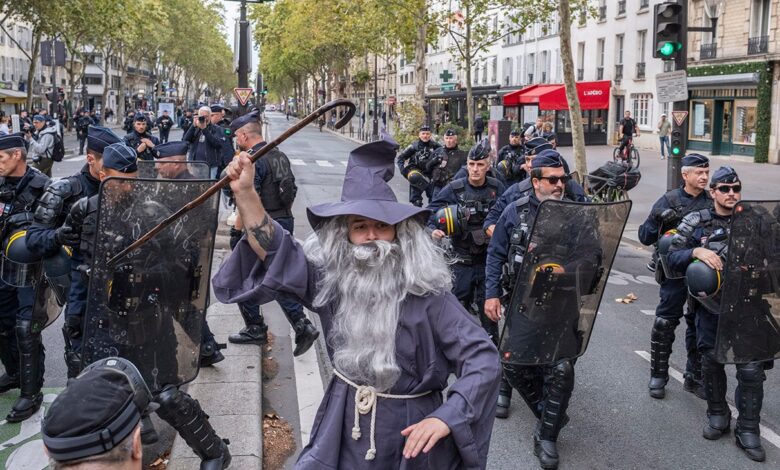
The intersection of student protest and police response has introduced a volatile element into the political narrative. Reports from the Associated Press document severe injuries sustained by minors during the earlier unrest, including a 15-year-old student who lost a hand to an exploding stun grenade, a 14-year-old with a fractured jaw and teeth, and a 14-year-old girl who suffered near-strangulation. By October 8, authorities had arrested 6,600 students, mostly under the age of 18. Hippolyte Leibovici, a 29-year-old filmmaker who protests in costume, noted the normalization of this violence among participants, stating, “We got used to police violence, people losing their hand or eye; it’s just a normal Saturday.” He argued that the core issue remains unaddressed: “This movement started because young students wanted better conditions at school. If President Macron corrected that, well, the protests would have ended right away.”
Leibovici and other costumed protesters suggest that the imagery serves a dual purpose: it brings joy to the movement and facilitates engagement with younger participants, who are described as highly politicized and educated but constrained by a “faulty system.” However, the government’s stance remains firm on public order. The Paris Police Prefecture’s enforcement of the anti-mask law represents a specific legal and symbolic barrier to the movement’s current aesthetic, contrasting with the unions’ focus on economic demands.
The political significance of November 5 lies in the convergence of these distinct but overlapping grievances. The *intersyndicale* had planned the strike before the sometimes-violent demonstrations of October 17, indicating that the labor unrest was already a brewing crisis distinct from, though now intertwined with, the student movement. The government faces a challenge on multiple fronts: addressing the structural decay of public services, managing the economic pressure of inflation on wages, and maintaining public order in the face of a diverse and determined opposition.
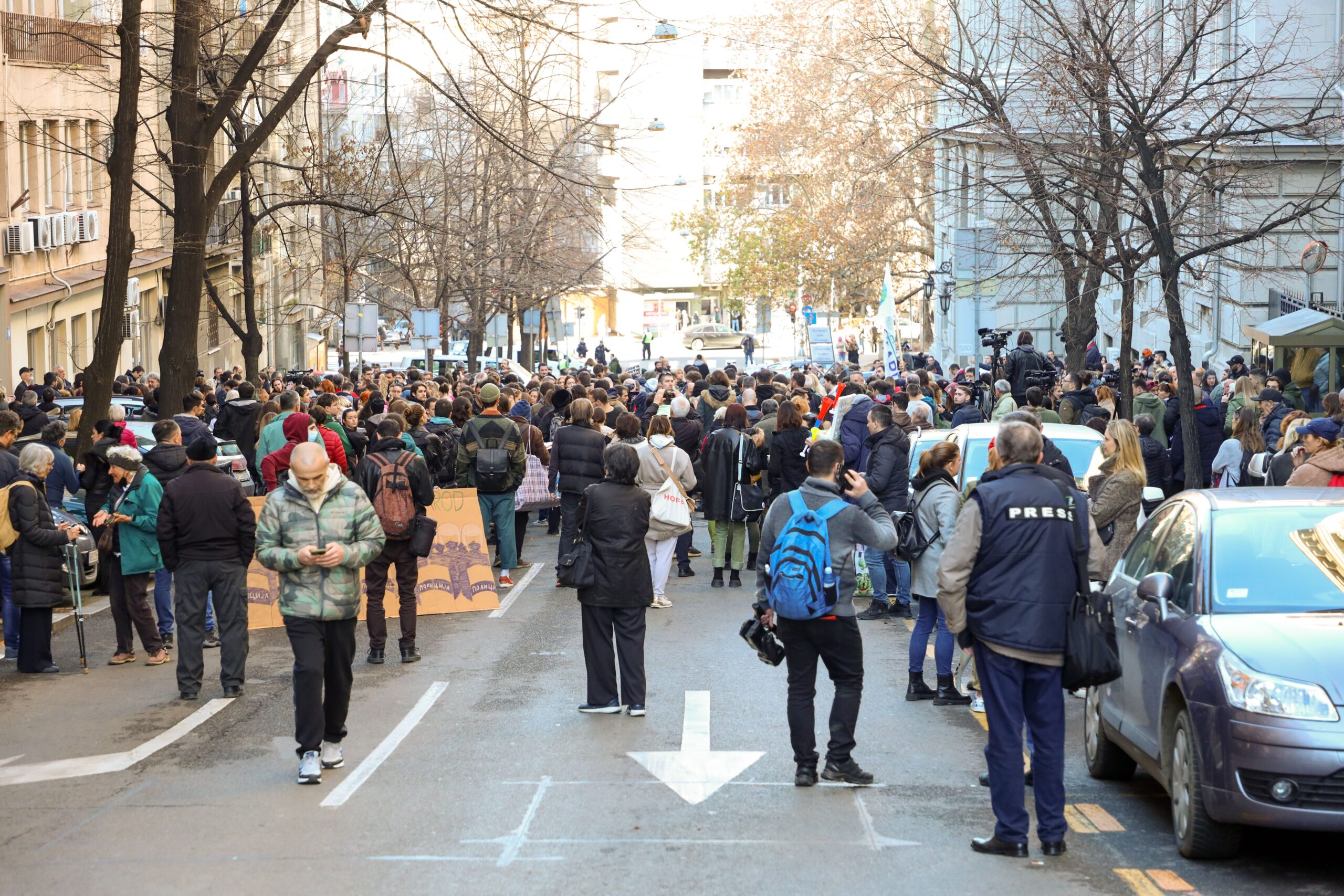
Practical consequences for the public are already being detailed by institutions. France’s railway company, SNCF, expects minor disruption on high-speed TGV services but more significant issues on regional lines, including Intercité and TER routes. In Paris, while the Metro, bus, and tram networks are expected to run as normal, disruption is anticipated on RER and Transilien suburban rail services. For education, primary school teachers must declare strike intentions 48 hours in advance, providing parents with clarity on potential disruptions by Tuesday, November 3.
As the date approaches, the uncertainty remains regarding the scale of participation beyond the confirmed strike notices and the potential for further escalation in public order incidents. The next political development will be determined by the outcome of the November 5 action: whether the coalition of students, workers, and retirees succeeds in forcing a policy response on wages and public services, or whether the government’s enforcement of law and existing economic policies holds firm against the broadest front of opposition seen in months.