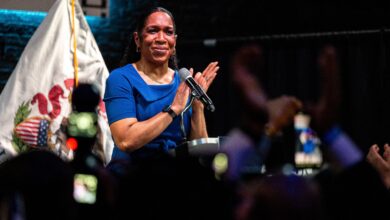

The announcement of his win positions Cooper as the Democrat set to represent North Carolina in the United States Senate. This result is significant not only for the composition of the federal legislature but also for the internal balance of power within North Carolina, a state that has frequently served as a battleground in national elections. By securing the Senate seat, Cooper transitions from a former state-level leader to a federal legislative actor, altering the political representation of the state in Washington, D.C.
Cooper’s decision to celebrate his victory in Raleigh, the state capital, underscores the strong ties he maintains with North Carolina’s political establishment. As a former governor, Cooper possesses a distinct understanding of the state’s legislative processes and administrative challenges, a background that will likely inform his tenure in the Senate. The move to Raleigh for the victory celebration also serves as a public reaffirmation of his connection to the state’s core political community, distinguishing his campaign from those that may have focused more heavily on national messaging.
The implications of this result extend beyond the immediate personnel change in the Senate seat. It reflects the shifting electoral dynamics in North Carolina, where control of federal offices often hinges on narrow margins and intense competition between the two major parties. The outcome suggests that the Democratic coalition in the state was able to mobilize effectively to secure this key upper chamber position. For voters in North Carolina, this means a new voice in the federal legislative process, one with direct experience in state governance.
While specific details regarding the margin of victory, final vote counts, or the reactions of his opponents were not provided in the initial reports, the confirmed claim of victory by Cooper indicates that the electoral process has reached a definitive conclusion in his favor. The formal certification of the results and the subsequent transition of power in the Senate office will be the next procedural steps. Until the official inauguration, the political landscape in North Carolina remains in a state of transition, with the focus now shifting from campaign rhetoric to legislative preparation.
Cooper’s entry into the Senate will bring a perspective shaped by his time in the governor’s mansion, where he would have dealt directly with state budgets, infrastructure projects, and public policy implementation. This experience may influence his approach to federal legislation, particularly in areas where state and federal jurisdictions overlap, such as healthcare, education, and economic development. The political establishment in Raleigh, which gathered for his celebration, will now look to his Senate office as a potential conduit for state interests in the federal arena.
The result also sets the stage for future political contests in North Carolina, as the balance of power in the state’s delegation to Congress is recalibrated. The opposition will likely analyze the factors contributing to this outcome to adjust their strategies for upcoming elections. For now, the immediate political consequence is the confirmed shift in representation, with Cooper taking the lead in the state’s Senate seat. The next phase will involve the formal assumption of his duties and the commencement of his legislative agenda in the federal Senate.