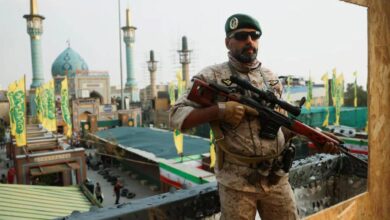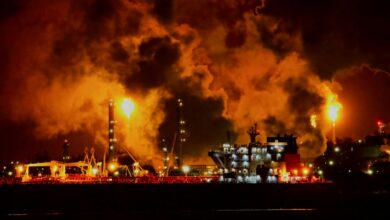
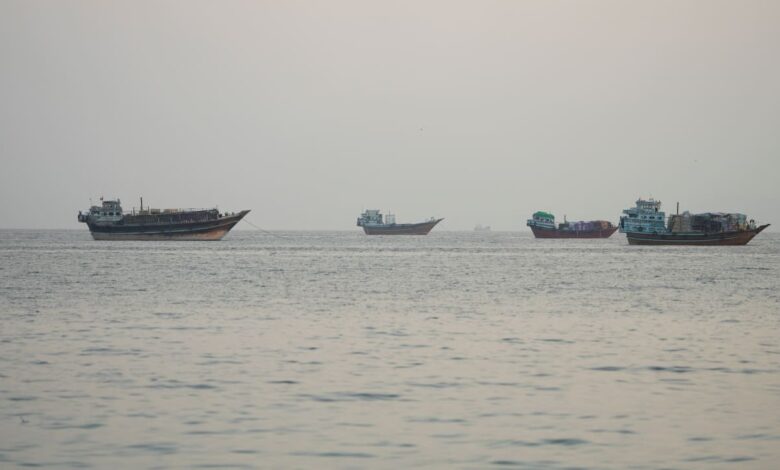
These incidents occur in the context of heightened tensions following US military strikes on Iran, which officials said were launched in response to the IRGC firing on a US aircraft. The IRGC previously reported on Tuesday that three tankers had been destroyed by mines early in the day and that an MQ-9 drone was shot down over the Strait. Earlier on Sunday, the IRGC announced that two other oil tankers had hit Iranian mines while transiting the Strait, alleging the vessels had switched off navigation and identification systems to move covertly with US military support. The United Kingdom Maritime Trade Operations (UKMTO) Center confirmed that an oil tanker passing through the Strait was hit by an unknown projectile on Sunday, though it did not attribute the cause to naval mines specifically.
Iran closed the Strait of Hormuz in response to the initial conflict, triggered by joint US-Israeli strikes in February. The Iranian Foreign Ministry stated this week that a seven-step peace plan had been condensed and could be implemented within two days if the United States agreed to its terms. However, talks to end the conflict have been stalled for months with little sign of a breakthrough. Iranian President Masoud Pezeshkian stated that his government has been attempting to resolve the crisis through dialogue, warning that “no-one will benefit from this war” if fighting restarts.
Political developments in the United States have influenced the diplomatic landscape ahead of the midterm elections. Mohammad Bagher Ghalibaf, Iran’s parliamentary speaker and top negotiator, noted that the election results, in which Republicans were punished, indicated that Americans had “said no to war.” He warned the US government against betraying this public will. US President Donald Trump acknowledged that poor results for Republican candidates were partly due to the conflict and increased gas prices, but he stated he did not regret launching the strikes. In a TV interview, Trump said he did not consider the US to be “really in a war” and commented that the conflict would end “when I say it ends.” He also addressed Israeli Prime Minister Benjamin Netanyahu’s comments about potential further attacks, stating that the US is “locked and loaded if we need to go, but there may be no need for it.”
Ghalibaf told a parliamentary session that Iran “will not surrender” and that the responsibility to prevent war lay with the US. He warned that if Washington makes another strategic mistake, it will face a “new battlefield.” The next expected development hinges on whether the US agrees to the condensed Iranian peace plan or if further military actions are taken, as both sides maintain that the current standoff is untenable.