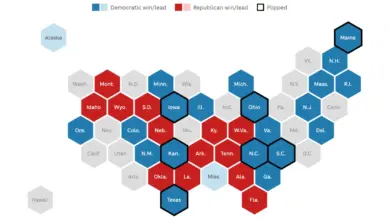

The directive follows recent escalations by the Department of Justice, which has sought to intervene in the race citing concerns over voter confusion. According to reports, federal authorities have intensified their scrutiny of the election process, sending target letters to Democratic operatives. These actions place the federal government squarely in the midst of a state-level electoral dispute, raising questions about the boundaries of federal intervention in local tabulation processes.
The uncertainty surrounding the final results is inherent to Alaska’s unique electoral framework. The state employs a system that combines open primaries with ranked-choice voting (RCV) in general elections. Under this model, voters rank candidates in order of preference. If no candidate secures more than 50% of first-choice votes, the candidate with the fewest votes is eliminated, and their ballots are redistributed according to voters’ next preferences until a candidate achieves a majority. This process, while designed to reflect voter will accurately, significantly extends the timeline for certifying results.
State officials have emphasized that the counting process is neither swift nor simple. Alaska has approximately 600,000 registered voters spread across a geographically expansive state where many remote communities are accessible only by plane or boat. This logistical challenge means that ballot collection and counting take considerably longer than in contiguous states. In previous high-profile contests, such as the 2008 and 2010 U.S. Senate races, it took roughly two weeks to determine a winner. The current cycle appears poised to follow a similar trajectory, with the outcome potentially remaining unknown for weeks.
Specific deadlines govern the acceptance of late ballots. State officials accept ballots from overseas voters for up to 15 days after Election Day, with November 18 targeted for their tabulation under the RCV system. Additionally, Alaska allows up to 10 days for absentee ballots mailed from within the United States to arrive. This window is critical for rural communities that rely heavily on air service for mail delivery, ensuring that votes from isolated areas are counted despite physical distance.
Political figures from both sides of the aisle have urged patience as election workers continue their work. Senator Sullivan’s campaign and that of his opponent, Mary Peltola, have both called for calm while the tallies are completed. Peltola addressed her supporters on Tuesday night, a date chosen to coincide with the broader national trend where Democrats secured enough seats to gain control of the U.S. Senate. While acknowledging the national victory for her party, she cautioned that Alaska’s final results would take time due to the state’s specific logistical and procedural requirements.
“It’s going to take a long time to make sure we’re counting every vote from every far-flung hinterland community, from every tiny outpost, from all of our service members serving overseas, our young people going to colleges,” Peltola said. Her remarks underscore the practical realities of counting votes in a state where geography dictates the pace of democracy. The presence of thousands of outstanding ballots, combined with the potential need for multiple rounds of RCV tabulation, means that the margin of victory, if any, will not be clear in the immediate aftermath of Election Day.
The intersection of federal intervention and state-level procedural delays creates a complex political landscape. The Justice Department’s focus on the “Dan J. Sullivan” name confusion suggests an effort to prevent what it views as an administrative error from altering the outcome. However, the state’s established protocols for ballot acceptance and RCV counting proceed independently of these federal probes. The result is a period of limbo where the final seat allocation in the Senate remains contingent on both the mechanical counting of ballots in remote Alaskan communities and the resolution of legal questions regarding vote attribution.
As the November 18 deadline for overseas ballots approaches, attention will shift to whether the redistribution of votes under the RCV system changes the standing of the candidates. The case also carries broader implications for the repeal of Alaska’s election system, a ballot measure that also remained undecided as counts continued. The prolonged timeline serves as a reminder of the operational weight of ranked-choice voting, a system that demands patience from both officials and voters to ensure accuracy in a state defined by its remoteness.