
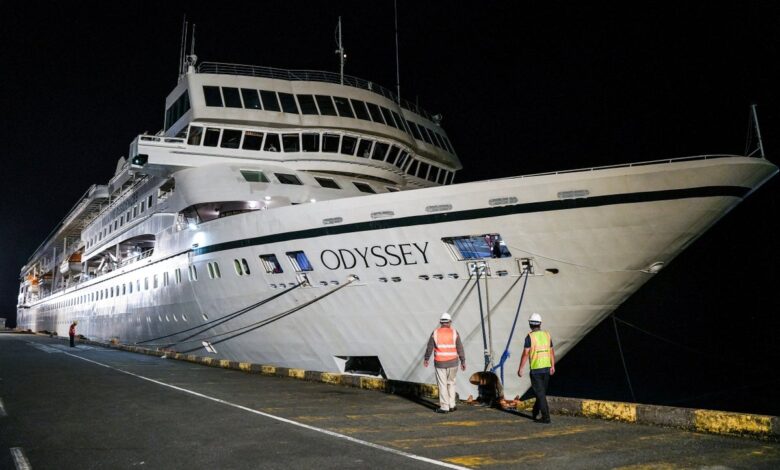
The abrupt conclusion of the voyage follows a suspension of operations announced last week by the ship’s owner, Villa Vie Residences, a Florida-based company. The operator cited a sharp increase in fuel prices, attributing the financial strain to the ongoing conflict in Iran. According to the company, monthly fuel costs per cabin had surged from approximately $1,800 to as much as $8,000, making continued operations prohibitively expensive. In a communication to guests, CEO Kathy Villalba stated that the company was “unable to secure the fuel necessary to continue” the voyage.
The suspension has left roughly 200 residents in a state of uncertainty, having invested tens of thousands of dollars—and in some cases, their primary residences—for what they believed would be a permanent lifestyle aboard the ship. The Villa Vie Odyssey was one of a handful of vessels offering long-term or permanent residential cabins, appealing to retirees and those seeking an alternative to conventional housing. For many, the decision to board in October 2024 represented a total life transition, funded by the sale of businesses or family homes.
Paul and Lynn Montoya, a couple from Laramie, Wyoming, exemplify the financial stakes involved. They sold their home to pay $179,000 for a lifetime cabin, along with monthly fees of about $6,000. After 17 months at sea, they were given only seven hours to pack their belongings and disembark. Similarly, Lanette Canen and Johan Bodin, 56-year-olds who boarded in late 2024, had sold their business to fund a $100,000 cabin, with additional monthly maintenance fees of $3,500. Other residents reported spending nearly $1 million, with expectations of living aboard for at least 15 years.
The lack of transparent communication from the company has compounded the distress among the displaced residents. Mary Ann Demsar, a 67-year-old retired high school teacher from Ontario, Canada, noted that the owners have provided no clear indication of what will happen next. “They’ve been so quiet, the only information we get is from the wonderful government and the representatives here in Cambodia,” Demsar said. Shirine Thomas, of Wilmington, North Carolina, expressed regret while collecting final items from the vessel, noting, “There are still many things on the ship that I wish I could take with me.” Many residents, including those who arrived with pets, had to leave behind a significant portion of their personal effects.
Villa Vie Residences has stated that it is attempting to restructure and raise new capital, indicating that the ship is currently in a “warm layup”—a status where the vessel remains out of service but is kept in a condition ready to sail again. However, no refunds have been announced for the substantial sums paid by residents. The company did not respond to emails or phone calls seeking further comment on the future of the vessel or the financial compensation for displaced occupants.
Maritime tracking websites and some passengers suggest the ship was bound for Singapore, though the company has not officially confirmed the final destination. The incident highlights the vulnerabilities of alternative living arrangements that rely on continuous global transit, particularly when exposed to geopolitical shocks that disrupt fuel supply chains. As the Villa Vie Odyssey sails away from Sihanoukville, the hundreds of individuals who traded terrestrial stability for a life at sea are left to navigate a complex financial and logistical crisis, with the ship’s next move yet to be determined.