
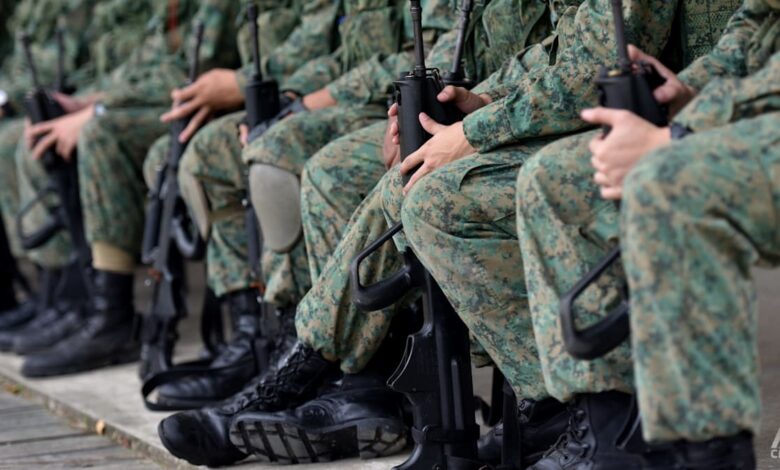
Mr Chan was responding to a question from Workers’ Party MP Fadli Fawzi regarding the number of NSFs who died of unnatural causes in the Singapore Armed Forces, Singapore Police Force, and Singapore Civil Defence Force over the last decade. The minister stressed that every death is treated as a tragic loss, with the Ministry of Defence (MINDEF) and the Ministry of Home Affairs (MHA) conducting thorough investigations to prevent recurrence. He added that MINDEF and MHA issue news releases whenever a serviceman dies in camp or while on duty.
The following day, on Wednesday (Nov 4), Mr Chan addressed concerns regarding air quality and operational continuity. Responding to a query from MP Kenneth Tiong about training limits during unhealthy air conditions, the minister stated that the Singapore Armed Forces (SAF) continues operations regardless of haze to ensure national defence. He clarified that while prolonged or strenuous outdoor training is moderated when the 24-hour Pollutant Standards Index (PSI) is in the unhealthy range (101 to 200), all non-essential outdoor activities are cancelled if the PSI enters the hazardous range. SAF personnel are issued protective equipment, such as N95 masks, for operational duties.
These parliamentary responses coincide with Singapore’s role in broader regional security discussions. At the 20th ASEAN Defence Ministers’ Meeting in Cebu, Singapore is positioned to steer a proposed US-ASEAN defence framework. Analysts cited in coverage of the meeting suggest that while this framework may unlock more US funding and training, it raises concerns about ASEAN being drawn into US-China strategic competition. Observers noted that Beijing’s absence from certain aspects of the dialogue reflects deteriorating China-Philippine relations, while other experts argued that deeper US engagement allows Southeast Asian states to balance China’s influence without abandoning ties with Beijing.
Approximately 45,000 male Singaporeans and permanent residents serve full-time national service annually across the three uniformed services. The defence minister reiterated that the health and well-being of all servicemen and women are of utmost importance, balancing these priorities with the critical need for continuous defence and security operations. The upcoming parliamentary sessions and regional defence dialogues will continue to address these operational and strategic matters.