
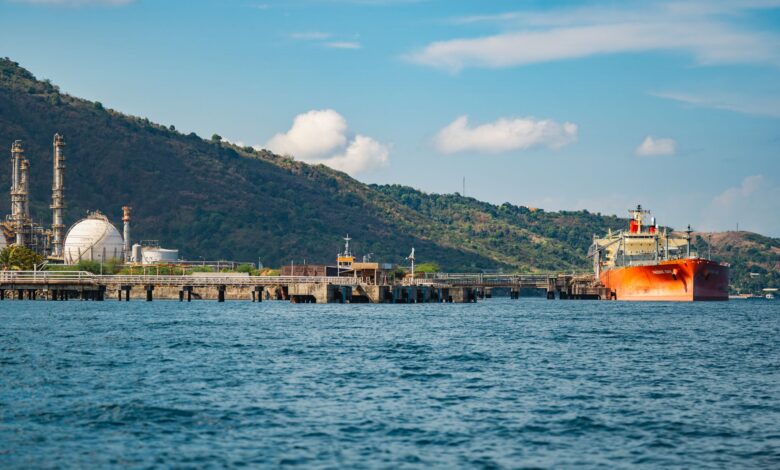
The development underscores the disconnect between executive-level diplomacy and statutory law in US energy policy. While the White House and the Kremlin have framed the deal as a mechanism to alleviate global supply tightness, the operational reality has been a near-total standstill. According to marine analytics firm Kpler and vessel-tracking site MarineTraffic, the Russian tanker Talisman and the Sierra Leone-flagged Leruo, which left the Baltic port of Primorsk last month with the US East Coast as their declared destination, have altered their routes. As of Thursday, one vessel is heading towards Brazil and the other into the Mediterranean. A third tanker, currently in the North Atlantic, has changed its destination from New York to “for orders,” leaving its unloading point unspecified.
The Trump administration first announced the agreement following a call with Putin on October 9. The terms, as outlined by Trump on his Truth Social platform, promised the immediate release of more than 300,000 tonnes of diesel to US and global markets. This was to be followed by 500,000 tonnes in November and 1 million tonnes “immediately thereafter.” Long-range product tankers, the primary vessels for such cargo, typically carry up to approximately 100,000 tonnes at a time. The agreement permits the sale, delivery, unloading, and import of this fuel until April 7, reversing years of US policy that banned Russian energy imports following Moscow’s full-scale invasion of Ukraine in February 2022.
However, the deal’s implementation has been hampered by a lack of operational details. Neither the White House nor the Kremlin has disclosed whether the agreement was formalized in writing, nor have they revealed the pricing, payment terms, or specific companies involved in the transactions. The Office of Foreign Assets Control (OFAC), part of the US Department of the Treasury, issued a temporary sanctions exemption to facilitate the trade. In a statement to the AP news agency, the Treasury maintained that the exemption is “in compliance with all applicable laws.”
The primary obstacle is not logistical but legal. A cross-party group of US lawmakers passed a new sanctions package in September, named in honor of the late Senator Lindsey Graham, which maintains a ban on Russian energy imports. This congressional action creates a distinct legal risk for traders, banks, and port authorities. New Jersey Governor Mikie Sherrill wrote to port and terminal operators in her state on Monday, explicitly instructing them to turn away ships carrying the fuel. Sherrill argued that the Trump administration lacks the authority to override the congressional ban, warning that “any effort to profit from the illegal trade in Russian fuel will be met with harsh penalties.”
Lawmakers have further warned that handling these imports could expose entities to civil or criminal liability and future congressional investigations. While no court has ruled on the dispute between the executive branch’s exemption and the legislative ban, the resulting uncertainty has paralyzed the market. Matt Smith, an analyst at Kpler, told AP, “It’s clear there’s hesitancy here in bringing these barrels onshore just because of the implications of doing so.” He added that due to these regulatory and sanctions concerns, it is unlikely the cargo will discharge on the US Atlantic coast.
The economic impact of this stall is immediate. US retail diesel prices topped $6 a gallon ($1.59 per litre) in September, nearly twice their pre-war levels, and have remained elevated since the start of the US-Israel war on Iran. Aarathi Krishnan, CEO of Raksha Intelligence, noted to Al Jazeera that the reported first shipment is equivalent to roughly two hours of US distillate consumption. “Even if it arrives as planned, it will make very little difference to national supply,” Krishnan said. This highlights the gap between the headline volumes promised in the deal and the actual marginal relief provided to consumers facing high wholesale and retail rates.
Despite the diversions, Moscow maintains that the deal is proceeding as intended. Kremlin spokesman Dmitry Peskov stated that “all the diesel will find its buyers,” suggesting that the fuel may be absorbed by other global markets rather than the US. The situation leaves US energy security policy in a state of flux, with the next critical milestone being whether any of the remaining tankers, including the sanctioned Seychelles-owned Beast currently signalling “Atlantic,” will attempt to offload in US ports or if the entire volume will be redirected to third-party buyers.



One Comment