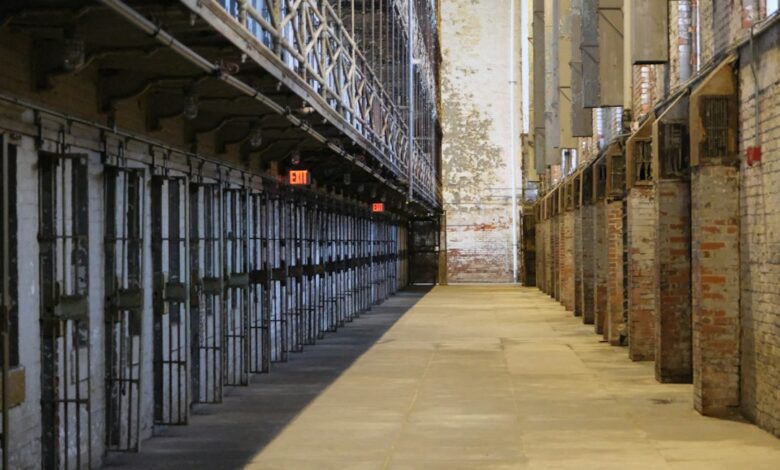
In the petition, which was reviewed by local media, Van der Sloot described his conditions as “psychological torture almost daily.” He alleged, “They threaten me with death, and that is affecting my mental health. And they threaten not only me, but also my family.” The prison, located at an altitude of 4,600 meters, is known for its severe cold and is utilized for Peru’s most dangerous criminals. Van der Sloot stated that while the prison administration has agreed to the transfer, a judicial approval is still pending. It remains unclear when the courts will consider this request.
Van der Sloot’s petition for a transfer arrives amidst significant procedural developments regarding his legal status in both Peru and the United States. In December of last year, he was found seriously injured in his cell, with media reports at the time suggesting a suicide attempt. He is currently serving a 28-year sentence for the 2012 conviction of murdering Stephany Flores, a 21-year-old student, in Lima. Additionally, he is serving an 18-year sentence for drug trafficking.
Concurrently, Van der Sloot lost an appeal to block his temporary transfer to the United States. His attorney, Maximo Altez, had filed a habeas corpus petition arguing that the transfer should be halted due to a lack of official notification. However, court documents dated June 5 indicate this argument contradicted previous statements by Altez, who had told CNN en Espanol on May 30 that his client agreed to the transfer. In a letter, Van der Sloot had written, “I want to go to the US.”
The United States has indicted Van der Sloot on federal charges of extortion and wire fraud. The indictment, filed in the Northern District of Alabama, alleges that in 2010, Van der Sloot attempted to sell false information regarding the whereabouts of Natalee Holloway’s remains to her mother, Beth Holloway, in exchange for $250,000. According to the indictment, Holloway wired $15,000 to a bank account held by Van der Sloot in the Netherlands and provided an additional $10,000 in person through an attorney. After receiving the initial $25,000, Van der Sloot showed the attorney a location for the remains, which was later determined to be false. Holloway’s body has never been recovered, and an Alabama judge signed an order declaring her legally dead in 2012.
Peru initially agreed to extradite Van der Sloot to the U.S. only after he completed his murder sentence. However, the Peruvian judiciary recently changed this stance, agreeing to a “temporary relocation” to the United States to face the extortion and wire fraud charges, with the understanding that he would be returned to Peru to complete his sentence. Justice Minister Daniel Maurate explained that the U.S. authorities indicated the case could be dropped if the transfer did not occur sooner, citing the advanced age of the witnesses. “But since the US needs him in order to face trial… the authorities told us that if he didn’t get there sooner, the case against him could be dropped,” Maurate said.
The transfer was executed by the Federal Bureau of Investigation (FBI), who flew to Peru on a U.S. Department of Justice plane. Van der Sloot was handed over to the FBI following an order by the superior court in Lima. He was arraigned in federal court in Birmingham, Alabama. While in the U.S., Van der Sloot also addressed the unresolved question of his involvement in Holloway’s 2005 disappearance in Aruba. In 2023, he admitted to killing Holloway but was not convicted of murder; instead, he confessed in exchange for a reduced sentence and was convicted only of extorting her parents. No one is currently charged with her death in Aruba, where police had dropped cases against Van der Sloot and two others in 2007 due to insufficient evidence.
Van der Sloot’s legal situation remains complex, involving concurrent proceedings in two jurisdictions. While he faces the immediate question of his prison placement in Peru due to safety allegations, his return to Peru after the U.S. proceedings is mandated by the terms of the temporary transfer. The Peruvian courts have yet to rule on his petition for a transfer from Challapalca, a decision that will determine his living conditions while he continues to serve his existing sentences.