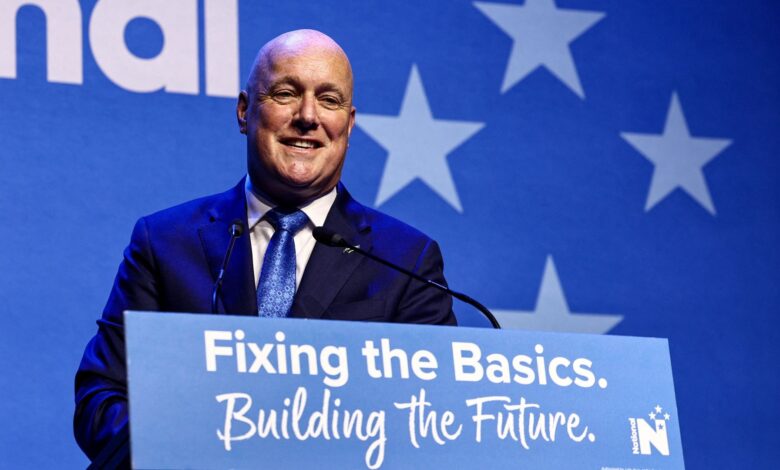
Opposition leader Chris Hipkins, whose Labour Party won 36 seats, showed no signs of conceding. He stated that the “shape of the next government” would remain uncertain “for a while.” Hipkins emphasized that the results indicated the next parliament would require all parties to “compromise, to work together and to find a common ground.” Luxon congratulated Hipkins on a “very hard-fought race” and expressed pride in his team, noting that the final outcome would depend on the remaining vote counts.
The election was characterized by historically low support for the two dominant parties, which together captured approximately 60% of the vote share. The campaign was heavily focused on the cost of living and unemployment. Julian McCrann, head of polling at Roy Morgan, noted that while Prime Minister Luxon had campaigned on solving economic issues, many voters felt he had not delivered. The Greens saw their vote rise by a couple of percentage points, with proposals including forcing major supermarkets to divest stores for publicly-owned shops.

Under New Zealand’s mixed-member proportional voting system, voters cast two ballots: one for their constituency representative and one for a political party. This system typically results in coalition governments. The centrist Opportunity Party crossed the 5% threshold to enter parliament for the first time. Leader Qiulae Wong stated the party would work with either side but would negotiate first with the party securing the most seats. Professor Andrew Geddis, an election law expert at the University of Otago, described Opportunity as a “wildcard player” capable of determining which bloc governs.
The final outcome hinges on the counting of special votes, cast outside a voter’s electorate or overseas, which are processed over the next three weeks. Professor Geddis cautioned that the result may come down to fine margins in individual electorates. The Electoral Commission is not due to announce the official result until 27 November. Until then, the political landscape remains fluid, with the National-led bloc (combining National, ACT, and New Zealand First) holding a slim lead over the left-leaning bloc if a deal can be reached.