According to a Wall Street Journal report, the board met on Wednesday to discuss Huang’s future. The uncertainty has already impacted investor sentiment, with Nvidia shares dropping more than 8% in after-hours trading following the news. At Wednesday’s close, Nvidia stock stood at $173.73, a 27% decline from its record high of $239.24 set on October 6. Since that peak, the company has lost approximately $1.8 trillion in market value. As of Thursday morning, the board had not announced a formal decision, leaving the company in a state of limbo.
The controversy centers on allegations involving Alice Huang, a Chinese businesswoman with whom Jensen Huang has acknowledged a romantic relationship. U.S. intelligence officials reportedly suspect she was recruited by Beijing to influence the CEO, though Huang has denied any knowledge of such links. The board previously retained the law firm Wachtell, Lipton, Rosen & Katz to investigate the relationship and asked Huang to continue leading the company during the inquiry. The recent reports of a separate extramarital relationship with Kimberly Powell have intensified pressure on the board to act.
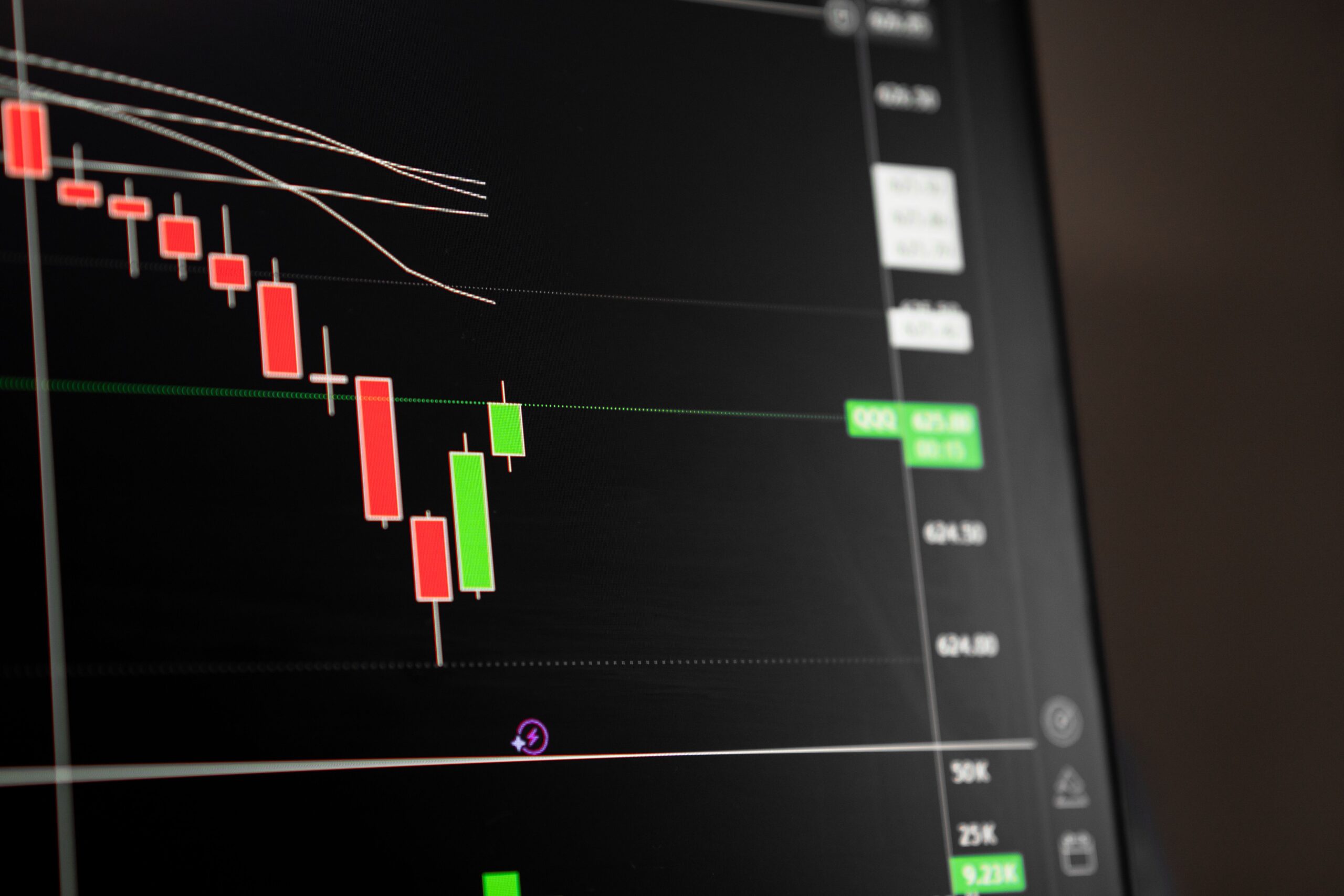
From a market perspective, the situation highlights the extreme concentration risk associated with holding Nvidia equity. For institutional investors and individual retirees alike, the stock’s performance is no longer just a matter of semiconductor demand but is heavily influenced by governance and leadership stability. Analysis of a hypothetical retirement portfolio reveals the magnitude of this exposure. A 66-year-old investor with a $750,000 Individual Retirement Account (IRA) who holds 500 Nvidia shares, along with S&P 500 and Nasdaq-100 index funds, has approximately 17% of their retirement capital tied to this single company. This is significantly higher than the 12% direct holding might suggest, because Nvidia constitutes roughly 6.3% of the S&P 500 and 7.1% of the Nasdaq-100.
The financial impact of the recent slide has been severe. Since the October 6 record, the hypothetical portfolio described above has lost $64,244, or 7.9%, in just five weeks. Of this loss, approximately $45,000 is attributable to Nvidia’s decline, either through direct holdings or via index funds. This contrasts sharply with a diversified strategy based on Warren Buffett’s recommended 90/10 allocation (90% in an S&P 500 index fund and 10% in short-term government bonds). Applied to the same initial capital, the 90/10 strategy would have suffered a loss of only 2.2% over the same period, preserving an additional $46,449 compared to the concentrated portfolio. This discrepancy underscores that the primary loss driver was not broad market weakness—evident in the S&P 500’s 2.5% drop—but rather the specific volatility of Nvidia.
Replacing Huang is not a straightforward process. As a co-founder who has led the company since 1993, Huang is central to Nvidia’s operations, which have pivoted from graphics processors to powering the global artificial intelligence boom. Major clients, including OpenAI, Google, and Anthropic, rely on Nvidia’s chips for training and running AI models. Huang currently owns more than 870 million shares, representing roughly 3.6% of the company, and manages an unusually large span of control with dozens of executives reporting directly to him. The absence of a clearly established successor adds to the uncertainty. However, under Nvidia’s bylaws, the board retains the power to remove him with or without cause through a majority vote.
The situation serves as a cautionary tale for investors regarding single-name risk in high-growth sectors. While Nvidia’s fundamental technology and order book remain intact, the leadership crisis has decoupled the stock’s price from its operational performance in the short term. The board’s upcoming decision will determine whether the company can stabilize investor confidence or if the leadership vacuum will persist, potentially affecting the broader AI infrastructure market.
The next critical development will be the board’s formal announcement regarding Jensen Huang’s tenure. Until then, the market will likely remain volatile, pricing in the risk of a leadership transition that could reshape the company’s strategic direction.