
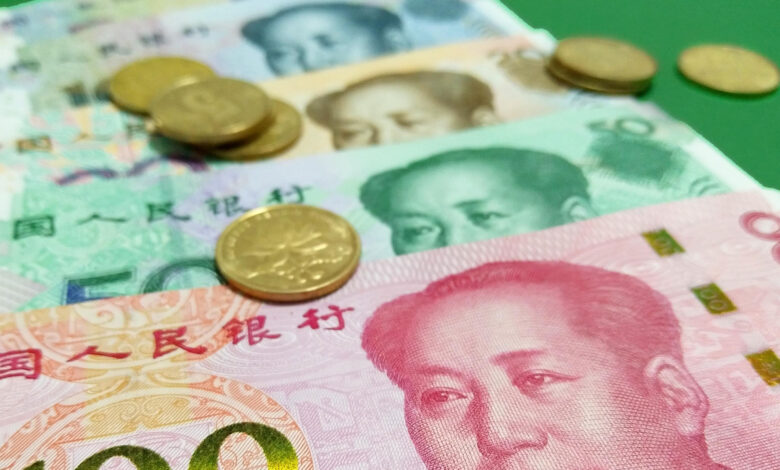
The shift is driven primarily by the pressure of US secondary sanctions, which have restricted the ability of Russian banks to process yuan transactions. While the yuan became the most traded currency on the Moscow Exchange by 2024 and overtook the dollar in bank deposits following Russia’s invasion of Ukraine in February 2022, the financial plumbing required for such settlements has proven vulnerable to external pressure. In response, Russia has pivoted to a different currency strategy: it now receives 69% of its export payments from Asian countries in rubles. This represents a significant structural change in how Moscow conducts trade, prioritizing its domestic currency in bilateral settlements rather than relying on a third-party major currency.
The retreat of the yuan in Russian trade occurs against a backdrop of intense scrutiny on China’s own monetary policy. As Europe prepares to discuss exchange rates with Beijing, Chinese officials have publicly downplayed any connection between their currency and the country’s expanding trade surplus. However, this stance has drawn criticism from independent analysis. The Peterson Institute for International Economics (PIIE), a nonpartisan research organization, argues that the data rejects the Chinese position. PIIE scholars contend that the yuan is undervalued by approximately 20 percent, a factor that is directly contributing to a trade surplus that, relative to the size of the world economy, now exceeds levels seen during the “China Shock” of the 2000s.
According to PIIE, this undervaluation allows Chinese manufacturers to grab sales from producers outside China, fueling rising international tensions. The Institute notes that this is a repeat of arguments made by Chinese officials in 2006–07, the last period when the currency was weak and the surplus was rising. To achieve sustainable growth both in China and the rest of the world, PIIE asserts that China requires major domestic reforms, including strengthening the social safety net to boost domestic consumption, and a substantial appreciation of the yuan to level the playing field between Chinese and foreign producers.
Beijing is actively managing these dynamics. Exclusive reports indicate that Chinese banks have boosted dollar deposit rates as part of a broader effort by the central bank to smooth the yuan’s rally and ensure stability. In its Q3 monetary policy report, the People’s Bank of China vowed to maintain ample liquidity and yuan stability. These measures suggest a central bank balancing the need to support its export sector with the desire to prevent excessive currency volatility that could destabilize financial markets.
The divergence in currency strategies highlights the fragmented nature of the post-sanctions global financial system. While Russia has turned inward, using the ruble to facilitate trade with Asian neighbors, China remains focused on maintaining the yuan’s competitiveness to support its massive export engine. The BRICS bloc, which includes Russia, China, Brazil, South Africa, Egypt, Ethiopia, Nigeria, and Uganda, remains divided on the feasibility of replacing the dollar. Some members favor the development of alternative payment systems rather than a single substitute currency.
President Putin has repeatedly criticized Washington’s use of financial sanctions, stating at the October 2024 BRICS summit in Kazan that the dollar is being used as a political weapon. “The dollar is being used as a weapon. We really see that this is so,” Putin said. However, the practical outcome of this rhetoric has been a retreat from the yuan in favor of ruble-based settlements with Asia. This development underscores the limits of using national currencies as geopolitical tools when faced with the dominance of the US financial system and the strict enforcement of secondary sanctions.
For global trade, the implications are twofold. First, the rise of the ruble in Russian-Asian trade complicates the narrative of a unified “de-dollarization” front. Second, the continued undervaluation of the yuan, as assessed by PIIE, suggests that trade imbalances will persist, likely keeping pressure on European and American policymakers to address exchange rate distortions. The European Union’s upcoming discussions with China on exchange rates are likely to focus on these structural imbalances, even as the US remains notably silent on the specific mechanics of yuan valuation.
The next critical data point will be the official reaction from European policymakers following their exchange rate talks with China, as well as any further adjustments to dollar deposit rates by Chinese banks. Additionally, the stability of the ruble’s share in Asian trade settlements will be a key indicator of whether Moscow’s pivot is a temporary tactical move or a permanent structural shift in its trade architecture.