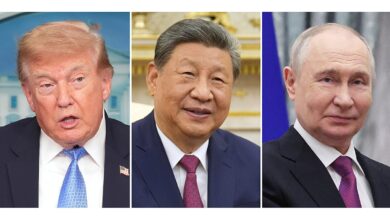

The urgency of the debate stems from U.S. efforts to broker an end to the war, which European leaders fear could result in a deal negotiated primarily between Washington and Moscow without adequate European input. German Chancellor Friedrich Merz warned against a repeat of the “Anchorage moment,” referencing a previous summit where U.S. President Donald Trump engaged with Russian President Vladimir Putin without European or Ukrainian envoys present. Merz urged the United States to avoid “surprises” and to continue acting as part of “Team Europe” and “Team Ukraine” during expected talks between Trump and Putin in China next week.
Opinions within the EU are divided on the optimal structure for representation. Italian Prime Minister Giorgia Meloni, who requested the topic be prioritized in Dublin, argued that a single envoy is needed to prevent “freelance diplomacy” by individual states. In contrast, Estonian Prime Minister Kristen Michal supported a dual representation model, stating that both Costa and Kallas are “clearly accountable to EU countries” and that there is no need for an ad hoc appointment. Kallas, the bloc’s High Representative for Foreign Affairs, asserted her institutional mandate, noting that Europe cannot simply appoint someone without an official role, unlike the U.S. delegation.

External reactions to Europe’s internal disarray have been critical. U.S. envoy Jared Kushner stated that if Europe could identify a single representative, it would be a greater achievement than convincing Russia to include them in the negotiations. Russian officials have been even more dismissive; Kremlin spokesman Dmitry Peskov compared European leaders to “spiders in a jar.” While Moscow claims to be ready to talk, it has simultaneously refused to confirm that it would accept EU leaders at the negotiating table, arguing that European nations are financing Ukraine’s military effort. The Kremlin stated that no decision has been made to expand the current trilateral format to include Europe.
The situation highlights a broader tension between institutional authority and political pragmatism. According to EU law, the bloc is represented by the European Council, yet Costa’s direct contacts with Moscow in June have irritated some leaders. Meanwhile, political figures such as France’s Marine Le Pen and her party members have challenged the EU’s diplomatic competence, arguing that national governments should handle negotiations. The Dublin summit is not expected to yield a final selection of an envoy but aims to establish an “understanding” among leaders on how Europe’s position will be relayed to the Kremlin in upcoming discussions.