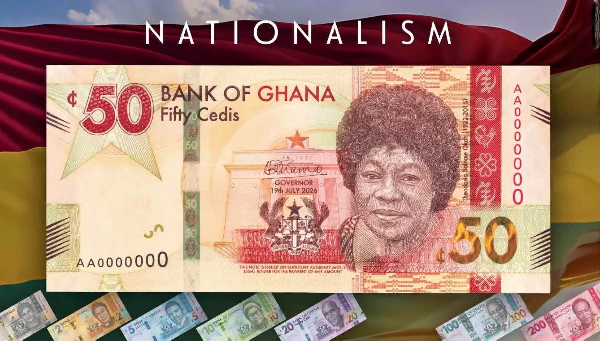
The primary economic rationale for the redesign is the enhancement of security features and physical durability. Johnson Asiama, Governor of the Bank of Ghana, stated that the new designs are intended to reduce counterfeiting and improve the practicality of the notes. Dominic Owusu, the central bank’s director of currency management, noted that the existing GH₵200 note was particularly large and difficult to handle. The redesigned series addresses this by creating smaller, more convenient formats for all eight denominations: GH₵1, GH₵2, GH₵5, GH₵10, GH₵20, GH₵50, GH₵100, and GH₵200.
Economically, the shift represents a logistical update rather than a monetary policy change. The BoG has explicitly assured the public that there is no need to rush to banks to exchange old notes or withdraw cash to obtain the redesigned currency. A nationwide public education campaign is planned to help citizens identify the new security features and designs. The currency retains its nominal value, with no indication of inflation-adjusted revaluation or changes to the exchange rate structure in the immediate release.
While the technical aspects of the currency update focus on anti-counterfeiting measures, the cultural symbolism of the new notes has triggered significant political and social debate. Unlike previous series, the new Heritage Series does not feature the “Big Six,” the group of six key politicians who campaigned for Ghana’s independence under Dr. Kwame Nkrumah. Instead, the notes highlight a broader range of national icons, including cultural, religious, and professional figures. This decision has been viewed by some critics as an erasure of historical political narratives from the national currency.
The most immediate controversy centers on the GH₵50 note, which is designated to honor Theodosia Salome Okoh, the designer of Ghana’s national flag. Hours after the unveiling, Dr. Eddie Obeng, a Ghanaian academic and nephew of Ms. Okoh, alleged that the banknote featured the wrong photograph. In a LinkedIn post, Dr. Obeng claimed the image depicted his mother, the country’s first lady PhD, rather than his aunt. “Imagine my surprise when I took a look and realised that they have used a picture of my mother instead,” he wrote, questioning the diligence of the process.
The error has provided fuel for political opposition. Alexander Afenyo-Markin, the Minority Leader, accused the Mahama-led government of using the incorrect photograph due to haste in removing the Big Six from the currency. “A whole government machinery that cannot be diligent enough to get the right picture to put on our currency, how can we trust them with our economy?” Mr. Afenyo-Markin asked, linking the administrative oversight to broader concerns about fiscal management. His comments followed the presentation of the 2027 Budget Statement and Economic Policy to Parliament by Finance Minister Dr. Cassiel Ato Forson on November 12. Koku Anyidoho, former Deputy General Secretary of the National Democratic Congress (NDC), also raised questions about the authenticity of the claims on social media, though no official retraction or confirmation of the error was detailed in the provided sources.
The new series assigns specific thematic significance to each denomination. The GH₵1 note honors Agnes Oforiwa Tagoe-Quarcoopome, a pioneering market trader and “market queen” of Accra, featuring Makola Market to symbolize the economic contribution of market women. The GH₵2 note represents religious diversity, featuring Cardinal Peter Dery and the Larabanga Mosque, one of the oldest in West Africa. The GH₵5 note highlights education through James Emman Kwegyir Aggrey, a Pan-Africanist educator, and Achimota School, which has educated several former heads of state. The GH₵10 note celebrates justice with Annie Ruth Jiagge, Ghana’s first female judge. The GH₵20 note features composer Ephraim Amu and the National Theatre. The GH₵100 note honors former UN Secretary-General Kofi Annan and the peacekeeping training center named after him. Finally, the GH₵200 note features Ghana’s first president, Kwame Nkrumah, and his mausoleum, symbolizing sovereignty.
President John Dramani Mahama, who attended the launch, urged citizens to treat the currency with pride, stating, “Carry the cedi note with pride and uphold the confidence on which it rests to continue to serve Ghana securely and well for generations to come.” The BoG has warned against damaging the new notes, such as writing on them or using them for decorative purposes, to maintain their integrity.
The introduction of the Heritage Series concludes a long period of currency design stagnation, but the immediate challenges lie in public acceptance and the resolution of the portrait dispute. The next critical step is the public education campaign and the official circulation date on December 1, 2026. The Bank of Ghana must now manage the transition without disrupting cash flow, while the government faces scrutiny over its administrative precision in a context where budget credibility is already a point of political contention.