
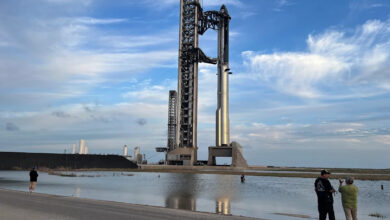
The 124-metre (407-foot) Starship, the world’s largest and most powerful rocket, launched from Starbase in Texas on Friday. Approximately 22 hours later, on Saturday, the upper-stage spacecraft descended slowly over the facility and slotted smoothly between the mechanical “chopstick arms” of the launch tower, known as Mechazilla, above Launch Pad 2. This maneuver demonstrates the company’s capability to rapidly recycle hardware, a prerequisite for reducing launch costs and increasing mission frequency.
During its flight, the Starship completed 14 orbits around Earth at an altitude of 265 km (165 miles), a substantial increase over the one to two orbits achieved in the previous mission. During this time, the spacecraft deployed 26 advanced Starlink satellites. SpaceX reported that all components of the upper stage, including the vital heat shield, appeared to function correctly upon return.
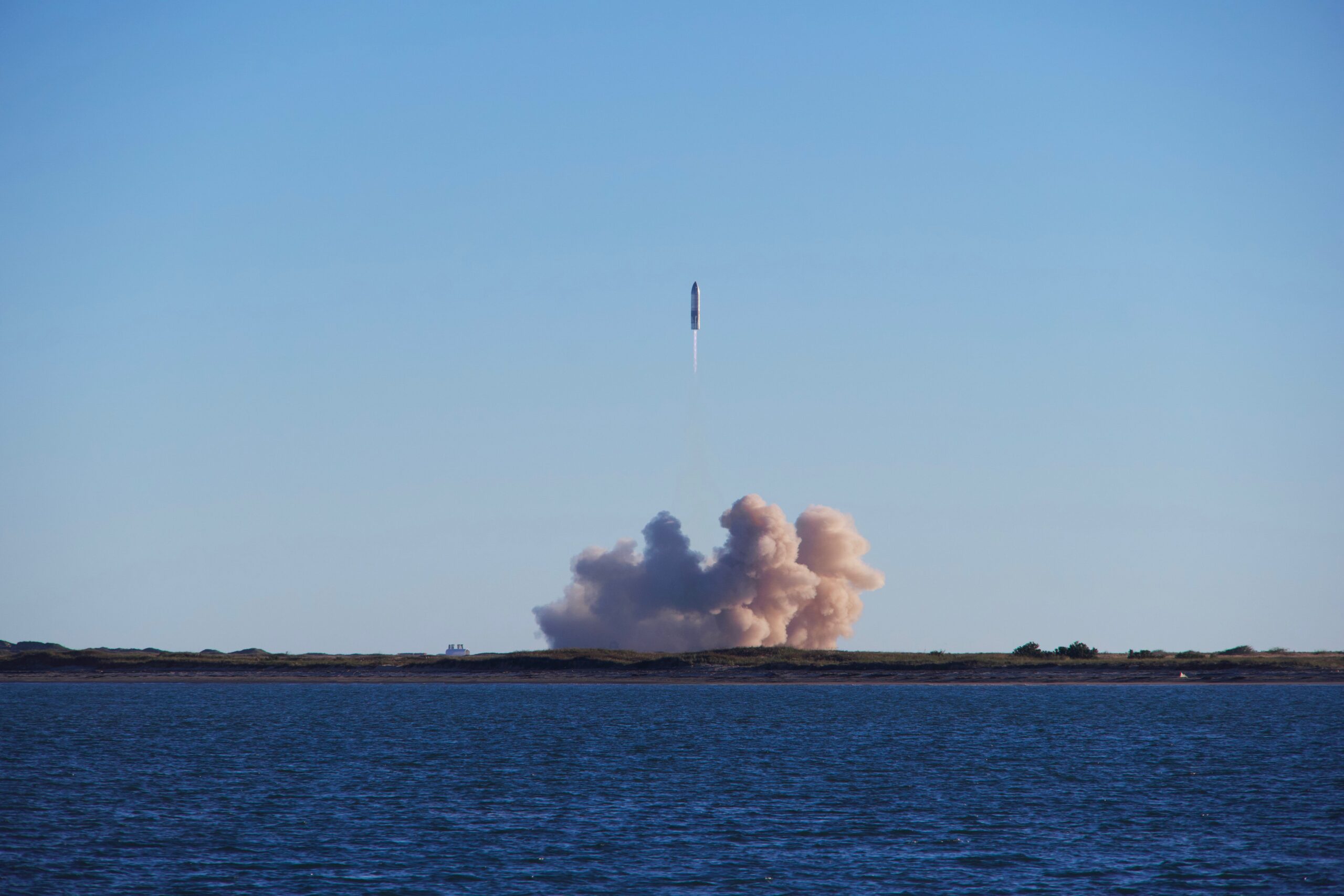
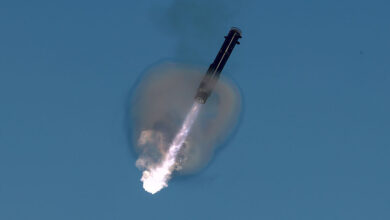
However, the mission did not meet all of its objectives. SpaceX had aimed for a “double catch,” recovering both the upper stage and the first-stage Super Heavy booster. The booster separation occurred cleanly, but shortly after, the first stage exploded shortly after liftoff. According to SpaceX official Kate Tice, the booster’s engines stopped firing too soon during descent. The guidance system detected that the vehicle was not in the correct position and automatically initiated a detour over the Gulf of Mexico (referred to as the Gulf of America in some reports) and self-destruction. Engineers are currently investigating the cause of the premature engine shutdown.
Despite the booster failure, the company has previously successfully caught the Super Heavy booster on three prior occasions, validating the basic technique for lower-altitude returns. This test flight was the 15th full-scale Starship flight since the program began in 2023 and only the second to reach orbit.
The achievement carries significant implications for the broader space sector. NASA is utilizing Starship technology for its Artemis program, which aims to return astronauts to the Moon later this decade. Isaacman praised the team, noting that the event is “making more believers by the day.” Walter Isaacson, Elon Musk’s biographer, highlighted the historical significance of the concept, recalling a December 2020 meeting where Musk insisted that the launchpad arms could catch a returning Starship. Isaacson stated, “This is actually a bigger deal for humanity than most people can imagine.”
SpaceX officials emphasized that the successful capture of the orbital stage is crucial for the rapid, low-cost recycling of hardware. The company expects to begin launching Starships from Florida’s Kennedy Space Center within the next few months. While the failure of the booster recovery highlights that the system is not yet fully reliable for dual-stage recovery, the successful orbital return and capture represent a critical step toward the fully reusable architecture intended for future Moon and Mars missions.


One Comment